
See the story of this unique year through data visualizations from our Charting the Path to the Next Normal series.
Tác giả: Đào Thu Hằng
I'm from Hanoi, Viet Nam.
I'm an author of Dot Chuoi Non (dotchuoinon.com/author/hangbelu/), a blog on Positive thinking, founded by Dr. Tran Dinh Hoanh, an attorney in Washington DC.
I'm a co-founder of Conversations on Vietnam Development - cvdvn.net, a virtual think tank. I am a co-founder of two companies in Viet Nam working on children education services. I advise companies on STEAM education, English language education for children and students in Vietnam.
I'm studying the Buddha's teaching and the teaching of Jesus. I practice mindful living including meditation.
I hold a PhD on Sustainable Energy Systems from University of Lisbon and Aalto University.
I graduated from Hanoi University of Technology on Environmental Engineering. I obtained a Master degree of the same major from Stanford University and Nanyang Technological University.
My English-language blog at: hangbelu.wordpress/.
I play table tennis as a hobby.
How Vietnam came to embrace a new vision of the Mekong Delta’s future
-
- Vietnam’s investments in the Mekong Delta helped turn the nation into a top rice exporter and, subsequently, a manufacturing powerhouse.
- Today, however, the “rice first” policy has become unsustainable, as climate change threatens the fertile Mekong Delta region in Vietnam’s south.
- In recent years, policymakers have grappled over how to gird the country’s most important agricultural region against the effects of rising seas and upstream dam building.
- This article is the first in a two-part series on the future of Vietnam’s Mekong Delta.
Tiếp tục đọc “How Vietnam came to embrace a new vision of the Mekong Delta’s future”
Fashion brand Nike and H&M to Vietnam: More renewables, please
29 global fashion brands say green energy will boost No. 3 textile exporter

A wind park in Vietnam’s Bac Lieu Province. © Reuters
HO CHI MINH CITY — Fashion brands including H&M and Nike are pressing Vietnam to move ahead with a renewable energy purchase program as companies come under increasing pressure to meet their sustainability goals, Nikkei Asia has learned.
A consortium of 29 brands sent a letter to Vietnamese Prime Minister Nguyen Xuan Phuc this month urging the country to introduce direct power purchase agreements (DPPA) between private buyers and sellers of renewable energy. Currently, energy users can only buy electricity through the national utility or through small-scale projects such as rooftop solar panels.
International clothing brands, which rely heavily on Asian garment factories, are under pressure from shareholders and consumers to reduce emissions in their supply chains. Renewable energy in Vietnam — the world’s third-largest textile exporter — is key to those companies hitting their emission targets.
“Without the DPPA we believe renewable energy development will plateau and fall short of meeting the growing energy needs of Vietnam’s industries,” the consortium warned in the Dec. 15 letter, seen by Nikkei.
Tiếp tục đọc “Fashion brand Nike and H&M to Vietnam: More renewables, please”
First Solar’s Photovoltaic Technology Completes 25 Years of Testing at NREL
NREL.gov
Dec. 14, 2020
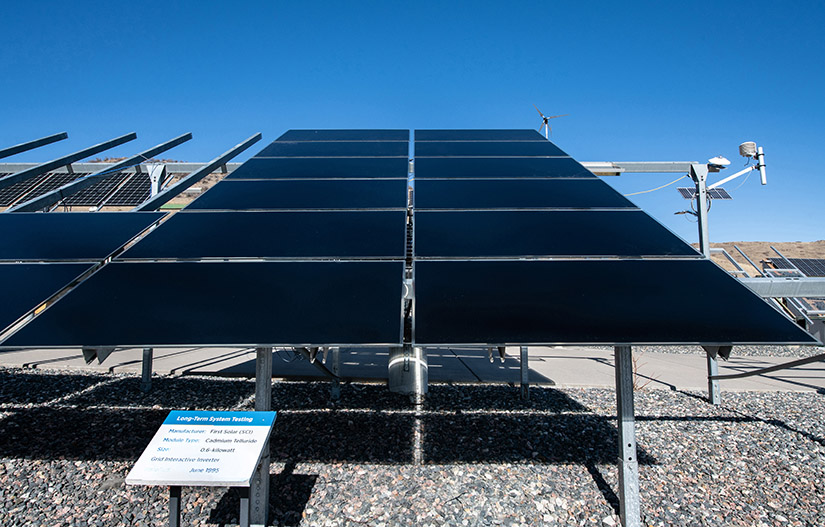
Determining how many years a solar panel will last can take, well, years. Intended to function for 25 years or more, solar panels must be made to withstand the elements. In some cases, panels continue working well after their planned operational lifetime. Nowhere is this more evident than on the sunny hillside in Golden, Colorado, where the National Renewable Energy Laboratory (NREL) operates the Outdoor Test Facility (OTF). Tiếp tục đọc “First Solar’s Photovoltaic Technology Completes 25 Years of Testing at NREL”
Southeast Asia braces for trash dump as China enacts waste import ban
SCMP
- On January 1, China will no longer be accepting waste from other countries, with Vietnam, Thailand and Indonesia likely to feel the brunt of the new policy
- Although the three countries have taken steps to deal with mounting trash, corruption and weak policies could doom them to remain buried in refuse

A river canal in Ho Chi Minh City choked by mostly plastic waste. Photo: Sen Nguyen
China, which used to be the world’s salvage king, is shutting its door to all waste imports starting the first day of the new year. The recent announcement triggered the same kind of anxiety among waste-exporting countries as in 2018, when China enacted its “Operation National Sword” policy, which banned the import of 24 types of solid waste, including plastic waste.
The 2018 policy switch caused the world’s major waste-exporting countries – Europe, Britain, the US and Australia – to scramble for alternative destinations, including
nations like Thailand, Vietnam, and Indonesia, which quickly became overwhelmed by the volume of refuse they received. Soon after, these countries began to impose their own bans and restrictions on waste imports.
With China’s latest announcement about a blanket waste ban, concerns have been raised about the effects this might have on Southeast Asian countries, where limited waste-management capacities are common.
Plastic pollution plagues Southeast Asia amid Covid-19 lockdowns
10 Aug 2020
, which borders China and was one of the countries most affected by Beijing’s 2018 waste policy, might not be ready for more imported waste. According to a national report released last month, various types of solid waste imported for manufacturing do not only not meet the national technical standard in regards to
but also put more pressure on waste-management services in the country.
Meanwhile, most of the domestically made solid waste processing equipment is unsynchronized, incomplete and not yet common in the country – going by the National Environmental Status Report in 2019 issued by the Ministry of Natural Resources and Environment. No specific national guidelines exist on what technology to use to treat municipal solid waste.
Since 2018, the Vietnamese government has kept a tight rein of its scrap imports through various policies, including amending the country’s technical standard to ensure only quality scrap is allowed in and cracking down on illegal shipments of thousands of containers of paper, plastic and metal scrap. Vietnam imported 9.2 million tons of scrap in the same year, a 14 per cent year-on-year increase, according to Vietnam customs statistics.
Tiếp tục đọc “Southeast Asia braces for trash dump as China enacts waste import ban”
Databases Related to Marine and Wind Energy and the Environment
tethys.pnnl.gov
The list below compiles and provides access to external databases. While the respective scopes of each of the databases are varied, all convey information relevant to wind and marine renewable energy and the environment. The list of databases is not exhaustive and will be updated as needed. If you have comments on incorrect or missing material, please email tethys@pnnl.gov.
Database for emerging PV technologies
Aiming to complement NREL’s Best Research-Cell Efficiency Chart and the Solar cells efficiency tables by Martin Green et al., which list the absolute best performing certified efficiencies for each major photovoltaic (PV) technology, emerging PV reports provides an alternative reference. We summarize the best results in the PV research, as published in academic journals (certified and uncertified) and with respect to the Shockley-Queisser efficiency limit, encouraging the reproducibility of the results. Unlike the established overviews, our new approach also deals with the best flexible, transparent/semitransparent and long-term photostable PV devices. In all cases, we also suggest protocols for best practices in characterization and reporting of emerging PV device performance.
Proposed Feed-in-Tariff reduction could “seriously damage” growth of wind power in Vietnam
- New proposed Feed-in-Tariff (FIT) extension by Vietnamese government would reduce tariffs for onshore and intertidal wind power by 17.4 per cent and 13.6 per cent respectively, one of the most dramatic reductions seen for wind power globally.
- According to the Global Wind Energy Council (GWEC), this FIT reduction threatens to deter investment and derail the long-term growth of wind power in Vietnam.
- GWEC welcomes a FIT extension to compensate for permitting and COVID-19-related delays, which collectively will cause Vietnam to miss its 800 MW of wind power capacity target by 41 per cent.
- GWEC, representing the global wind industry, recommends a minimum 6-month extension to the current FIT, followed by milder reductions to the FIT from May 2022 onwards.
3 December 2020, Singapore – The Global Wind Energy Council (GWEC) welcomes the recent decision by the Vietnamese government to approve an extension of the Feed-in Tariff (FIT) scheme for wind power in the country. However, the proposed dramatic reduction to the FIT risks seriously damaging the growth of Vietnam’s promising wind power sector, slowing down investment and the creation of new jobs and making it harder for Vietnam to meet growing energy demand. Tiếp tục đọc “Proposed Feed-in-Tariff reduction could “seriously damage” growth of wind power in Vietnam”
Geopolitics plays out on the Mekong with doubts on dams and promises of cooperation
The geopolitics of the Mekong river continue to evolve, with key announcements from China, Thailand and the Mekong River Commission.
Editorial
Recent weeks have seen new developments in the ongoing tension over the Mekong river and its waters, as the river basin faces ecological crises and its waters play an ever-larger role in geopolitics.
Thailand has announced that it is reconsidering its decision to purchase power from the planned Sanakham Dam, a large hydropower project on the mainstream of the Mekong in Laos. Tiếp tục đọc “Geopolitics plays out on the Mekong with doubts on dams and promises of cooperation”
Clean Energy Can Help Southeast Asia Recover After COVID-19

Prior to the devastating impacts of COVID-19, Southeast Asia was becoming an economic powerhouse. Manufacturing, industry and services expanded across the region in recent decades. Energy demand also grew an average of 6% per year, one of the fastest growth rates in the world. But despite the global decline in renewable energy prices, Southeast Asian countries have largely embraced fossil fuels to meet their growing energy needs.
Tiếp tục đọc “Clean Energy Can Help Southeast Asia Recover After COVID-19”
Following the Money Isn’t Enough: How Civil Society Organizations Provide Accountability for Climate Adaptation Finance
WRI.org
by –
This paper highlights how civil society organizations can play critical roles in establishing transparent and accountable climate finance systems that put communities at the center of decision-making. It draws from the Adaptation Finance Accountability Initiative’s experiences in Ethiopia and Uganda as well as lessons learned from similar efforts in Bangladesh, Kenya, and the Philippines. It offers valuable information to help civil society organizations build their engagement and capacity on climate adaptation finance.
Muôn kiểu phá rừng – Bài 2: Cổ thụ về xuôi, rừng chảy máu
Vài năm trở lại đây, ở nước ta rộ lên thú chơi cây cảnh cổ thụ được khai thác từ rừng. Ban đầu, đây chỉ là trào lưu nhỏ lẻ của một bộ phận người đam mê cây cảnh, nhưng dần dần nó đã lan rộng trở thành “cơn lốc” triệt hạ, cưỡng bức cây rừng ở khu vực Tây Nguyên – Nam Trung bộ.
Những cuộc đào bới, triệt hạ cây rừng bắt đầu từ nương rẫy, dần tấn công cả vào rừng phòng hộ. Rừng bị tàn sát khiến lũ lụt gia tăng. Trong khi đó, các cơ quan chức năng lại kêu khó vì pháp luật còn nhiều kẽ hở.
Tiếp tục đọc “Muôn kiểu phá rừng – Bài 2: Cổ thụ về xuôi, rừng chảy máu”
Top 10 Priorities for President Biden to Tackle the Climate Crisis
Former U.S. Vice President Joseph R. Biden and his running mate Kamala Harris are widely recognized as having won the 2020 U.S. presidential election, with a majority in the Electoral College and a resounding majority in the popular vote. The Democratic Party has retained control of the U.S. House of Representatives, while the results for the U.S. Senate are very close and the outcome is undetermined at this time. In this WRI Commentary, WRI U.S. Director Dan Lashof suggests a 10-point plan for the new administration.
President-elect Biden will be sworn into office in the midst of four deeply intertwined crises: the health crisis, the economic crisis, the racial injustice crisis and the climate crisis. He has promised to build back better by taking bold action on all four simultaneously, including making unprecedented investments in health care, infrastructure and clean energy.
Tiếp tục đọc “Top 10 Priorities for President Biden to Tackle the Climate Crisis”
The energy-sector threat: How to address cybersecurity vulnerabilities
Electric-power and gas companies are especially vulnerable to cyberattacks, but a structured approach that applies communication, organizational, and process frameworks can significantly reduce cyber-related risks.
Tiếp tục đọc “The energy-sector threat: How to address cybersecurity vulnerabilities”
 CVD
CVD 