Nên thừa nhận chế định kết hợp dân sự giữa hai người cùng giới tính

lapphap.vn

Bài viết đăng tải trên ấn phẩm Nghiên cứu lập pháp số 7(263), tháng 4/2014) – TS. CAO VŨ MINH – Đại học Luật TP. Hồ Chí Minh.

1. Đi tìm lời giải cho quy định “cấm kết hôn giữa những người cùng giới tính”

Trong rất nhiều nội dung cần sửa đổi của Luật Hôn nhân và gia đình (Luật HNVGĐ) thì vấn đề hôn nhân giữa những người cùng giới tính (NCGT) đang nhận được quan tâm sâu sắc của toàn xã hội. Vấn đề nên hay không nên thừa nhận hôn nhân đồng giới (HNĐG) đang phát sinh những quan điểm trái chiều nhau. Hiện nay có hai quan điểm chủ đạo: i) không nên công nhận HNĐG vì điều này trái với quy luật tự nhiên của cuộc sống; ii) nên công nhận HNĐG vì mọi người sinh ra là bình đẳng bất kể người đó có xu hướng tính dục và bản dạng giới như thế nào.

Liên quan đến vấn đề giới tính trong kết hôn, Luật HNVGĐ hiện hành của nước ta quy định cấm kết hôn giữa những NCGT[1]. Như vậy, nếu đặt câu hỏi: “theo pháp luật Việt Nam, người đồng tính (NĐT) có quyền kết hôn hay không?” thì lời đáp sẽ rất đơn giản và rõ ràng: “có”. Tuy nhiên, nếu hỏi rằng: “NĐT có được kết hôn một cách tự nguyện, theo ý muốn thực sự, theo nhu cầu mang tính bản năng của họ không?” thì câu trả lời sẽ là ngược lại. Thực ra, quy định cấm kết hôn “giữa những NCGT” không nhằm riêng vào NĐT[2]. Tuy vậy, việc cấm kết hôn giữa những NCGT đã hạn chế hầu như tất cả những khả năng kết hôn mà NĐT có nhu cầu.

NĐT bị hấp dẫn về mặt giới tính bởi NCGT với họ và thường có nhu cầu quan hệ tình dục với người cùng giới. Với thiên hướng tình dục này, có bốn khả năng kết hôn có thể đặt ra với NĐT.

Trường hợp thứ nhất: kết hôn giữa NĐT nam với NĐT nữ (kết hôn khác giới tính giữa hai NĐT). Trường hợp này không có nhiều khả năng xảy ra trên thực tế vì xu hướng tình dục của hai người này không hướng vào nhau.

Tiếp tục đọc “Nên thừa nhận chế định kết hợp dân sự giữa hai người cùng giới tính”

World toilet day: In Praise of Toilets

ipsnews.net

A Dalit woman stands outside a dry toilet located in an upper caste villager’s home in Mainpuri, in the northern Indian state of Uttar Pradesh. Credit: Shai Venkatraman/IPS - World Day raises awareness of all these 3.6 billion people living without access to safely managed sanitation, posing dangerous health problems - Close to 4 billion people –or about half of the world’s total population of 8 billion– still live without access to a safe toilet and other sanitation facilities - 2022 World Toilet Day focuses on another invisible fact: the grave impacts of such a sanitation crisis on groundwater, which is the source of up to 99% of the world’s fresh water

A Dalit woman stands outside a dry toilet located in an upper caste villager’s home in Mainpuri, in the northern Indian state of Uttar Pradesh. Credit: Shai Venkatraman/IPS

MADRID, Nov 14 2022 (IPS) – For those who have it, a toilet is that ‘thing’ in the bathroom, next to the bidet, the hand-washing sink with hot and cold water faucets, and the bathtub.

Given their ‘unprestigious’ function, some billionaires, in particular in the Gulf oil-producer kingdoms, fancy to pose their buttocks on a solid-gold toilet. Once they are there, why not also solid-gold faucets?

Many others prefer a more comfortable use of their toilets, thus endowing them with both automatic heating and flushing. And anyway, being given-for-granted, nobody would give a thought to the high importance of all these ‘things’.

The other side of the coin shows an entirely different picture. A shocking one by the way.

Billions of humans without one

And it is a fact that close to 4 billion people –or about half of the world’s total population of 8 billion– still live without access to a safe toilet and other sanitation facilities.

Nearly a full decade ago, the international community, represented in the United Nations General Assembly, decided to declare 19 November every single year, as a world day to address such a staggering problem.

Tiếp tục đọc “World toilet day: In Praise of Toilets”

Áp lực Giáo viên: Ngày nằm viện hay nhà có tang, nghỉ dạy vẫn bị trừ điểm thi đua

“…lên tiết để trao đổi kinh nghiệm cho giáo viên thực tập chỉ được cộng 1 điểm thi đua nhưng hiến máu lại được cộng đến 3 điểm. Do đó, giáo viên lại rủ nhau hiến máu cho thật nhiều. Hiến máu là công việc cao cả nhưng giáo viên cứ đi hiến máu về lại mệt nghỉ cả ngày, cả lớp phải nghỉ theo. Rất đau lòng”

tuoitre.vn

TTO – Cử tri là giáo viên tại TP.HCM cho biết bản thân rất chán nản, không phải vì lương thấp mà áp lực công việc quá cao. Nhiều tiêu chí xét thi đua khiến giáo viên như đội trên đầu một chiếc vòng kim cô, siết ngày càng chặt.

Giáo viên bật khóc vì công việc áp lực như đội vòng kim cô - Ảnh 1.

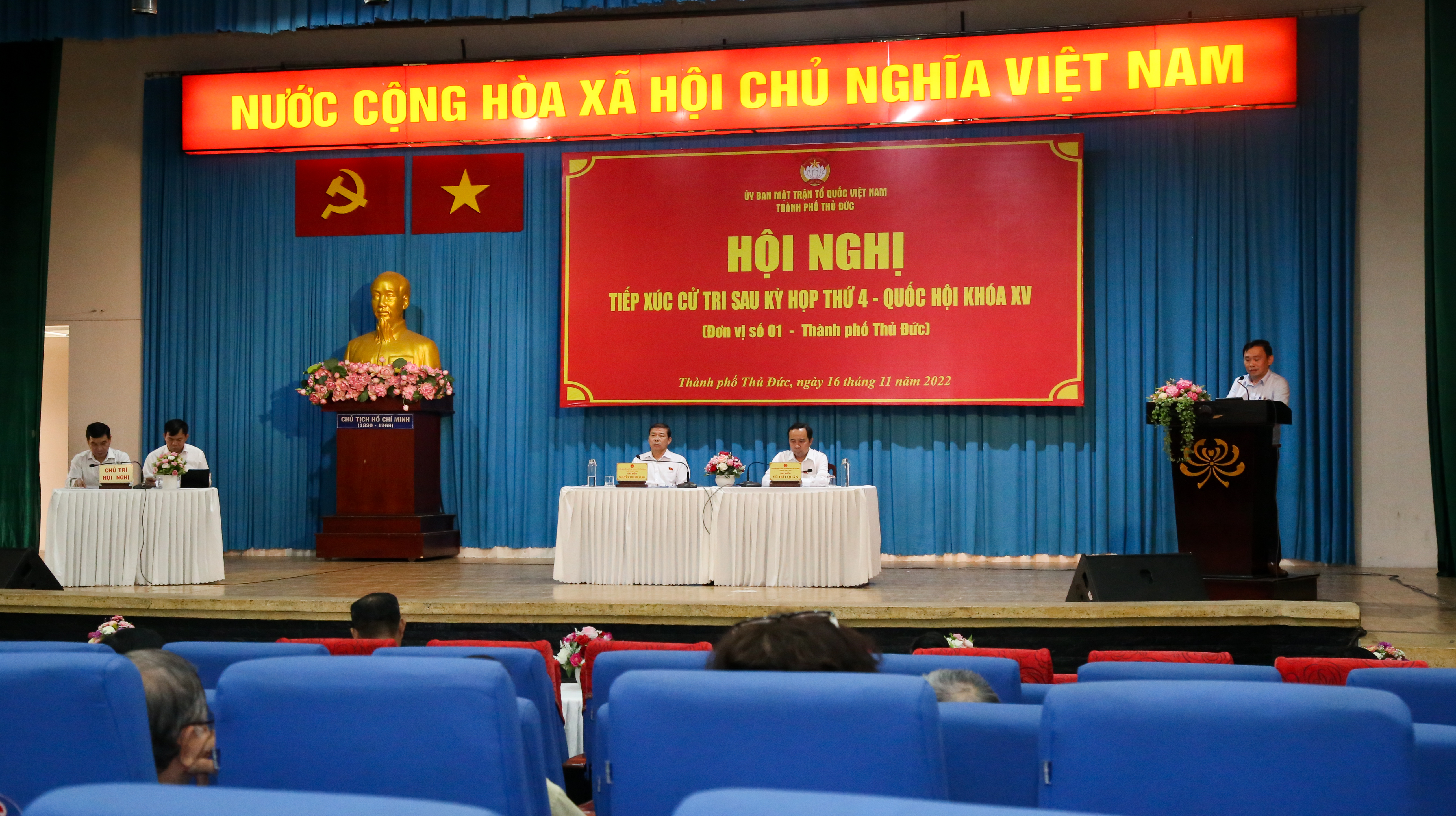
Đoàn đại biểu Quốc hội TP.HCM, đơn vị số 1 tiếp xúc cử tri TP Thủ Đức – Ảnh: THẢO LÊ

Sáng 16-11, Đoàn đại biểu Quốc hội TP.HCM đơn vị 1 gồm ông Vũ Hải Quân – giám đốc Đại học Quốc gia TP.HCM và ông Nguyễn Thanh Sang – phó viện trưởng Viện Kiểm sát nhân dân TP.HCM – đã tiếp xúc cử tri TP Thủ Đức. Đại biểu Nguyễn Anh Tuấn đã nhận công tác bí thư Tỉnh ủy Bắc Ninh nên không dự buổi tiếp xúc cử tri. 

Giáo viên nản vì lương thấp mà áp lực công việc quá cao 

Tiếp tục đọc “Áp lực Giáo viên: Ngày nằm viện hay nhà có tang, nghỉ dạy vẫn bị trừ điểm thi đua”

China Announces New ASEAN Belt & Road Initiative Projects Centered Around Cambodia

The Phnom Penh-Bavet Highway which will ultimately link the Cambodian and Vietnamese capital cities

aseanbriefing.com

The 2022 ASEAN summit took place at the Cambodian capital Phnom Penh, this past weekend, with China as an official guest. At the event, Chinese Premier Li Keqiang announced Beijing’s approval of Chinese investment in significant infrastructure projects in the ASEAN region.  

Among these is a US$1.6 billion expressway to be built from Phnom Penh to Bavet, at the Cambodian-Vietnamese border, and financial support for a rail link between Phnom Penh, Bangkok, and Vientiane, Laos, from which a high-speed rail link has already been constructed into China. 

Tiếp tục đọc “China Announces New ASEAN Belt & Road Initiative Projects Centered Around Cambodia”

EU and international partners launch ground-breaking partnership on just energy transition with Indonesia

ec.europe.eu

Today, the President of Indonesia, Joko Widodo, the President of the European Commission, Ursula von der Leyen , on behalf of the EU, and the leaders of the International Partners Group (IPG), which is jointly led by the United States and Japan and includes Canada, Denmark, France, Germany, Italy, Norway and the United Kingdom, launched a Just Energy Transition Partnership (JETP) with Indonesia . The launch takes place in connection with an event within the framework of the Partnership for Global Infrastructure and Investment (PGII) at the G20 summit, which takes place on 15-16 November 2022 in Bali.

In a joint statement , Indonesia and international partners have announced their commitment to meeting ground-breaking climate targets and related financing. This is done to support the Asian country in an ambitious and fair energy transition, which is in line with the goals of the Paris Agreement and which contributes to keeping the global warming limit of 1.5 °C within reach.

Tiếp tục đọc “EU and international partners launch ground-breaking partnership on just energy transition with Indonesia”

Perilous Pathogens: How Climate Change Is Increasing the Threat of Diseases

Climate change is creating many pathways for zoonotic diseases to reach people. Four cases show how the climate crisis is altering disease threats and how the world can respond.

cfr.org

Article by Claire Klobucista and Lindsay Maizland November 4, 2022 4:12 pm (EST)

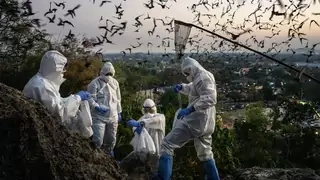
THAILAND: Infectious-disease researchers catch bats to study. Adam Dean/New York Times/Redux

The world is already witnessing the consequences of human-caused climate change, including hotter temperatures, rising sea levels, and more frequent and severe storms. What’s harder to see are climate change’s effects on the spread of disease: on the mosquito that carries a virus, or the pathogenic bacteria on a piece of fruit.

Tiếp tục đọc “Perilous Pathogens: How Climate Change Is Increasing the Threat of Diseases”

FIFA Women’s World Cup 2023: Vietnam to face defending champions USA

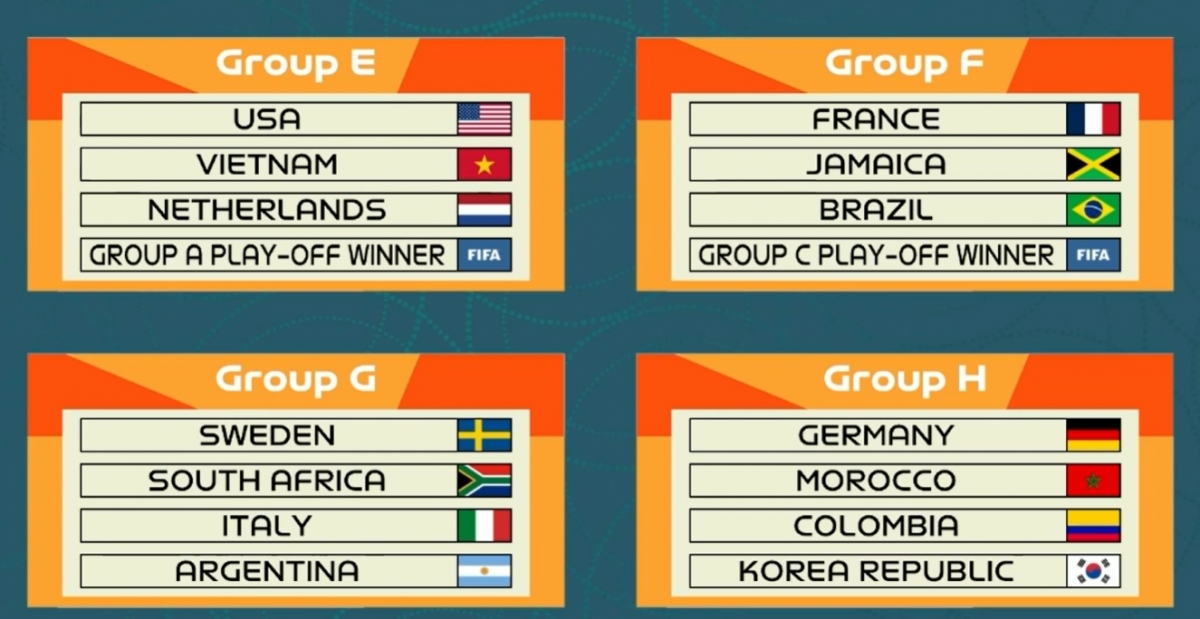
VOV.VN – Vietnam have been drawn in Group E alongside defending champions the United States, the Netherlands, and a playoff winner at the 2023 FIFA Women’s World Cup, as announced at the draw held in New Zealand on October 22.

vietnam to face defending champions usa at 2023 fifa women s world cup picture 1

This represents a huge challenge for Vietnam as the USA are four-time champions and they are currently placed at the top of the FIFA Women’s World Rankings.

Elsewhere, the Netherlands were the runners-up of the FIFA Women’s World Cup in 2019 and are now in eighth position in the global rankings.

The final Group E team could be either Thailand, Cameroon, or Portugal, and the name will be announced after a play-off match in February, 2023.

Group E matches will take place in New Zealand from July 22 to August 1 next year.

Vietnam are scheduled to take on the USA on July 22, the play-off winner on July 27 and the Netherlands on August 1.

The 2023 FIFA Women’s World Cup is the ninth edition of the global tournament, the quadrennial world championship for women’s national football teams organised by FIFA.

The 2023 tournament will be jointly hosted by Australia and New Zealand from July 20 to August 20, 2023. This is the first time that the FIFA Women’s World Cup will have two host nations and 32 teams to vie for the trophy instead of 24 as previously.

This is the first time that Vietnam have progressed to the finals of the international tournament.

Kiến nghị xây dựng Luật đạo đức – Viện trưởng Viện Kiểm Soát Nhân Dân Tối cao

(PLO)- Xây dựng Luật đạo đức là để giáo dục mọi người nhận thức được danh dự là điều thiêng liêng nhất trong đời người, nhằm góp phần tốt hơn trong phòng ngừa vi phạm, tội phạm.

Báo cáo của Chính phủ, các cơ quan tư pháp gửi Quốc hội (QH) cho thấy có tình trạng móc nối, tiếp tay của cán bộ, công chức, viên chức nhà nước đối với doanh nghiệp để trục lợi.

Tội phạm tham nhũng, chức vụ tăng 37,6%

Mới đây, thừa ủy quyền của Thủ tướng, Tổng thanh tra Chính phủ Đoàn Hồng Phong đã ký báo cáo gửi QH về công tác phòng chống tham nhũng năm 2022. Đáng chú ý, báo cáo của Chính phủ cho hay hoạt động phòng chống tham nhũng, tiêu cực (PCTNTC) đã từng bước được mở rộng ra khu vực ngoài Nhà nước.

Theo Chính phủ, Ủy ban Chứng khoán Nhà nước đã triển khai 25 đoàn thanh kiểm tra định kỳ và 40 đoàn kiểm tra đột xuất về hoạt động chào bán, mua lại cổ phiếu, bán cổ phiếu quỹ, chào mua công khai, việc thực hiện nghĩa vụ của công ty đại chúng, tổ chức niêm yết… cũng như việc tuân thủ quy định pháp luật chứng khoán đối với các công ty đại chúng, công ty chứng khoán, công ty quản lý quỹ.

Cơ quan CSĐT Bộ Công an đã khởi tố vụ án thao túng thị trường chứng khoán xảy ra tại Tập đoàn FLC, Công ty cổ phần Chứng khoán BOS và các công ty có liên quan; khởi tố vụ án lừa đảo chiếm đoạt tài sản xảy ra tại Tập đoàn Tân Hoàng Minh và các tổ chức, đơn vị có liên quan…

Dù vậy, Chính phủ nhận định: “Tình trạng móc nối, tiếp tay của cán bộ, công chức, viên chức nhà nước đối với doanh nghiệp để trục lợi, chiếm đoạt tài sản của Nhà nước còn diễn ra ở một số lĩnh vực”.

Tiếp tục đọc “Kiến nghị xây dựng Luật đạo đức – Viện trưởng Viện Kiểm Soát Nhân Dân Tối cao”

The rise of arbitration in the Asia-Pacific

globalarbitrationreview.com

In summary

Arbitral hubs and institutions in Asia have reached new heights in terms of their growth and popularity, achieving stellar global rankings and an ever-growing number of case filings. Arbitration’s popularity in Asia has been augmented by the generally pro-arbitration stance taken by the countries in the region. This chapter examines recent developments in Singapore and other parts of Asia, tracking the continued growth and overall maturation of Asia’s arbitration scene.


Discussion points

  • The growing profile of the arbitral seats and institutions in Asia
  • Steps taken by arbitral institutions to enhance and update their rules to compete with other international arbitral institutions
  • Pro-arbitration stance of jurisdictions across the region, including support for the arbitral process and the enforcement of arbitral awards

Referenced in this article

  • Bloomberry Resorts and Hotels Inc and another v Global Gaming Philippines LLC and another ([2021] SGCA 9)
  • CAJ and another v CAI and another appeal ([2021] SGCA 102)
  • CKG v CKH ([2021] SGHC(I) 5)
  • CNX v CNY ([2022] SGHC 53)
  • National Oilwell Varco Norway AS (formerly known as Hydralift AS) v Keppel FELS Ltd (formerly known as Far East Levingston Shipbuilding Ltd) ([2022] SGCA 24)
  • Phoenixfin Pte Ltd and others v Convexity Ltd ([2022] SGCA 17)
  • The ‘Navios Koyo’ ([2021] SGCA 99)
  • Westbridge Ventures II Investment Holdings v Anupam Mittal ([2021] SGHC 244)

Arbitral hubs and institutions in Asia have reached new heights in terms of their growth and popularity. In the 2021 Queen Mary University of London and White & Case International Arbitration Survey (the QMUL Survey),[1] Singapore and Hong Kong ranked first and third respectively as the most popular arbitral seats in the world. This marks a first for Singapore, and it shares its position with London – a global powerhouse in the field. Singapore was also named the most preferred seat in the Asia-Pacific, and, along with Hong Kong, ranked in the top-five most preferred seats in all regions.

Tiếp tục đọc “The rise of arbitration in the Asia-Pacific”

Nỗi lo thiếu nước của Sài Gòn

vnexpress.net

TP HCM chỉ có thể cầm cự không quá một ngày nếu mất nước, bởi đô thị 10 triệu dân chưa có đủ nguồn dự phòng trong tình huống khẩn nguy.

Năm 1975, dân số TP HCM khoảng 3 triệu người. 47 năm sau, số người sinh sống tại thành phố là gần 10 triệu, chưa tính khách vãng lai. Để đáp ứng nhu cầu người dân và phát triển kinh tế của đô thị lớn nhất nước, hơn 4 thập niên qua, ngành cấp nước thành phố liên tục tăng công suất, từ 450.000 m3 lên 2,4 triệu m3 – hơn gấp 5 lần.

https://flo.uri.sh/visualisation/10730503/embed?auto=1Công suất cấp nước 47 năm qua tăng hơn gấp 5 lần.

Thống kê thời gian gần đây cứ 5 năm, thành phố lại tăng một triệu người. Nếu tính mỗi người cần trung bình 200 lít nước một ngày, đô thị lớn nhất Việt Nam sẽ tiêu thụ thêm 365 triệu m3 nước mỗi năm – bằng gần 1/4 dung tích hồ Dầu Tiếng (1,5 tỷ m3). Đó là chưa kể nhu cầu về nước cho các hoạt động sản xuất, dịch vụ còn cao hơn nhiều so với nước sinh hoạt.

Tiếp tục đọc “Nỗi lo thiếu nước của Sài Gòn”

EU warns of pesticide residues found in Vietnamese agricultural products

nongnghiep.vn

(VAN) The EU has warned that bitter leaves and some other agricultural products exported from Vietnam have exceeded the maximum residue level of many active ingredients and banned substances.

According to the Vietnam Sanitary and Phytosanitary Notification Authorities and Enquiry Point (SPS Vietnam Office), RASFF – Rapid Alert System for Food and Feed of the European Union (EU) has just sent a warning notice, stating that the product of frozen ground bitter leaves of An Van Co., Ltd. Thinh (Address: 60 Ly Thuong Kiet, Ward 1, Bao Loc City, Lam Dong Province) was found to have exceeded the maximum residue level (MRL) of many active ingredients and banned substances.

The product of frozen ground bitter leaves receives warning from the EU.

In which, some active ingredients have high residue levels such as: Thiamethoxam (54 mg/kg); Tebuconazole (26 mg/kg); Propiconazole (34 mg/kg); Diniconazole (86 mg/kg).

The country issuing the notification is the Netherlands, which has notified the consignee. Finland has initiated the recall of the product.

In addition to frozen ground bitter leaves, Vietnam has also received warning on tea exported to Hong Kong. This product contains three banned substances and pesticide residues exceeding EU regulations, including: Chlorfluazuron (0.11 mg/kg); Imidacloprid (0.15 mg/kg) and Chlorpyrifos (0.043 mg/kg).

Being the focal point for transparent information about SPS measures and regulations to WTO members, the Vietnam SPS Office has notified this issue to the Plant Protection Department and related units.

Tiếp tục đọc “EU warns of pesticide residues found in Vietnamese agricultural products”

Russia bans 45 foreign-owned banks or banking units from selling their shares

Logo of Swiss bank Credit Suisse is seen in Zurich

[1/3] The logo of Swiss bank Credit Suisse is seen at its headquarters in Zurich, Switzerland October 4, 2022. REUTERS/Arnd Wiegmann

  • This content was produced in Russia where the law restricts coverage of Russian military operations in Ukraine

MOSCOW, Oct 26 (Reuters) – Russia on Wednesday banned dealings in the shares or share capital of 45 banks or banking units, all either owned by parties in countries that Russia terms “unfriendly” or owned through foreign capital.

Western countries and allies, including Japan, have piled financial restrictions on Russia since it sent troops into Ukraine in late February. Moscow retaliated with obstacles for Western businesses and their allies leaving Russia, and in some cases seized their assets.

The list followed a decree issued on Aug. 5 by President Vladimir Putin banning dealings in stakes in the financial and energy sectors owned by parties in “unfriendly” countries unless specific permission was given. read more read more

The list, published on Wednesday, included Russian units of Intesa (ISP.MI), Credit Suisse (CSGN.S), Raiffeisen (RBIV.VI), Citi (C.N), OTP bank <OTPB.BU> and UniCredit Bank (CRDI.MI), as well as the Russian Yandex-Bank and Ozon-Bank.

Citi, the largest Wall Street bank to have a presence in Russia with an exposure of $8 billion, plans to wind down nearly all of the institutional banking services as it is unable to sell the business amid the recent sanctions-related laws. read more read more read more

Xinjiang exports to US dip in September but still higher year on year despite forced labour law

Machinery and mechanical equipment top category of products shipped from region, whose month-on-month decline aligns with weakening in Chinese exportsUS customs chief insists ‘seeing good examples of compliance so far’ with recently implemented Uygur Forced Labour Prevention Act

Published: 2:00am, 25 Oct, 2022

Xinjiang’s exports to the United States dropped in September after soaring for two consecutive months, but were still nearly three times as high as the same month last year, according to the latest Chinese customs data – despite a Washington law that seeks to ban goods from the far-west region of China due to forced labour allegations.

The shipments from Xinjiang to the US have appeared to continue even as officials from the US customs agency insist that they have been effectively enforcing the Uygur Forced Labour Prevention Act, which kicked in on June 21.

Companies from the Xinjiang Uygur autonomous region in September exported US$21.05 million worth of goods to the US, slashed by more than half compared with the figure for August, but more than double the tally in June, trade data showed.

The month-on-month decline of Xinjiang exports to the US was in line with the overall weakening of Chinese exports.

https://multimedia.scmp.com/widgets/graphicsEmbeds/charts2/chart/?id=CHG2022092115_columnN2UB

Tiếp tục đọc “Xinjiang exports to US dip in September but still higher year on year despite forced labour law”