Cancer burden in Vietnam: Avoidable consequences, preventable illness

Tuoi Tre News

Updated : 12/17/2015 07:55 GMT + 7

Death and the detrimental effects of cancer, which is itself a preventable disease, can be avoided by early detection and proper treatment.

>> Cancer burden in Vietnam: P2 – The culprits
>> Cancer burden in Vietnam – P1: Liabilities

tuoitrenews – Contrary to popular belief that a diagnosis of cancer means a death penalty, experts have asserted otherwise.

The cancer burden would be significantly eased by adopting a comprehensive preventative model, made possible with competent agencies’ effective administrative role and improved awareness.

Dr. Nguyen Chan Hung, chair of the Cancer Association of Vietnam, warned that diets rich in animal fat and meat, tainted food, dried salty fish or pickled vegetables, or insufficient vegetables and fruits are among the contributory factors of different types of cancer.

Those who smoke or drink heavily, and lead a sedentary lifestyle, also stand higher risks of contracting the illness.

According to Dr. Tran Thi Anh Tuong, vice head of the Nutrition Department of Ho Chi Minh City Oncology Hospital, all cancers start because abnormal cells grow out of control.

Cancerous cell growth is different from normal cell growth.

Instead of dying, cancerous cells continue to grow and form new, abnormal cells.

Cancer cells can also invade, or grow into, other tissues, something that normal cells cannot do.

Except for some unavoidable factors including genetic elements and old age, other causes are preventable thanks to a healthy lifestyle and adequate knowledge of the disease.

Early diagnosis saves lives, cuts costs

Dr. Mai Trong Khoa, deputy director of Bach Mai Hospital in Hanoi and director of the Nuclear Medicine and Oncology Center, told Tuoi Tre (Youth) newspaper earlier this month that approximately 100,000 out of 125,000 new cancer patients in Vietnam die of the illness each year.

New cancer cases have gone up especially fast recently, while the mortality rate has also been on the rise. Tiếp tục đọc “Cancer burden in Vietnam: Avoidable consequences, preventable illness”
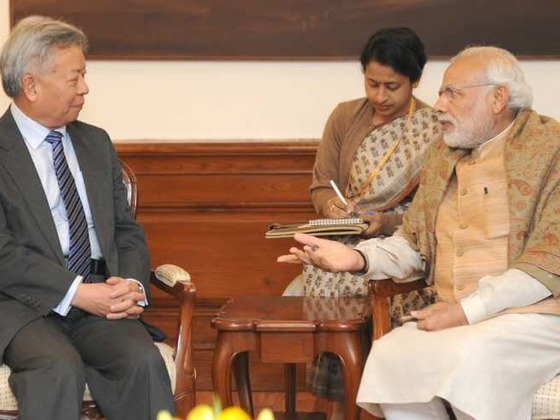
Pressure mounts on AIIB for greater clarity on green lending


The Problem with Biofuels

The U.S. Navy is touting its “Great Green Fleet,” but why haven’t biofuels made a bigger splash despite a decade of hype and investment?

technologyreview – Last week the U.S. Navy, with its accustomed pomp and fanfare, launched its first carrier strike group powered partly by biofuel—in this case, a blend made primarily from beef fat. The biofueled warships form a central element of the Navy’s Great Green Fleet program to draw half of its power from clean energy sources, rather than petroleum, by 2020.

Attended by secretary of the Navy Ray Mabus and agriculture secretary Tom Vilsack, the ceremony masked what has been nearly a decade of problems for biofuels—an energy source once touted as capable of virtually eliminating the use of petroleum in the transportation sector. Today biofuels production and consumption stand at a fraction of the levels foreseen under the Renewable Fuel Standard, a federal mandate signed by President George W. Bush that requires fuels made from corn, sugarcane, and other biological sources to be mixed into the nation’s gasoline supply. Tiếp tục đọc “The Problem with Biofuels”

Is 3-D Printing the Key to Cheap Carbon-Fiber Parts?

Technologyreview – Someday, carbon fiber might live up to its hype and make all of our cars and airplanes more lightweight and efficient. Today, though, parts made of the material are very expensive, and are used mainly in race cars, high-end sports cars, and new jetliners. Some entrepreneurs are now betting that the key to making carbon-fiber parts much cheaper and more widely used is 3-D printing technology.

The three objects, made by MarkForged, show different points in the printing process. The finished part is a component of a race car spoiler.
The Mark One printer lays down polymer and carbon fiber layers.

The benefits of carbon fiber are so great—parts made of it can be as strong as aluminum ones while weighing less—that “anyone who can afford it” is already using it in aerospace and automotive applications, says Greg Mark, CEO and founder of the Cambridge, Massachusetts-based startup MarkForged. But it’s too expensive for the mainstream, and a big reason for that is the way it’s made: a complicated, labor- and time-intensive process with many steps that must be done by hand (see “Where’s the Affordable Carbon-Fiber Automobile?”). Mark says the new process his company has developed is as simple as designing the part on the computer, pushing a button, and retrieving the part several hours later.

Top: An automotive cold air intake made by Impossible Objects.
Bottom: A drone propeller made via the process Impossible Objects has developed.

The ability to print carbon-fiber parts will make 3-D printing much more useful for many industries, according to Robert Swartz, chairman, founder, and chief technology officer for Chicago-based startup Impossible Objects. Most of the plastic parts made using existing 3-D printing technologies don’t perform well enough to be used, say, in a drone. “There’s a real need for functionality,” says Swartz, and that requires better materials. Tiếp tục đọc “Is 3-D Printing the Key to Cheap Carbon-Fiber Parts?”

Cybersecurity: The Age of the Megabreach

We haven’t stopped huge breaches. The focus now is on resilience, with smarter ways to detect attacks and faster ways to respond to them.

Technologyreview – In November 2014, an especially chilling cyberattack shook the corporate world—something that went far beyond garden-variety theft of credit card numbers from a big-box store. Hackers, having explored the internal servers of Sony Pictures Entertainment, captured internal financial reports, top executives’ embarrassing e-mails, private employee health data, and even unreleased movies and scripts and dumped them on the open Web. The offenders were said by U.S. law enforcement to be working at the behest of the North Korean regime, offended by a farcical movie the company had made in which a TV producer is caught up in a scheme to kill the country’s dictator.

Cyber Survival
With cyberattacks getting worse, the urgent need today is for faster responses, smarter technologies, and wider encryption.

The results showed how profoundly flat-footed this major corporation was. The hack had been going on for months without being detected. Data vital to the company’s business was not encrypted. The standard defensive technologies had not worked against what was presumed to have been a “phishing” attack in which an employee clicked a link that downloaded powerful malware. Taken together, all this showed that many of today’s technologies are not adequate, that attacks can now be more aggressive than ever, and that once breaches occur, they are made worse by slow responses. Tiếp tục đọc “Cybersecurity: The Age of the Megabreach”

Who’s afraid of cheap oil?

Low energy prices ought to be a shot in the arm for the economy. Think again Jan 23rd 2016 | From the print edition Timekeeper

economist – ALONG with bank runs and market crashes, oil shocks have rare power to set monsters loose. Starting with the Arab oil embargo of 1973, people have learnt that sudden surges in the price of oil cause economic havoc. Conversely, when the price slumps because of a glut, as in 1986, it has done the world a power of good. The rule of thumb is that a 10% fall in oil prices boosts growth by 0.1-0.5 percentage points.

In the past 18 months the price has fallen by 75%, from $110 a barrel to below $27. Yet this time the benefits are less certain. Although consumers have gained, producers are suffering grievously. The effects are spilling into financial markets, and could yet depress consumer confidence. Perhaps the benefits of such ultra-cheap oil still outweigh the costs, but markets have fallen so far so fast that even this is no longer clear.

The new economics of oil

The world is drowning in oil. Saudi Arabia is pumping at almost full tilt. It is widely thought that the Saudis want to drive out higher-cost producers from the industry, including some of the fracking firms that have boosted oil output in the United States from 5m barrels a day (b/d) in 2008 to over 9m b/d now. Saudi Arabia will also be prepared to suffer a lot of pain to thwart Iran, its bitter rival, which this week was poised to rejoin oil markets as nuclear sanctions were lifted, with potential output of 3m-4m b/d. Tiếp tục đọc “Who’s afraid of cheap oil?”

IFC finances Canadian Solar Vietnam, Brazil fab projects to tune of $70m

Canadian Solar CEO Shawn Qu welcomed the partnership with the IFC: "With IFC's commitment, we are able to expand our production capacity to meet the increasing demand for solar energy worldwide."

Canadian Solar CEO Shawn Qu welcomed the partnership with the IFC: “With IFC’s commitment, we are able to expand our production capacity to meet the increasing demand for solar energy worldwide.”

pv-magazine: The International Finance Corporation (IFC) has entered into an agreement with Chinese Tier-1 solar power company Canadian Solar to deliver a finance package worth $70 million to aid the company’s overseas expansion plans.

The terms of the deal include a $60 million loan and a $10 million subscription in Canadian Solar common shares. Tiếp tục đọc “IFC finances Canadian Solar Vietnam, Brazil fab projects to tune of $70m”

How Can We Create a World Where Plastic Never Becomes Waste?

01/23/2016 09:00 am ET | Updated 4 days ago

Christophe Launay via Getty Images

huffingtonpost -Today nearly everyone, everywhere, every day, comes into contact with plastics. Plastics have become the ubiquitous workhorse material of the modern economy — combining unrivalled functional properties with low cost. And yet, while delivering many benefits, the current plastics economy has drawbacks that are becoming more apparent by the day.

Significant economic value is lost after each use, along with wide-ranging negative impacts to natural systems. How can we turn the challenges of our current plastics economy into a global opportunity for innovation and value capture, resulting in stronger economies and better environmental outcomes? Tiếp tục đọc “How Can We Create a World Where Plastic Never Becomes Waste?”

In a world with no antibiotics, how did doctors treat infections?

Theconversation – The development of antibiotics and other antimicrobial therapies is arguably the greatest achievement of modern medicine. However, overuse and misuse of antimicrobial therapy predictably leads to resistance in microorganisms. Antibiotic-resistant bacteria such as methicillin-resistant Staphylococcus aureus (MRSA), vancomycin-resistant Enterococcus species (VRE) and carbapenem-resistant Enterobacteriaceae (CRE) have emerged. Certain CRE species are resistant to multiple antibiotics, and have been deemed “superbugs” in the news.

Alternative therapies have been used to treat infections since antiquity, but none are as reliably safe and effective as modern antimicrobial therapy.

Unfortunately, due to increasing resistance and lack of development of new agents, the possibility of a return to the pre-antimicrobial era may become a reality.

So how were infections treated before antimicrobials were developed in the early 20th century?

Blood, leeches and knives

Bloodletting was used as a medical therapy for over 3,000 years. It originated in Egypt in 1000 B.C. and was used until the middle of the 20th century.

Medical texts from antiquity all the way up until 1940s recommend bloodletting for a wide variety of conditions, but particularly for infections. As late as 1942, William Osler’s 14th edition of Principles and Practice of Medicine, historically the preeminent textbook of internal medicine, included bloodletting as a treatment for pneumonia. Tiếp tục đọc “In a world with no antibiotics, how did doctors treat infections?”

Vietnam Plans Move Away From Coal

January 28th, 2016 by

cleantecnica – Vietnam Prime Minister Nguyen Tan Dung has announced his government’s intention to “review development plans of all new coal plants and halt any new coal power development.”

Vietnam prime minister

Nguyễn Tấn Dũng, Prime Minister of Vietnam

According to Solarplaza, the Premier stated that Vietnam needs to “responsibly implement all international commitments in cutting down greenhouse gas emissions; and to accelerate investment in renewable energy.”

The announcement comes in advance of the Solar PV Trade Mission, scheduled April 18 – 22 in Hanoi and Bangkok. It is hoped the trade missions will assemble diverse high-level delegations of stakeholders from around the world into emerging markets to jointly explore and create business development opportunities.
Tiếp tục đọc “Vietnam Plans Move Away From Coal”

Why Google Quit China—and Why It’s Heading Back

When American Internet companies do business abroad, they are sometimes forced to do a repressive government’s dirty work.

theatlantic – When Google shut down its Chinese search engine in 2010, it gave up access to an enormous market. There are more than twice as many people on the Internet in China as there are residents in the U.S., and the number of Chinese Internet users is growing at a rate that far surpasses that of any other country. Google has plans to return to China in the near future, but why did it turn away from the country for so long?

Censorship is why. Google effectively shut down its Chinese operations after it discovered a cyberattack from within the country that targeted it and dozens of other companies. And while investigating the attack, Google found that the Gmail accounts of a number of Chinese human-rights activists had been hacked.

Google had set up shop in China four years before the breach, offering a version of its services that conformed to the government’s oppressive censorship policies. At the time, Google officials said they’d decided that the most ethical option was to offer some services—albeit restricted by China’s censors—to the enormous Chinese market, rather than leave millions of Internet users with limited access to information.

 But the 2010 attacks prompted the company to reverse course. Instead of complying with government requests to filter its search results, Google directed all of its Chinese traffic to the uncensored Hong Kong version of its search engine, a move that left the company vulnerable to being completely shut down in China. Indeed, Google’s services became inaccessible to most Chinese users within months.
Tiếp tục đọc “Why Google Quit China—and Why It’s Heading Back”

2015 Was the Warmest Year on Record, and It Wasn’t Even Close

Warming oceans and a sharp rise in air temperatures show that climate change is in full effect – and may be outstripping predictions.

By Michael Reilly on January 20, 2016

technologyreview – The numbers are in, and they are unforgiving: 2015 was the hottest year on record, and it wasn’t even close. The announcement was expected—scientists monitoring global temperatures predicted before the end of the year that 2015 would set a record for warmth, in part because of the massive El Niño event currently under way in the Pacific Ocean. But the data released today confirm that human-induced global warming is pushing temperatures higher at an alarming rate: 2014 was the previous record holder for global average surface temperature, clocking in at 0.57 °C above the 1960 to 1990 average, but last year was 0.75 °C above that average.

If that doesn’t sound like a big jump, consider that the agreement reached at the U.N. climate summit in Paris last year aims to limit warming to 2 °C above preindustrial levels. The good news is that the agreement represents the first global effort to try to curtail greenhouse-gas emissions. The bad news is we’re already half way to that 2 °C target. Worse, the figures released today could be underestimates, and even if the Paris agreement is upheld we could be headed for much more warming, unless we get even more ambitious in our emissions targets.

(Source: New York Times, Guardian, New Scientist)

2016 will be even hotter than 2015 – the hottest year ever

2015 Was Hottest Year in Historical Record, Scientists Say

2015 smashes record for hottest year, final figures confirm


Why I put 400 condoms in the kitchen drawer for my sons

As a youth worker, Amy Barwise is used to dealing with pregnancies and sexually transmitted infections, but after a week of revelations at home and work she decided safer was better than sorry

The doctor told me that teens are most likely to have sex after school before their parents get home from work. Photograph: Graeme Robertson for the Guardian

theguardian – An hour before the kids get home from school on Friday, I check the kitchen drawer where I’ve left about 400 condoms for the boys. It’s virtually empty. Clearly it’s been a busy week on the sexual front in my small house. Nothing to do with me and I’ve been in all week, so I know there’s been no action within these four walls.

I make a cup of tea and mull it over. It’s been a hectic week.

Last Friday, the landline rang. As it usually means it’s someone over 40 calling, nobody else answers, so I do. But it was my son Ben’s best mate; sunny, chatty Danny. He sounded like he was a million miles away. He asked if Ben was in and when I said yes, he explained he needed to talk to him and was coming straight over. And he was gone.

I told Ben, who looked shifty. Nothing unusual in that.

I guessed the call had something to do with last Saturday’s sleepover at another friend’s house. Danny had siphoned off the top inch of spirits from his parents’ collection and mixed them into such a lethal cocktail that he was hospitalised and his dad was called. Tiếp tục đọc “Why I put 400 condoms in the kitchen drawer for my sons”

This Buddhist Monk Is An Unsung Hero In The World’s Climate Fight

 01/22/2016 04:04 pm ET
  • Jo ConfinoExecutive Editor, Impact & Innovation, The Huffington Post

The architect of the historic Paris climate negotiations credits the teachings of Thich Nhat Hanh with helping broker the deal.

huffingtonpost – DAVOS, SWITZERLAND — One of the guiding forces behind the scenes of theParis climate agreement is an 89-year-old Vietnamese Zen Buddhist monk.

Christiana Figueres, who led the climate talks, has credited Thich Nhat Hanh with having played a pivotal role in helping her to develop the strength, wisdom and compassion needed to forge the unprecedented deal backed by 196 countries.

Figueres, the executive secretary of the United Nations Framework Convention on Climate Change, says the teachings of Thay, as he is known to his hundreds of thousands of followers around the world, “literally fell into my lap” when she was going through a deep personal crisis three years ago.

She says the Buddhist philosophy of Thay, who is currently recovering from a serious stroke, helped her to deal with the crisis while also allowing her to maintain her focus on the climate talks.

CYRUS MCCRIMMON VIA GETTY IMAGES
Vietnamese Buddhist monk Thich Nhat Hanh.

Figueres said she realized that “I have to have something here, because otherwise I can’t deal with this and do my job, and it was very clear to me that there was no way that I could take a single day off,” she told The Huffington Post this week at the World Economic Forum’s annual meeting in Davos, Switzerland.

“This has been a six-year marathon with no rest in between,” she said. “I just really needed something to buttress me, and I don’t think that I would have had the inner stamina, the depth of optimism, the depth of commitment, the depth of the inspiration if I had not been accompanied by the teachings of Thich Nhat Hanh.” Tiếp tục đọc “This Buddhist Monk Is An Unsung Hero In The World’s Climate Fight”