Mekong nations take on Golden Triangle narco-empire

By Andrew R.C. Marshall   March 20, 2016 | 03:26 pm GMT+7

Mekong nations take on Golden Triangle narco-empire

A Thai soldier stands guard at Ban Kaen Kai operation base on the Mekong river at the border between Thailand and Laos March 3, 2016. Patrols on the Mekong River by the Laotian army and Myanmar police have subdued pirates who once robbed cargo ships with impunity. But drug production and trafficking in the region, known as the Golden Triangle, is booming – despite the presence of Chinese gunboats and Chinese armed police. The United Nations Office on Drugs and Crime estimates that Southeast Asia’s trade in heroin and methamphetamine was worth $31 billion in 2013. REUTERS/Jorge Silva

“Golden Triangle” is source of most of drugs reaching China

THE MEKONG RIVER – The Lao People’s Army patrol boat was custom-made in China with night-vision capability and two of the most powerful engines on this remote stretch of the Mekong River.

Today, like most days, it sits idle for lack of gasoline, guarded by a single Laotian soldier in flip-flops.

Tiếp tục đọc “Mekong nations take on Golden Triangle narco-empire”

Learning With Documentary Films: Strategies to Engage Students

Documentaries and film can bring the world to students in very real ways. Cleary Vaughan-Lee, Education Director for Global Oneness Project, tells us how and shares resources and strategies. And join Cleary and me on Twitter this Thursday, October 29 at 8pmET/5pmPT for #GlobalEdChat! We will delve deeper into how to use film in the classroom.

edweek Why do we need stories? Stories are universal and create connections across time, place, and cultures. Now more than ever, we need stories to help us understand and connect to our fast-changing world. Impactful stories—a book, a film, or an oral story passed down from generations—have the power to bring us closer to something much greater than ourselves. Tiếp tục đọc “Learning With Documentary Films: Strategies to Engage Students”

Here Come the Unregulated GMOs

technologyreview – People are arguing about whether genetically modified foods should carry labels. But the next generation of GMOs might not only be unlabeled—they might be unregulated.

Over at Scientific American you can read a 6,000-word story about how one such organism, a GM mushroom, was created. The short version is that a plant scientist named Yinong Yang used the gene-editing technique called CRISPR to snip out a few DNA letters in the genome of “Agaricus bisporus, the most popular dinner-table mushroom in the Western world.”
The result: he turned off an enzyme that turns mushrooms brown.

Why wouldn’t a modified mushroom be regulated, you ask? Because regulation of GMOs is a big mess that doesn’t make too much sense. Back in the 1990s, when Monsanto and the like were first coming out with biotech crops, the U.S. cobbled together a way to regulate them from existing rules. Tiếp tục đọc “Here Come the Unregulated GMOs”

Situation of women journalists in Asia-Pacific, 20 years after the Beijing Declaration

Date: 23 June 2015

PRESS RELEASE

asiapacific.unwomen – Bangkok, Thailand – There are more women media professionals than ever in many countries across Asia-Pacific, but they still represent only three out of 10 newsroom staff, often earn less than their male counterparts and are subject to sexual harassment, while struggling to reach decision-making positions.

Participants during the launch. Photo: Lance Woodruff

These are some of the findings in “Inside the News: Challenges and Aspirations of Women Journalists in Asia and the Pacific”, a study launched yesterday by UNESCO, UN Women and the International Federation of Journalists (IFJ) at the Foreign Correspondents’ Club of Thailand.

“Inside the News” highlights how issues of gender impact the lives and work of journalists in the region, with case studies drawn from the personal accounts of media professionals in Cambodia, India, Malaysia, Nepal, Pakistan, Sri Lanka and Vanuatu.

Vietnam: Climate change, dams will drastically impact Mekong region

Asiancorrespondent – THE millions of people who depend on the Mekong River for survival are at risk due to the twin threats of climate change and hydroelectric power plants. While the latter is often seen as part of the solution to the former, in this case hydroelectricity may, in fact, be a more urgent threat. Tiếp tục đọc “Vietnam: Climate change, dams will drastically impact Mekong region”

Dams upriver exacerbate drought in Mekong Delta

Update: March, 10/2016 – 09:14

Experts at the conference rejected study results that claimed the 11 hydropower dams in the Mekong River had little impact on Viet Nam and millions of people downstream. — VNA/VNS Photo Duy Khuong

vietnamnews – CẦN THƠ (VNS) — Aside from natural forces like climate change, countries’ actions have worsened the drought and salinity in Việt Nam’s Mekong Delta. Tiếp tục đọc “Dams upriver exacerbate drought in Mekong Delta”

Asian LNG Demand: Key Drivers and Outlook

Oxfordenergy

The LNG Industry has long regarded the Asian markets of Japan, South Korea, Taiwan, China and India as high growth importing markets, willing to sign long term contracts with price terms linked to crude oil prices.  The rebound in Asian LNG demand in 2010, following the post-financial crisis year of 2009, re-affirmed this paradigm with LNG markets further tightening following the Fukushima tragedy. The signal for new LNG supply projects could not have been clearer in 2010 and 2011.

While the LNG supply projects triggered by such high demand growth and price signals were being constructed however, Asian demand for LNG began to wane.  This appeared to be partly a consequence of mild winters but also LNG import prices and a general regional economic slowdown, perhaps led by China, also contributed.  This paper seeks to provide a ‘ground level’ understanding of the existing, emerging and potential Asian LNG markets and highlights data sources from in-country government departments, often overlooked from a European or North American perspective.

The picture presented in this paper is one of LNG having to shed its mantle of a premium fuel whose import price is linked to that of oil and ‘re-market’ itself as fuel which can contribute to a lower carbon future, by displacing coal in national energy mixes, and equally importantly reducing particulate emissions. This however calls for a radical renaissance in marketing by upstream LNG producers and strenuous efforts in cost reduction through competition in the liquefaction equipment sector.

The paper provides a framework for analysing and monitoring these markets which, if not currently deemed to offer the high levels of future LNG demand anticipated from the standpoint of the early 2010s, will nevertheless constitute a key element of the global LNG balance for the foreseeable future. As such they will significantly impact the fundamentals and pricing dynamics of the increasingly ‘connected’ global regional gas markets.

Executive Summary

RCEP – a life raft for trade liberalization in Asia

REGIONAL COOPERATION, TRADE

By . Posted APRIL 21, 2016

RCEP - a life raft for trade liberalization in Asia

asiapathway – There seems to be a pushback against trade agreements in the post global financial crisis era. The Trans-Pacific Partnership (TPP) was signed in early 2016, but US presidential candidates have spared no effort criticizing it so near-term ratification is highly uncertain. The WTO Doha Round is in the deep freeze after 14 years of negotiations. Unilateral trade liberalization has virtually come to a standstill. Tiếp tục đọc “RCEP – a life raft for trade liberalization in Asia”

The science of happiness can trump GDP as a guide for policy

theconversation – For centuries, happiness was exclusively a concern of the humanities; a matter for philosophers, novelists and artists. In the past five decades, however, it has moved into the domain of science and given us a substantial body of research. This wellspring of knowledge now offers us an enticing opportunity: to consider happiness as the leading measure of well-being, supplanting the current favourite, real gross domestic product per capita, or GDP.

In the social sciences, data on individuals’ happiness are obtained from nationally representative surveys in which a question such as the following is asked:

Taken all together, how would you say things are these days, would you say that you are very happy, pretty happy, or not too happy?

There are many variants of this question. Instead of happiness, the question may be about your overall satisfaction with life, you might be asked to place yourself on a “ladder of life”. The common objective is to deliver an evaluation of the respondent’s life at the time of the survey. We can use the term “happiness” as a convenient proxy for this set of measures. Tiếp tục đọc “The science of happiness can trump GDP as a guide for policy”

Where are the world’s tax havens, and what are they used for?

Mossack Fonseca law firm sign is pictured in Panama City, April 4, 2016.

The Panama Papers have exposed the world of offshore secrecy
Image: REUTERS/Carlos Jasso
Written by
Rosamond Hutt, Senior Producer, Formative Content
Published
Tuesday 12 April 2016

weforum – The incident of the Panama Papers, the largest collection of leaked documents ever recorded, has revealed where some of the world’s wealthiest people keep their assets, and how the global offshore industry helps them do it.
Tiếp tục đọc “Where are the world’s tax havens, and what are they used for?”

Plan for Poorer Countries to Fund HIV Response Raises Concerns

Reprint |   | Print |

In Zimbabwe, four out of 10 sexually active girls aged 15-19 reported taking an HIV test in the last 12 months. Credit: Jeffrey Moyo/IPS

In Zimbabwe, four out of 10 sexually active girls aged 15-19 reported taking an HIV test in the last 12 months. Credit: Jeffrey Moyo/IPS


ipsnews – UNITED NATIONS, Apr 11 2016 (IPS) – Calls for low and middle income countries to contribute an additional 6.1 billion dollars to the global HIV response by 2020 could see some vulnerable groups left behind, said HIV activists meeting at the United Nations last week. Tiếp tục đọc “Plan for Poorer Countries to Fund HIV Response Raises Concerns”

How to protect infrastructure from a changing climate

blog.worldbank

Every other month the news seems to flash images of extreme weather – disastrous heat waves, floods of biblical proportions, and epic storms.  On the rise as a result of a changing climate, these weather events can cause a myriad of damages and put the world’s critical infrastructure at risk. This costs money. The devastating 2010 floods in Pakistan caused close to $2 billion in damages to physical infrastructure, according to World Bank estimates. And Hurricane Sandy wreaked $1.13 billion in damages on New York City’s infrastructure alone (New Jersey and other parts of New York State saw significant damages as well).

Examples like these are endless.

Alongside these increasing climatic risks to the world’s existing infrastructure assets, the fact remains that many countries desperately need more and better infrastructure. This is particularly true for developing countries.  To meet the future infrastructure demands of these economies would require investment of at least an estimated additional $1 trillion a year through 2020. Tiếp tục đọc “How to protect infrastructure from a changing climate”

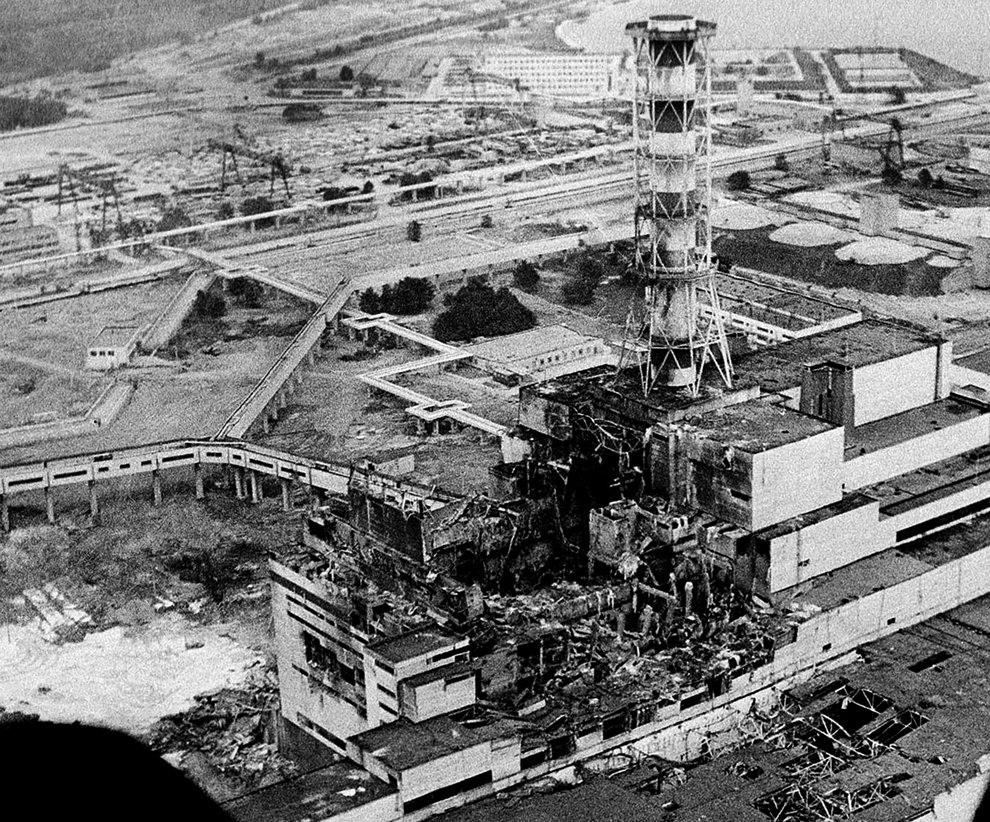
The Lessons of Chernobyl May Be Different Than We Thought

By Ryan Faith

April 26, 2016 | 7:45 pm

news.vice.com – Thirty years ago today, the Number 4 reactor at Chernobyl blew itself to smithereens, resulting in the worst nuclear disaster in history. A radiation cloud drifted over Europe, contaminating food sources that to this day continue to be monitored. Fifty-thousand residents in the nearby city of Pripyat were permanently evacuated. Dozens of people lost their lives.

Yet about 20 years after the disaster, an extensive two-year study led by seven UN agencies and involving the governments of Ukraine, Russia, and Belarus found that the biggest health threat from Chernobyl wasn’t the result of radiation — it was fatalism. People assumed they were going to die early due to radiation exposure, and so failed to take care of themselves as years passed. Tiếp tục đọc “The Lessons of Chernobyl May Be Different Than We Thought”

It’s Time to Outlaw Nuclear Weapons

A treaty banning the bomb could lead to real progress.

nationalinterest

Tom Sauer April 18, 2016

Perhaps for the first time, the nuclear-weapon states are really afraid. Not because of their enemies’ nuclear weapons, let alone their own, but because of the likely start of multilateral negotiations for a nuclear-weapons ban. The odds are good that nuclear weapons will be declared illegal in the foreseeable future. Tiếp tục đọc “It’s Time to Outlaw Nuclear Weapons”