Thailand, the sick man of Southeast Asia?

eastasiaforum.org Published: 22 December 2025
In Brief

Thailand is confronting a convergence of economic and political pressures that threaten to lock in prolonged stagnation caused by weak growth, demographic decline and low productivity. Decades of political instability, repeated intervention by unelected ‘tutelary’ powers and the blocking of reformist forces have undermined policy continuity, discouraged investment and diverted spending away from long-term growth drivers like education and public investment. Renewed border tensions with Cambodia and looming elections now compound these structural weaknesses, leaving Thailand trapped in a cycle of political uncertainty and economic underperformance that erodes its regional standing.

With growth barely above 2 per cent, a looming demographic crisis and an immigration regime unsuited to offsetting future workforce challenges, Thailand is in urgent need of pro-growth, pro-productivity reforms and public investment despite its strained public finances. These challenges are par for the course in any rich post-industrial country — but for a middle-income country in today’s international environment, they’re all the more daunting.

Tiếp tục đọc “Thailand, the sick man of Southeast Asia?”

Khởi động hạ tầng an toàn cho chương trình điện hạt nhân quốc gia – Vai trò của Chính phủ ở Giai đoạn 1

Nangluongvietnam.vn 04/02/2026

 – Trong kỳ trước, Tạp chí Năng lượng Việt Nam đã có bài viết đề xuất việc rà soát toàn diện các yêu cầu của IAEA về phát triển nguồn nhân lực trong mối quan hệ chặt chẽ, mang tính tương hỗ với 18 vấn đề hạ tầng then chốt của chương trình điện hạt nhân quốc gia. Tiếp nối định hướng này, bài viết dưới đây tập trung phân tích vai trò và trách nhiệm của Chính phủ ở Giai đoạn 1 của chương trình điện hạt nhân, với trọng tâm là khởi động hạ tầng an toàn. Cách tiếp cận này phù hợp với khuyến nghị của IAEA. Theo đó, an toàn hạt nhân không phải là một lĩnh vực độc lập, mà là kết quả tổng hợp của chính sách, khuôn khổ pháp lý – thể chế, năng lực con người, trong đó vai trò định hướng và bảo đảm của Chính phủ ở Giai đoạn 1 có ý nghĩa quyết định.

Phát triển nguồn nhân lực điện hạt nhân theo các mốc thời gian của IAEA – Yêu cầu tại Mốc 2 đối với Việt Nam

Tiếp tục đọc “Khởi động hạ tầng an toàn cho chương trình điện hạt nhân quốc gia – Vai trò của Chính phủ ở Giai đoạn 1”

Would China protect Vietnam if it is being attacked by another country?

QUORA

Profile photo for Mo Chen

Mo Chen · Lives in China (1989–present) 7y

Would China protect Vietnam if it is being attacked by another country?

Are you serious!

Whoever would start a war in Southeast Asia has got to be the single most delusional person in this universe!

Look. Around.

It’s a pile of black powder barrel in here!

What? You think all you hear in the news is Vietnam being pushed around by China, that Vietnam is weak?

Tiếp tục đọc “Would China protect Vietnam if it is being attacked by another country?”

Where did Vietnamese originate from?

QOURA

Icon for Vietnam-The Rising Dragon

Vietnam-The Rising Dragon · 

It seems that Many of the Chinese consider Nanyue Kingdom of Trieu Day/Zhou Tao as the Vietnamese state. It means that the Guangdong and Guangxi provinces today should be historical territories of Vietnam?

Profile photo for Ang Chi Siang

Ang Chi Siang Lived in Vietnam, Wife is Vietnames 9y

Where did Vietnamese originate from?

This is not going to make a lot of my Vietnamese friends happy here, I’m afraid.

I suggest all Vietnamese readers read it with an open mind.

Most people are only willing to consider the history of Vietnam up to the Nam Viet Kingdom era which was established in 204 BC.

Tiếp tục đọc “Where did Vietnamese originate from?”

Why is the Philippines still richer and look a lot more modern than Vietnam?

QOURA

Profile photo for Ngo The Hoan

Ngo The Hoan · Software Engineer with an interest in history

Why is the Philippines still richer and look a lot more modern than Vietnam?

Because many Filipinos love to dig out photos of Vietnam like this:

They then proceed to compare it with photos of their cities like this:

Then conclude that their country looks richer and more developed. But the reality is much more complicated.

You see, each tiny white blob you see in the Vietnam photo is a private property. Something that looks like this on land:

They are called tube houses, a characteristic feature of Vietnamese cities. Tube houses came about due to people’s desire to make use of their small land. The more money you have, the more you build up.

Tiếp tục đọc “Why is the Philippines still richer and look a lot more modern than Vietnam?”

Công lý công bình cho người bán dâm

Báo Pháp Luật mới đăng 3 bài về các cô bán dâm, dưới đây. (Mình chỉ đăng tiêu đề và links. Các bạn có thể theo links để đọc bài.)

Có vài điều cần làm rõ:

    1. Gốc rễ của mãi dâm là người mua dâm, không phải là người bán dâm.
    2. Nếu không bắt người mua dâm thì người bán dâm không có tội. Nếu người mua dâm không có tội, người bán dâm cũng không có tội.
    3. Bán dâm là nghề lương thiện. Tham nhũng, hối lộ, lừa đảo… mới là nghề bất lương, mới cần được cải tạo nhân phẩm và tái hòa nhập cộng đồng.

Anh Hoành và mình có viết truyện về mua bán dâm trong bộ truyện Huyền sử Bồ tát Đông Hải (dưới đây), mời cả nhà cùng đọc.

Mong công lý và công bình đến với người bán dâm.

PTH

***

TP.HCM chặn tệ nạn từ gốc

***

Huyền sử Bồ tát Đông Hải – Chương 18: Công lý công bình không phân biệt


Tiếp tục đọc “Công lý công bình cho người bán dâm”

Bảo đảm an toàn cho shipper và tài xế công nghệ

Sự phát triển công nghệ góp phần tạo công ăn việc làm cho lao động tự do, tạo ra các nghề mới như tài xế công nghệ và shipper. Tuy nhiên, nhóm lao động này đang ở thế yếu khi phải đối mặt với nhiều rủi ro an toàn mà không được hưởng quyền lao động chính đáng.

Trước thực trạng trên, Nhà nước cần ban hành quy định nhằm bảo vệ quyền lợi cho tài xế công nghệ và shipper. Đồng thời, cần xác định rõ vai trò trách nhiệm của các công ty nền tảng khi hoạt động tại VN, để người lao động tự do trong nước được hưởng phúc lợi lao động hợp pháp.

An An

  1. Shipper và những lỗ hổng bảo vệ
  2. Ai bảo vệ tài xế công nghệ, shipper?

***

Shipper và những lỗ hổng bảo vệ

Tiếp tục đọc “Bảo đảm an toàn cho shipper và tài xế công nghệ”

Vietnam’s 1,500-Year Empire brought down by regional wars: The Champa Kingdom


CNA Insider
– 27- 1-2026

Linked to ancient seafarers from Taiwan, the Champa were expert sailors and vital players in global trade. On land, they were skilled builders and innovative agriculturalists who also made their mark on the modern world. Curator and scholar Peter Lee embarks on a quest to uncover the story of the Champa Kingdom and its glory years.

From visiting the ancient, hallowed grounds of My Son Sanctuary where grand temples showcase the king’s authority, to learning about modern Cham identity with a local rap artist, Peter traces the great heights that the kingdom reached before its eventual decline. But in recent years, a new generation of Cham people are striving for pride and recognition of their ancient heritage.

Tiếp tục đọc “Vietnam’s 1,500-Year Empire brought down by regional wars: The Champa Kingdom”

Người già Việt Nam giữa khoảng trống an sinh 

Tại Việt Nam, nhu cầu chăm sóc sức khỏe và sinh hoạt tại viện dưỡng lão của người cao tuổi ngày càng tăng. Tuy nhiên, số lượng cơ sở và nhân lực có trình độ trong lĩnh vực này vẫn còn hạn chế. Bởi vậy, Nhà nước cần có chính sách hỗ trợ và đẩy mạnh mở rộng các mô hình viện dưỡng lão, qua đó giúp người cao tuổi dễ dàng tiếp cận các trung tâm chăm sóc sức khỏe chất lượng, phù hợp với khả năng chi trả. Ngoài ra, cần khuyến khích gia đình và xã hội quan tâm, chăm lo đến người cao tuổi, để họ sống vui khỏe, có ích và không rơi vào tình cảnh cô đơn.

An An

 
***

Cấp bách khơi thông cơ chế phát triển nhà dưỡng lão

Bài 1: Muốn vào viện dưỡng lão, không dễ!

 01/07/2024 – 06:34
 
PNOTheo dự báo, đến năm 2038, Việt Nam sẽ trở thành nước có dân số già với tỉ lệ người cao tuổi chiếm 25%, kéo theo nhu cầu sử dụng các dịch vụ chăm sóc, hỗ trợ xã hội ngày càng lớn. Cho nên, ngay từ bây giờ, việc quan tâm đầu tư, phát triển hệ thống các dịch vụ chăm sóc người cao tuổi, trong đó có viện dưỡng lão, là hết sức cần thiết, nhất là tại các thành phố lớn như Hà Nội và TPHCM.
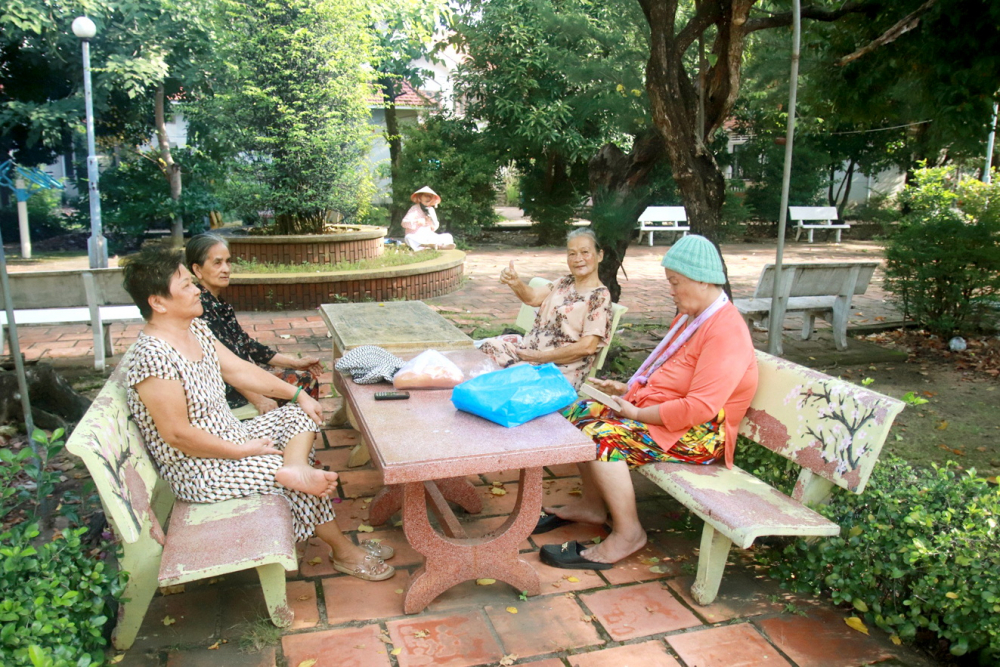
Không gian rộng rãi, thoáng mát của trung tâm dưỡng lão Thị Nghè (TPHCM) - ẢNH: THU LÊ
Không gian rộng rãi, thoáng mát của trung tâm dưỡng lão Thị Nghè (TPHCM) – ẢNH: THU LÊ

Tiếp tục đọc “Người già Việt Nam giữa khoảng trống an sinh “

Nuclear Deterrence in the 21st Century

chatthamhouse.org Research paper Published 20 April 2020 ISBN: 978 1 78413 391 7

Royal Navy Vanguard Class submarine HMS Vigilant returning to HMNB Clyde after extended deployment. The four Vanguard-class submarines form the UK's strategic nuclear deterrent force. Photo: Ministry of Defence.

Royal Navy Vanguard Class submarine HMS Vigilant returning to HMNB Clyde after extended deployment. The four Vanguard-class submarines form the UK’s strategic nuclear deterrent force. Photo: Ministry of Defence.21st century. Researchers at Chatham House have worked with eight experts to produce this collection of essays examining four contested themes in contemporary policymaking on deterrence.

Tiếp tục đọc “Nuclear Deterrence in the 21st Century”

Nuclear deterrence is dying. And hardly anyone notices

Thebulletin.org By Alex Kolbin | January 30, 2026

A man in a dark coat stands outdoors holding a black umbrella, illuminated by a red light in the background at night.President Donald Trump speaks to the media before boarding Marine One on January 9, 2026. The day before, the President told New York Times reporters, “If it expires, it expires,” referring to New START—the last remaining bilateral nuclear arms control treaty between Washington and Moscow, which expires on February 5. (Photo: White House/Molly Riley)

For decades, nuclear weapons have been treated as the ultimate arbiter of international politics. They were supposed to deter great-power war, impose caution on leaders, and anchor what strategists liked to call strategic stability. Today, that framework is eroding in plain sight. Yet the reaction from policymakers and much of the expert community remains oddly muted.

Put simply, nuclear weapons are no longer functioning as a decisive factor in global security.

For almost four years, Russia—the world’s largest nuclear power—has been subjected to missile strikes carried out with systems supplied by several other nuclear-armed states. The United Kingdom now openly speaks of developing new tactical ballistic missiles for Kyiv and of placing “leading-edge weapons” directly into the hands of Ukrainians. Russia itself employs nuclear-capable intermediate-range ballistic Oreshnik missiles as if they were any other conventional weapon system for punishing Ukrainian infrastructure. Meanwhile, US President Donald Trump casually commented on New START—the last remaining bilateral nuclear arms control treaty between Washington and Moscow, which expires on February 5—“If it expires, it expires.” And former Russian President Dmitry Medvedev, currently serving as a Deputy Chief of the Russian Security Council, stated, “No START-4 is better than a treaty that only masks mutual distrust and provokes an arms race in other countries,” referring to what may come next after New START expires.

Tiếp tục đọc “Nuclear deterrence is dying. And hardly anyone notices”

Should China, South Korea, and Vietnam quit eating dog meat?

QUORA

Profile photo for Thang Luu

Thang Luu · Updated 8y

I am a Vietnamese guy who casually eats dog meat. Normally, I eat dog meat with my friend in a party, simply because dog meat is tasty (there’s no religious or monetary issue here). I think it is hypocritical to ask us to stop eating dog meat, simply because dogs are considered a “friend” in some areas of the world. Besides, there are a lot of other practices that should receive the same attention outside of the eating of dog meat, such as:

  • Japan’s whalin
  • Canada’s clubbing of seals
Tiếp tục đọc “Should China, South Korea, and Vietnam quit eating dog meat?”

Why did the Khmer Rouge attack Vietnam in 1975-1978 while they are weaker obviously?

QUORA

[TĐH: I am not sure that the US actively supported Khmer Rouge, as asserted in the following article. At that time, US had just lost South Vietnam (The Republic of VN) to North Vietnam (The Socialist Republic of VN), so US was depressed, angry at North Vietnam, embargoing the newly united Vietnam, and shy from involving Vietnam in anything. So, US was doing nothing related to Vietnam (except the embago), acting like US knew nothing about the astrocities happening in Cambodia. And EU simply followed its leader US. The entire Western world turned a blind eye toward Cambodia.

China punished Vietnam in 1979 for “invading” Cambodia but got black-eyed from Vietnam.

Call it anything you want, but Vietnam did eliminate Khmer Rouge and save the Cambodians from the worst astrocities in Cambodia’s history. You can ask Hun Sen directly about this.]

Profile photo for Lucia Millar
Why did Kmer Rouge attacked Vietnam in 1975-1978 while they are weaker obviously?

Tiếp tục đọc “Why did the Khmer Rouge attack Vietnam in 1975-1978 while they are weaker obviously?”

Đòn bẩy cho một Việt Nam thịnh vượng (13 bài)

Đòn bẩy cho một Việt Nam thịnh vượng 

Phạm Tuyên

27/03/2025 11:00

TP – Với gần một triệu doanh nghiệp, khoảng 5 triệu hộ kinh doanh cá thể, khu vực kinh tế tư nhân hiện đóng góp khoảng 51% GDP, hơn 30% ngân sách Nhà nước, tạo ra hơn 40 triệu việc làm, chiếm hơn 82% tổng số lao động trong nền kinh tế, đóng góp gần 60% vốn đầu tư toàn xã hội.

Dù được coi là thành tố quan trọng để phát triển nền kinh tế, đóng góp ngày càng lớn, kinh tế tư nhân hiện vẫn đối mặt với nhiều rào cản, không thể bứt phá về quy mô và năng lực cạnh tranh.

Bài 1: Nguồn lực chưa được khơi thông

Những hạn chế phát triển của doanh nghiệp tư nhân thời gian qua xuất phát một phần từ những bất cập của hệ thống thể chế, chính sách kinh tế và môi trường kinh doanh. Những điểm nghẽn này không chỉ kìm hãm tốc độ tăng trưởng của khu vực kinh tế tư nhân, khiến tỷ trọng đóng góp của khu vực này trong GDP gần như không thay đổi trong hơn một thập kỷ qua, mà còn cản trở nền kinh tế nâng cao giá trị gia tăng, thoát khỏi bẫy thu nhập trung bình.

Doanh nghiệp tư nhân còn gặp nhiều rào cản trong tiếp cận nguồn lực, đặc biệt là vốn tín dụng, đất đai, tài nguyên và nhân lực chất lượng cao, nhất là trong các ngành công nghệ, kỹ thuật và tài chính. Ảnh: Nguyễn Bằng
Tiếp tục đọc “Đòn bẩy cho một Việt Nam thịnh vượng (13 bài)”