Between Indonesia, Thailand and Vietnam, which country will become a developed country the soonest?

QOURA

Profile photo for Masa

Masa · Updated 11mo

Vietnam has one of the best school education systems in the world. The country’s children perform well in international tests of reading, math and science skills. At the “64th International Mathematics Olympiad (IMO2023)”, out of the six high school students who participated on behalf of Vietnam, all participants won medals, with two gold medals, two silver medals, and two bronze medals.

According to the World Bank, Vietnamese students outperform not only their fellow Southeast Asian countries Malaysia and Thailand, but also students from developed countries such as the United Kingdom and Canada, which are more than six times as wealthy as their home country. What is also noteworthy is that there are no gender or regional differences in student performance in Vietnam.

Tiếp tục đọc “Between Indonesia, Thailand and Vietnam, which country will become a developed country the soonest?”
Siết quản lý mua bán nợ để ngăn tình trạng đòi nợ thuê biến tướng

Đòi nợ thuê theo cách gây áp lực tinh thần, đe dọa tính mạng của người nợ và gia đình là hành vi vi phạm pháp luật, gây mất an ninh xã hội. Thế nhưng, hình thức đòi nợ phi pháp này vẫn diễn ra dưới danh nghĩa kinh doanh mua bán nợ, vốn được nhà nước cho phép để xử lý nợ xấu. 

Thực tế này đòi hỏi cơ quan chức năng cần quản lý và giám sát chặt chẽ hoạt động mua bán nợ. Bên cạnh đó, việc minh bạch thông tin về các công ty được phép kinh doanh cùng quy định nêu rõ trách nhiệm và cách thức thu hồi nợ theo pháp luật là biện pháp cần thiết, nhằm giảm thiểu tình trạng lợi dụng kinh doanh mua bán nợ để đòi nợ thuê trái phép.

An An

  1. Cần phải quản lý chặt hoạt động mua bán nợ
  2. Làm thế nào để kinh doanh mua bán nợ không bị giới đòi nợ thuê núp bóng?

***

Cần phải quản lý chặt hoạt động mua bán nợ

Thứ Năm, 16/01/2025 10:25

(CATP) Từ đầu năm 2021, Việt Nam chính thức cấm tổ chức, cá nhân đầu tư, kinh doanh ngành nghề “Kinh doanh dịch vụ đòi nợ”. Đây là quyết định cần thiết của Nhà nước nhằm đảm bảo trật tự an toàn xã hội (TTATXH) vì thực tế cho thấy, nhiều công ty đòi nợ thuê đã lợi dụng kẽ hở pháp luật để thực hiện các hành vi mang tính chất phạm pháp. Tuy vậy, cấm triệt để hoạt động “đòi nợ thuê” cũng làm cho một bộ phận người dân, doanh nghiệp hiểu sai bản chất, khái niệm “mua bán nợ” được các công ty trong và ngoài nhà nước quản lý và thực hiện.

Tiếp tục đọc “Siết quản lý mua bán nợ để ngăn tình trạng đòi nợ thuê biến tướng”

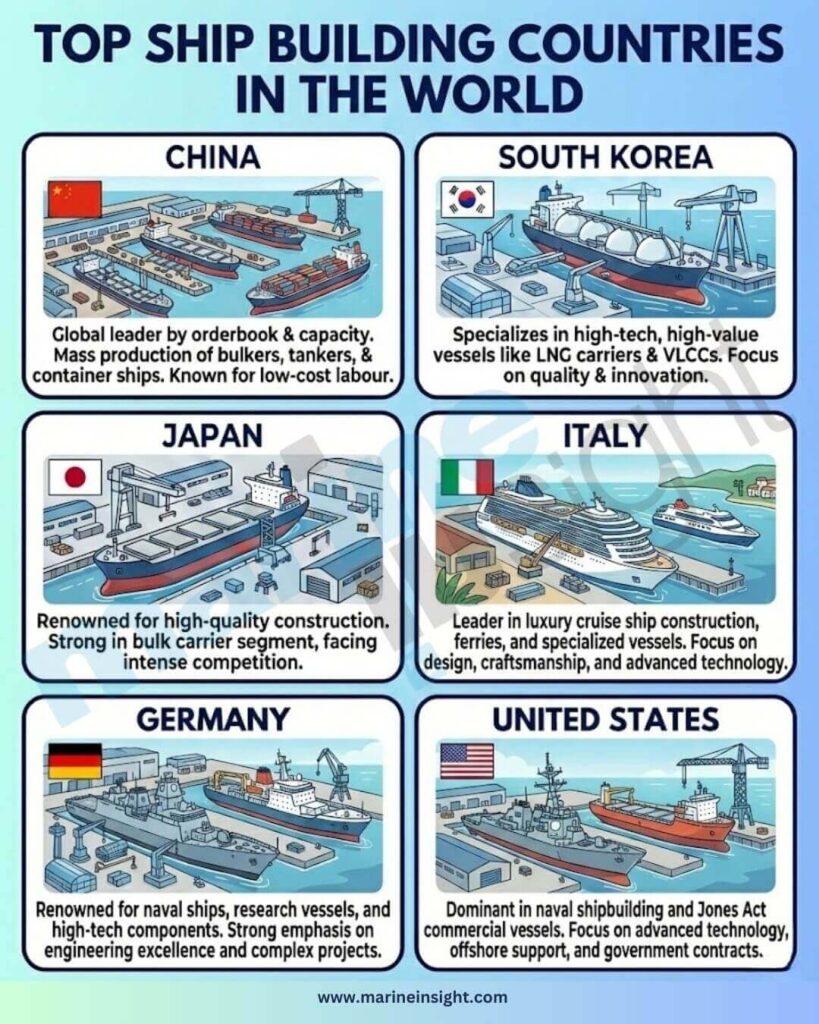
Top 10 Ship Building Countries In The World (Vietnam is on the list)

China, South Korea, Japan, Italy, USA, Germany, France, The Netherlands, The Philippines, Vietnam

marineinsight.com ByZahra AhmedFebruary 11, 2025

The shipbuilding industry is growing at a tremendous rate, with its market size expected to increase from USD 155.58 billion in 2025 to 203.76 billion in 2033, owing to greater container and dry bulk trade and the opening of new markets, per Straits Research. Around 85% of shipbuilding activities are concentrated in China, Japan, and South Korea, which are the top shipbuilding countries in the world.

Shipbuilding, which involves the construction of large seagoing vessels, manufacturing marine equipment, and refurbishing old vessels is a lucrative industry, propelled by the rising sea trade between countries, as the world population increases amidst rising consumer demands worldwide.

Apart from commercial vessels, naval vessels are also witnessing an increased demand with several navies like the Chinese and American, building new ships to showcase naval prowess.

ship building countries

In this article, we will mention the top 10 shipbuilding countries in the world, the majority of which are in Asia, Europe and the Americas, leading through their technological breakthroughs, and strategic investments in port infrastructure and ship equipment.

Tiếp tục đọc “Top 10 Ship Building Countries In The World (Vietnam is on the list)”

The latest on what’s happening in China from Asia Society Policy Institute’s  Center for China Analysis

(https://asiasociety.org/policy-institute/)

THIS WEEK:
Politburo meeting projects institutional continuity after purges, Xi balances Putin and Trump diplomacy, Beijing signals reserve-currency ambitions, “future industries” take center stage in the 15th Five-Year Plan, and Shanxi marks a clean-energy turning pointRead back issues in the China 5 Archive.

China’s President Xi Jinping stands with Politburo Standing Committee members at the Monument to the People’s Heroes on Martyrs’ Day in Beijing’s Tiananmen Square on September 30, 2025. (Photo by Greg Baker/AFP via Getty Images)

1. A Signal of Institutional Stability Following High-Profile Purges

What Happened: On January 30, Xi Jinping chaired a routine Politburo meeting to review the annual Party affairs work reports of the National People’s Congress, the State Council, the Chinese People’s Political Consultative Conference, the Supreme People’s Court, the Supreme People’s Procuratorate, and the Chinese Communist Party Central Secretariat. The meeting also discussed “other matters,” a phrase sometimes used to conceal politically sensitive issues from public reporting. Tiếp tục đọc “The latest on what’s happening in China from Asia Society Policy Institute’s  Center for China Analysis”