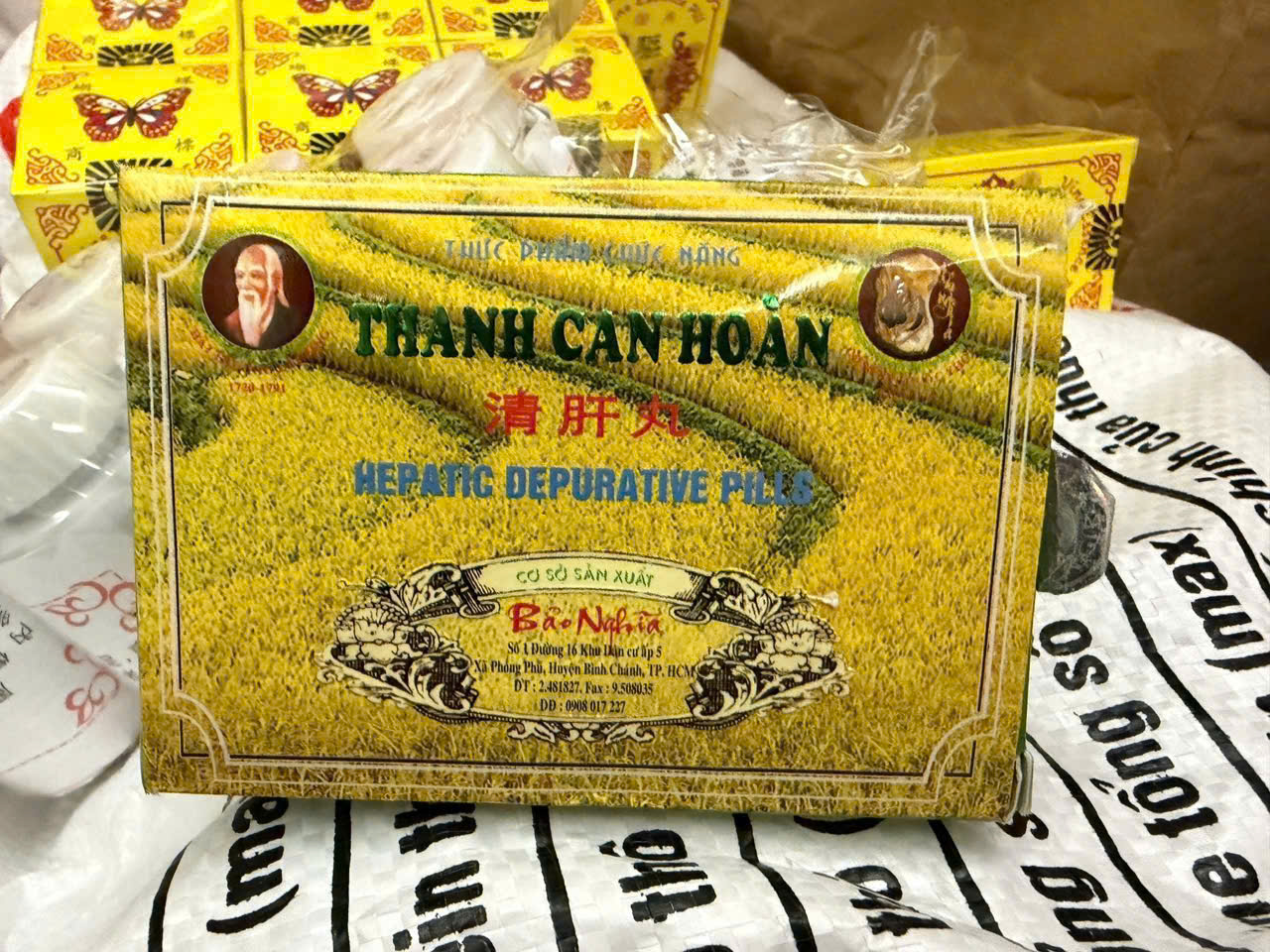
Ngày 23/01/2026, Cơ quan Cảnh sát điều tra Công an TP. Hồ Chí Minh (Phòng Cảnh sát kinh tế) đã ra Quyết định khởi tố vụ án, khởi tố bị can và thi hành Lệnh bắt tạm giam đối với Nguyễn Duy Hiển (sinh năm 1962), Ngô Mỹ Hoành (sinh năm 1973) và Võ Văn Nghề (sinh năm 1993, cùng cư trú tại TP. Hồ Chí Minh) để điều tra về hành vi “Sản xuất, buôn bán hàng giả là thuốc chữa bệnh, thuốc phòng bệnh”.
Yes. We share plenty of similar cultures throughout our neighbor China.
We, Koreans and Vietnamese fought against the formidable Chinese army for centuries. Meanwhile, we adopted many Chinese cultures such as Confucianism, Chinese characters and building styles. And we developed those into our unique styles.
Especially, the last dynasty of both Vietnam and Korea, were both influenced by Ming dynasty, not Qing dynasty which was the lastest one in Chinese history.
Korea and Vietnam loved Ming dynasty more than Qing Dynasty founded by Manchu. Japan, on the other hand, was influenced by Tang dynasty. China was influenced by the lastest danysty, Qing.
Săn bắt và buôn bán chim di cư là vấn nạn nghiêm trọng. Thế nhưng, suốt nhiều năm nay, thực trạng này vẫn diễn ra tại nhiều tỉnh, thành trong nước. Điều này đòi hỏi cơ quan chức năng cần giám sát chặt chẽ và xử phạt mạnh tay hơn các trường hợp vi phạm. Bên cạnh đó, cần chú trọng nâng cao ý thức của người dân để họ hiểu rõ và chung tay bảo vệ sự sống của các loài chim.
Loạt bài: Báo động nạn săn bắt chim di cư và mất cân bằng sinh thái tại Bắc Trung Bộ
Kỳ 1: Săn chim mùa di cư – Lưới giăng, cò giả và những cái bẫy tử thần
Hải Yến • 21/10/2025 08:47
Những ngày cuối tháng 9, khi tiết trời chuyển mùa, cũng là thời điểm hàng vạn cá thể chim di cư bay qua vùng đồng bằng Bắc Trung Bộ. Thế nhưng, thay vì được nghỉ chân giữa những cánh đồng lúa vàng ruộm, chúng phải đối mặt với muôn vàn “cái bẫy tử thần” – lưới giăng, cò giả, keo dính, loa dẫn dụ… phủ kín các cánh đồng và bãi bồi từ Nghệ An đến Hà Tĩnh.
Văn học VN đang loay hoay, hay, nói chính xác hơn, nhà văn VN đang loay hoay. Vì sao?
Vì họ không có điểm tập trung.
Nhà văn, cũng như những người lao động nghệ thuật khác (nhạc sĩ, họa sĩ…), nên chú tâm vào nghệ thuật. Khi bắt đầu chú tâm vào những điều khác ngoài nghệ thuật (như tiền bạc, danh tiếng, độc giả, khuynh hướng chính trị của quan chức – dù là có thật hay do mình tưởng tượng…), nhà văn sẽ đánh mất chính mình, và nghệ thuật của họ khó được trong sáng và sâu sắc.
Hãy tập trung vào nghệ thuật. Dù chẳng có mấy ai đọc bài mình, dù chẳng có nhà xuất bản nào in bài mình, dù mình chẳng có tiền từ chất xám của mình…, hãy tập trung vào nghệ thuật. Và mọi chuyện còn lại để Trời Đất lo.
TTCT – Và nếu có điều gì cần cho văn học Việt bây giờ thì đó chỉ là một điều giản dị: thêm một chút can đảm để đi xa hơn vùng an toàn, và thêm một chút trung thực để nói ra một điều gì đó thật, dù nhỏ.
Summary: Researchers using China’s “artificial sun” fusion reactor have broken through a long-standing density barrier in fusion plasma. The experiment confirmed that plasma can remain stable even at extreme densities if its interaction with the reactor walls is carefully controlled. This finding removes a major obstacle that has slowed progress toward fusion ignition. The advance could help future fusion reactors produce more power
China’s “artificial sun” fusion reactor has crossed a critical plasma density threshold that scientists once thought was unreachable. The result brings fusion ignition closer than ever. Credit: Shutterstock
Scientists working with China’s fully superconducting Experimental Advanced Superconducting Tokamak (EAST) have successfully reached a long-theorized “density-free regime” in fusion plasma experiments. In this state, the plasma remains stable even when its density rises far beyond traditional limits. The results, published in Science Advances on January 1, shed new light on how one of fusion energy’s most stubborn physical barriers might finally be overcome on the road to ignition.
Visions of planting walls of trees to block the expansion of the desert have long been promoted but never realized. The green wall myth persists today even though it is premised on outdated understandings of desertification. We review the history of the idea of green walls and focus on two sets of contemporary initiatives to assess their outcomes: peri-Saharan programs (Algeria’s Green Dam and Great Green Wall in sub-Saharan Africa) and China’s Three Norths Shelterbelt Program. This review reveals a mixed record of technical success with low rates of the establishment of monocultures of fast-growing trees vulnerable to disease. While there is evidence for reduced wind erosion in some areas, afforestation is also associated with reduced soil moisture and lowering of water tables. Social impacts include increased water scarcity for people and livestock in some cases, and resource enclosures that particularly work against pastoralist livelihoods.
Green walls refer to continuous bands of planted trees stretching across single or multiple countries in dryland regions. As socioecological projects, green walls invoke powerfully attractive images of maintaining life over the assumed sterility of the desert through human ingenuity and effort. A wall of planted trees is envisioned to hold back an expansionary desert from degrading the productivity of the lands behind the wall. Despite the persistent discursive power of this image, its scientific foundation rests on now discredited understandings of desertification.1Desertification, scientifically understood as land degradation due to human mismanagement, is less a regional phenomenon across a broad front than a highly localized phenomenon in areas of greater and more persistent human pressures. The power of the green wall vision is illustrated by its persistent use in promotions of a diverse array of dryland afforestation initiatives with different afforestation patterns (e.g., shelterbelts, scattered woodlots and larger afforested blocks, and agroforestry) and goals (ecological rehabilitation, carbon sequestration, and improved climate resilience). In short, green wall rhetoric mobilizes support and empowers certain actors rather than describing actual dryland afforestation practices.2This article focuses on the vision, practices, and effects of these programs.
This review was written during a period of global enthusiasm for trees and mobilization for mass afforestation, with the World Economic Forum’s Trillion Trees initiative the most prominent example (https://www.1t.org/) but also a wide range of other afforestation efforts across the globe (3). While the arborocentrism of this moment has a long history (see below), concerns about climate change and an interest in increasing the sequestration of industrial carbon has led to a rapid rise of tree planting initiatives. The world’s drylands could be seen as “empty” and thus important “untapped” landscapes to store carbon. Through a consideration of the empirical record of green wall programs, this article outlines reasons to be cautious. Trees are often not suited for the arid zones where they are planted and, even if they are established, may have negative ecological and social impacts (4). By ignoring the need for ecological and social monitoring of afforestation impacts, green wall enthusiasm has often worked to hide the mixed record of these initiatives.
Ô nhiễm không khí đe dọa trực tiếp tới sức khỏe và tính mạng con người. Tại Việt Nam, tình trạng này đang ở mức báo động, đặc biệt ở Hà Nội và TP.HCM. Đáng nói, số liệu về chất lượng không khí tại nhiều địa phương vẫn còn mù mờ, khiến người dân không nắm rõ mức độ ô nhiễm nơi mình sinh sống.
Trước thực trạng này, minh bạch dữ liệu không khí là yếu tố then chốt giúp Nhà nước, người dân và toàn xã hội ý thức rõ về tình trạng không khí và các nguồn gây ô nhiễm. Từ đó, mới có các giải pháp cải thiện không khí hiệu quả và quyết liệt hơn.
Theo nghiên cứu của WHO, hơn 60.000 người tử vong năm 2016 do bệnh tim, đột quỵ, ung thư phổi, phổi tắc nghẽn mạn tính, viêm phổi ở Việt Nam đều có liên quan tới ô nhiễm không khí.
Bệnh nhân tại phòng cấp cứu ở Trung tâm Hô hấp – Bệnh viện Bạch Mai – Ảnh: DANH KHANG
Consumers are gravitating toward fiber-filled foods this year. FreshSplash/E+/Getty Images
New York — Move over, protein. Fiber is on pace to be the next “it” nutrient of the year.
Consumers — particularly Gen Z — are fixated on stomach health, leading to the “fibermaxxing” trend taking hold on TikTok. As people try to maximize the fiber in their meals, major food companies are capitalizing on the trend with new, fiber-focused products.
“There is a consumer need in terms of digestion and gut health, and that’s something we’ve seen the last few years,” said Sherry Frey, health and wellness thought leader at NIQ. The younger generation, she added, understands that digestive health is linked to better skin and improved cognitive function.
In 416 BC, the city-state of Athens was in a prolonged conflict with Sparta, its archrival. For years, Athens had enjoyed comparative advantage over Sparta, particularly alliances and mutual defense pacts with smaller city-states known as the Delian League. By 416 BC, the Delian League had been in place for nearly 70 years, roughly the same as NATO, the modern equivalent of a prolonged and successful mutual defense alliance.
That was also the year that Athens came to view the Mediterranean island of Melos as vital for its strategic position. Melos had no military of its own, but it sat geographically at the intersection of maritime routes that helped both protect and project Athenian power. The island had long claimed neutrality, but for Athens, that would no longer suffice.
When an Athenian delegation demanded that Melos become a part of Athens, the Melians refused and appealed to Athenian traditions of logic and justice to work out a compromise. The Athenians responded with a famous line about power: “You know as well as we do that right, as the world goes, is only a question between equals in power — while the strong do what they can, and the weak suffer what they must.”
Bạo lực học đường tại VN là vấn đề nhức nhối và ngày càng trở nên nghiêm trọng. Để ngăn chặn tình trạng này, gia đình và nhà trường nên chủ động cho con em mình học võ và trang bị những kỹ năng tự vệ cần thiết.
Ngoài ra, cũng cần tự hỏi, tại sao trong môi trường giáo dục, nhiều học sinh lại có suy nghĩ và hành vi bạo lực, thiếu kiểm soát như vậy? Phải chăng đang có khoảng trống giáo dục tâm linh trong nhà trường?
Đã đến lúc, trường học cần có môn học hiểu về trái tim. Qua đó, các em học sinh có cơ hội được học tĩnh lặng, biết làm chủ cảm xúc, yêu thương bạn bè và trở thành người có ích cho xã hội.
Trong hơn 20 ngày qua, liên tiếp 5 vụ bạo lực học đường xảy ra trên cả nước, hậu quả 2 em học sinh tử vong, khiến dư luận bức xúc và lo ngại về tình trạng xuống cấp đạo đức trong môi trường giáo dục.
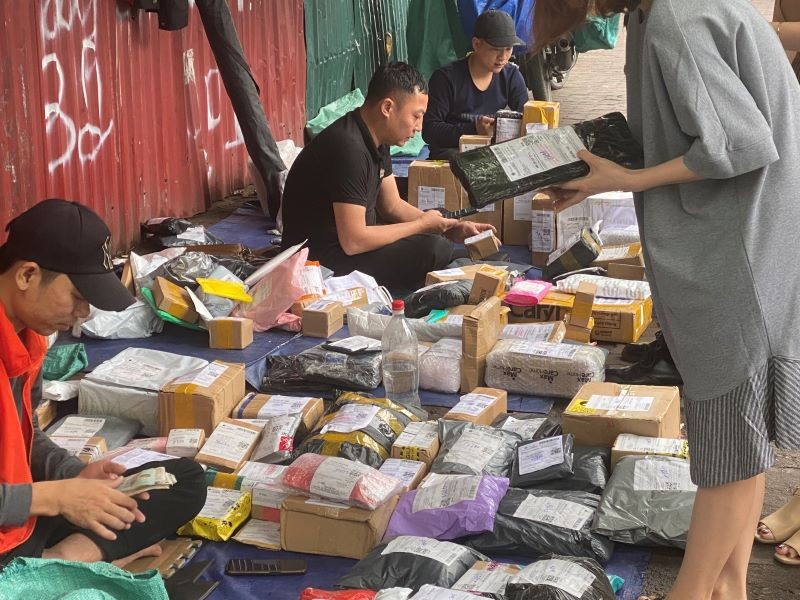
Thương mại điện tử (TMĐT) mang tới trải nghiệm mua sắm tiện lợi, song cũng thải ra môi trường lượng rác thải và khí thải khổng lồ từ khâu đóng gói tới vận chuyển sản phẩm.
Rác thải từ TMĐT là vấn đề môi trường cấp bách, cần được Nhà nước quan tâm và sớm ban hành các quy định cụ thể. Các sàn TMĐT, đơn vị vận chuyển, người bán cũng như người mua cần nâng cao ý thức, chung tay hướng tới giải pháp xanh để bảo vệ môi trường khi tham gia mua bán trực tuyến.
Gánh nặng môi trường từ rác thải nhựa trong thương mại điện tử
Tùng Dương
18/06/2025, 07:36
Thương mại điện tử càng phát triển càng tác động xấu đến môi trường nếu không kiểm soát được rác thải, nhất là rác thải nhựa. Dự báo đến năm 2030, nếu thương mại điện tử Việt Nam có quy mô 100 tỷ USD thì sẽ để lại hơn 800.000 tấn rác thải nhựa và phải tốn rất nhiều nguồn lực để giải quyết vấn đề này.
Câu hỏi 13 năm trước: “Nếu Coca-Cola trốn thuế, ngành Thuế phải chịu trách nhiệm?”, bây giờ “Coca-Cola Việt Nam thua kiện vụ bị truy thu 821 tỷ đồng tiền thuế” rồi, vậy ngành Thuế thì sao?
TP HCM – Coca-Cola Việt Nam đề nghị tòa hủy quyết định của Cục thuế về việc truy thu hơn 821 tỷ đồng tiền thuế, song tòa xác định cơ quan thuế làm đúng pháp luật.
Nhà máy Coca-Cola đặt tại TP HCM. Ảnh: Coca-Cola Việt Nam

.jpg)








 CVD
CVD 