See What’s Driving Deforestation Alerts on Global Forest Watch

globalforestwatch.org Oct 20, 2025
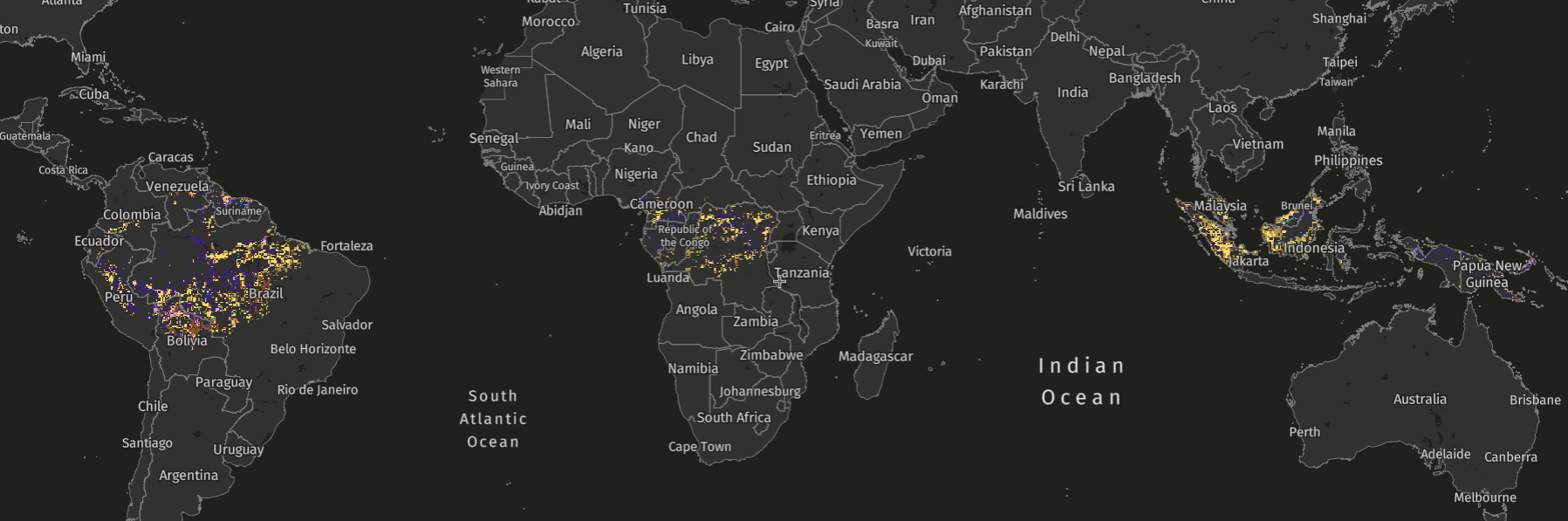
Screenshot 2025-10-16 184230

Global Forest Watch’s (GFW) deforestation alerts provide information about loss of tree cover in near-real-time, making them a critical tool for those working to combat deforestation. Existing alerts on GFW have been used to help Indigenous and local communities protect their forests, halt and prosecute environmental crimes and protect threatened wildlife.

However, in the past, alerts only let users know there’s been a disturbance without identifying a cause, other than a few limited classes such as fires.

Now, new drivers of deforestation alerts data is available on GFW that shows the causes of alerts across the tropics. This innovative data set uses an AI method to assign drivers to GFW’s integrated deforestation alerts in the three major forested regions in the tropics, allowing users to see what’s driving loss in near-real-time in these regions for the first time.

Critically, this information helps users distinguish between tree cover loss from natural and human causes, enabling more targeted action from those managing forests and reducing the need for costly field visits. Further, the data also provides more rapid information to estimate ecological impacts and supports better understanding of carbon emissions related to forest disturbances.

Tiếp tục đọc “See What’s Driving Deforestation Alerts on Global Forest Watch”

Global Infrastructure Resilience Report 2025 

CDRI.world

GIR 2025 report emphasizes the urgent need to incorporate resilience into infrastructure planning and investment. It shows that economic losses from service disruptions after disasters are, on average, 7.4 times higher than direct infrastructure damage.  

The report emphasizes the importance of risk assessments, faster reconstruction, and governance reforms to reduce these losses. It advocates for localized risk modelling, institutional readiness, and innovative financing, including insurance and risk pooling. Businesses must also build end-to-end resilience across supply chains.  

With over 75 case studies, GIR 2025 provides actionable insights across key pillars, including technology, finance, governance, and nature-based solutions. It calls for global cooperation to ensure infrastructure systems can withstand, adapt to, and recover from disasters, turning resilience into a driver of sustainable, inclusive growth. 

Key points

  • Economic losses from service disruptions exceed direct infrastructure damage costs.
  • Faster reconstruction halves the GDP impact compared to delayed recovery efforts.
  • Risk assessments guide resilient investments and infrastructure planning decisions.
  • Businesses need resilient supply chains to reduce disaster vulnerabilities.
  • Financing resilience requires layered tools like insurance and risk pooling.
  • Governance reforms strengthen infrastructure recovery and long-term development stability.

Download