Cần định nghĩa lại phân luồng trong thời đại AI

TS HOÀNG NGỌC VINH – 09/07/2025 14:59 GMT+7

TTCTNếu giáo dục hiện đại không hỏi “Có bao nhiêu phần trăm học sinh học nghề?” mà phải đặt vấn đề: người học có đủ kỹ năng, có việc làm và có thể học tiếp không?

Học viên Trường cao đẳng Cơ điện Hà Nội chuẩn bị cho bài thi tay nghề quốc tế với các thao tác chuyên nghiệp. Ảnh: VĨNH HÀ

Thừa nhận của Bộ trưởng Bộ GD&ĐT Nguyễn Kim Sơn, rằng: “Quy định 40% học sinh sau THCS đi học nghề, 60% vào THPT là một sự phân chia cứng nhắc, thiếu căn cứ khoa học và thực tiễn” có thể coi là sự đánh dấu một bước chuyển nhận thức quan trọng sau hơn hai thập kỷ theo đuổi chính sách phân luồng hành chính.

Tiếp tục đọc “Cần định nghĩa lại phân luồng trong thời đại AI”

Who Buys the Most Iranian Oil?

visualcapitalist.com

As tensions escalate between Iran, Israel, and the U.S. amid fragile ceasefire negotiations, the Iranian oil market is facing heightened volatility.

Certain Asian economies that rely heavily on Iranian crude and stable passage through the Strait of Hormuz now face some of the greatest exposure.

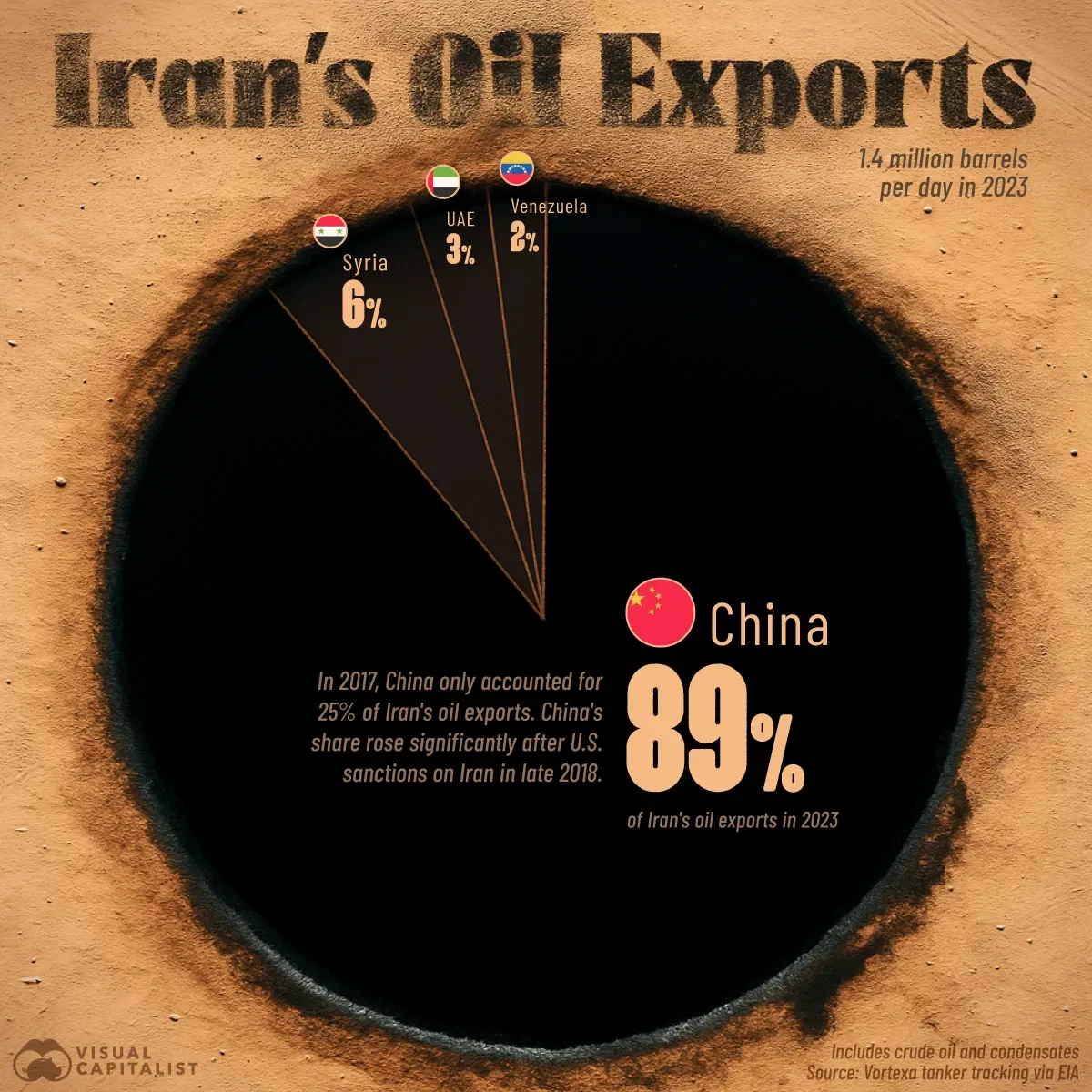
This chart visualizes the breakdown of Iran’s crude oil and condensate exports by destination in 2023.

Data comes from the U.S. Energy Information Administration.

China is the Top Buyer of Iranian Oil

Below, we show the share of Iran’s oil exports by destination.

CountryShare of Iran’s Crude Oil Exports
🇨🇳 China89%
🇸🇾 Syria6%
🇦🇪 United Arab Emirates3%
🇻🇪 Venezuela2%

In 2023, a staggering 89% of Iran’s oil exports went to China, a sharp rise from just 25% in 2017.

This surge followed renewed U.S. sanctions in 2018, which isolated Iran from most global oil buyers.

Iran is among the world’s largest oil producers, and in recent years, China has become its most critical customer both economically and geopolitically.

As hostilities in the region intensify–marked by U.S. attacks on Iranian nuclear infrastructure and Iranian missile strikes on American bases in Qatar and Iraq—China’s access to Iranian oil is increasingly at risk.

This is because the Strait of Hormuz, a critical route for China’s oil imports, could be disrupted by further conflict or Iranian retaliation.

While Iran supplies only about 13% of China’s total oil imports, the relationship is strategically important, offering China discounted crude and reinforcing its broader regional influence amid Western pressure.

Phân luồng sau cấp II: học sinh bị ép uổng?

VĨNH HÀ – 10/07/2025 05:05 GMT+7

TTCTSau 7 năm theo đuổi tỉ lệ phân luồng cứng, với nhiều hệ lụy tiêu cực, lãnh đạo Bộ GD-ĐT đã thừa nhận sai lầm của cách phân luồng này.

“Tư lệnh” ngành giáo dục thừa nhận đặt tỉ lệ phân luồng học sinh sau THCS là một sai lầm. Ảnh: NHƯ HÙNG

Tiếp tục đọc “Phân luồng sau cấp II: học sinh bị ép uổng?”

Tại sao Iran?

SÁNG ÁNH – 07/07/2025 16:26 GMT+7

TTCT Hình ảnh Iran trong mắt phương Tây đã bị bóp méo rất nhiều, và cuộc chiến vừa diễn ra không chỉ có nguyên nhân địa chính trị…

Phụ nữ Iran ở Tehran. Ảnh: Reuters

Trong thập niên 1970, do phải tiêu pha cho chiến tranh Việt Nam và chiến tranh lạnh với Liên Xô, đồng thời với sự lớn mạnh kinh tế của Nhật Bản và Đức, Hoa Kỳ mất vị trí đứng đầu. 

Tổng thống Nixon, dưới áp lực của chính các đồng minh Đức, Anh, Pháp, phải ngưng việc hoán đổi USD sang vàng như ấn định bởi hiệp ước Bretton Woods sau Thế chiến II. 

Lý do nước Mỹ không đảm bảo được đồng USD bằng vàng nữa là vì họ đã in ra quá nhiều USD so với lượng vàng đang giữ. Mà vàng lại không phải của Hoa Kỳ, mà là ký thác của Anh, Pháp trong thời Thế chiến, giờ họ đòi về. Đồng USD đành thả nổi và sụt giá.

Tiếp tục đọc “Tại sao Iran?”

Green energy statecraft and Australia’s clean industry future

lowyinstitute.org Elizabeth Thurbon Oliver Yates

A new policy model that removes the risk in clean commodity innovation will put Australia ahead of the pack.

Australia will need to lead as global supply chains pivot towards low-emissions production (Getty Images)

Australia will need to lead as global supply chains pivot towards low-emissions production (Getty Images)

Published 9 Jul 2025  Australia Australian trade, investment & economy

As global supply chains pivot towards low-emissions production, Australia will need to lead, or risk being left behind. The country’s challenge is not a lack of technology, capital, or ambition. It’s a gap in policy architecture. Without bankable demand, Australia’s most promising clean commodity projects – green iron, sustainable aviation fuel, and clean ammonia – remain stuck at the starting line.

To meet that challenge, we propose a new demand-side policy model: the Clean Commodities Trading Initiative (CCTI) – a flagship example of green energy statecraft. At its heart is a new tool for national transformation: Clean Commodity Credits that reward innovation and emissions savings.

A market-friendly mechanism to kickstart large-scale clean production.

Green energy statecraft is a strategic approach to governance that uses the clean energy transition to simultaneously advance a nation’s economic, environmental, social, and geostrategic goals. Unlike conventional industry policy, which focuses on domestic market corrections, statecraft treats clean energy as key to national security and prosperity – used to build alliances, secure supply chains, boost productivity, and shape global rules.

The European Union, China, Japan, and South Korea are all pursuing variations of green energy statecraft. Australia must do the same – on its own terms, with tools suited to its advantages, institutions, and budget.

Tiếp tục đọc “Green energy statecraft and Australia’s clean industry future”

Plastic for dinner? Why Southeast Asians may have the most microplastics in their bodies

channelnewsasia.com 07 Jul 2025 06:00AM

Microplastics have permeated the region’s food chain, hitting countries like Indonesia and the Philippines the hardest. The programme Insight looks at the health risks and what is being done to boot plastic from our plates.

Plastic for dinner? Why Southeast Asians may have the most microplastics in their bodies
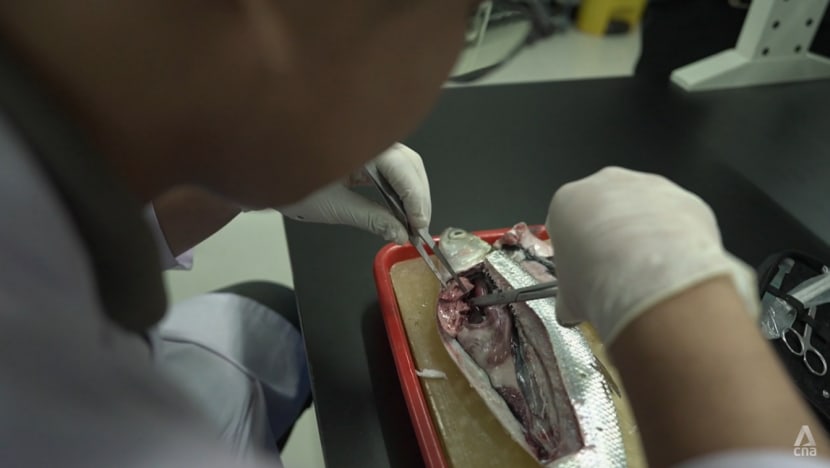
A study found that in nearly 94 per cent of fish sampled from Jakarta Bay, their gills and guts were laced with microplastics.

JAKARTA and MANILA: Milkfish — grilled, fried or floating in fragrant soup — is a staple on Indonesian dining tables. Its flesh is tender, its flavour delicately sweet.

What has no taste, however, would be the microplastics inside its body.

A study last year found that in nearly 94 per cent of fish sampled from Jakarta Bay, their gills and guts were laced with these toxic fragments, each no larger than five millimetres.

“If the microplastics are absorbed by fish and then consumed by humans, it means they’ll accumulate in humans,” warns Widodo Setiyo Pranowo, principal investigator at Indonesia’s National Research and Innovation Agency. “That’s dangerous.”

Tiếp tục đọc “Plastic for dinner? Why Southeast Asians may have the most microplastics in their bodies”

Rác thải nhựa từ dịch vụ đặt đồ ăn online – Tiện 1 phút, hại nghìn năm

tainguyenvamoitruong.vn

TN&MTXu hướng gọi đồ ăn trực tuyến đang làm gia tăng nhanh chóng lượng rác thải nhựa, tạo áp lực nặng nề đến môi trường toàn cầu.

“Núi” rác nhựa sau mỗi lần đặt đồ ăn trực tuyến

Thị trường giao đồ ăn trực tuyến tại Việt nam ngày càng hoạt động sôi nổi với nhiều thương hiệu. Vào năm 2018, Việt Nam chỉ có một vài thương hiệu giao thức ăn như Now, Lala (rút lui khỏi thị trường sau vài tháng hoạt động), Vietnammm (đã được Baemin mua lại) thì đến 2023, có ít nhất là 8 doanh nghiệp đang hoạt động trong ngành. Một số thương hiệu nổi bật có thể kể đến như: Shopee Food, GrabFood, GoFood, Baemin,…

Theo khảo sát của công ty nghiên cứu thị trường Q&Me, trong giai đoạn cách ly xã hội, có 75% người dân sống ở Hà Nội và TP. Hồ Chí Minh đã sử dụng dịch vụ đặt đồ ăn online giao tận nhà. Đến thời điểm hiện tại, thói quen đó vẫn được nhiều người duy trì bởi sự tiện ích mà nó đem lại.

Tiếp tục đọc “Rác thải nhựa từ dịch vụ đặt đồ ăn online – Tiện 1 phút, hại nghìn năm”