Cuốn “Sổ tay hệ thống cảnh báo sớm hiểm họa tự nhiên tại Việt Nam” nhằm cung cấp một cách khoa học và hệ thống thông tin về các loại hình hiểm họa tự nhiên (bao gồm: hiểm họa khí tượng – thủy văn và hiểm họa địa vật lý), đồng thời đề cập việc quản lý rủi ro thảm họa tiếp cận thông qua “Hệ thống cảnh báo sớm đa thiên tai tại Việt Nam”, qua đó góp phần nâng cao hiểu biết và nhận thức của đội ngũ cán bộ Hội, các cấp chính quyền, các tổ chức cộng đồng và nhân dân về thiên tai, thảm họa
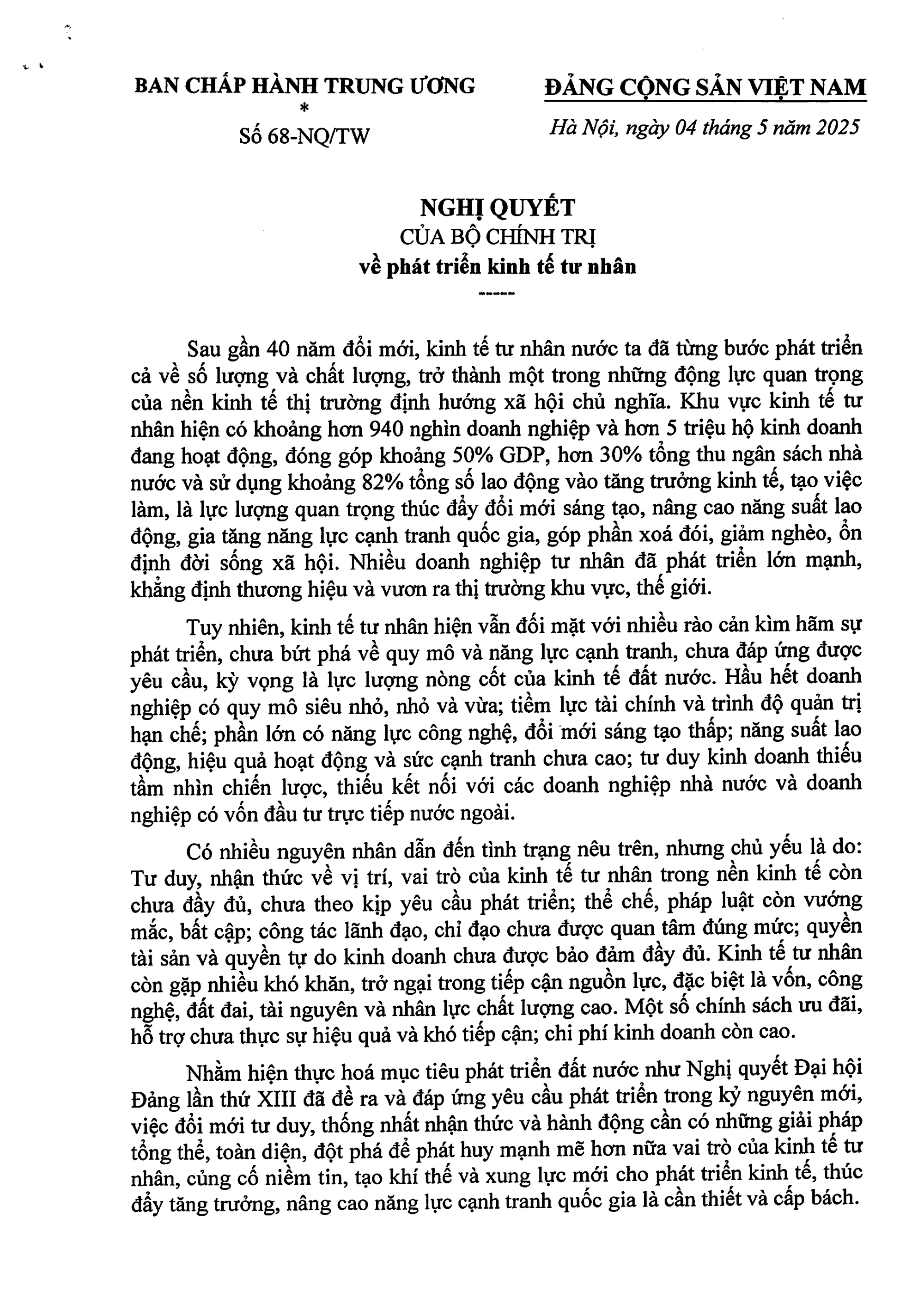
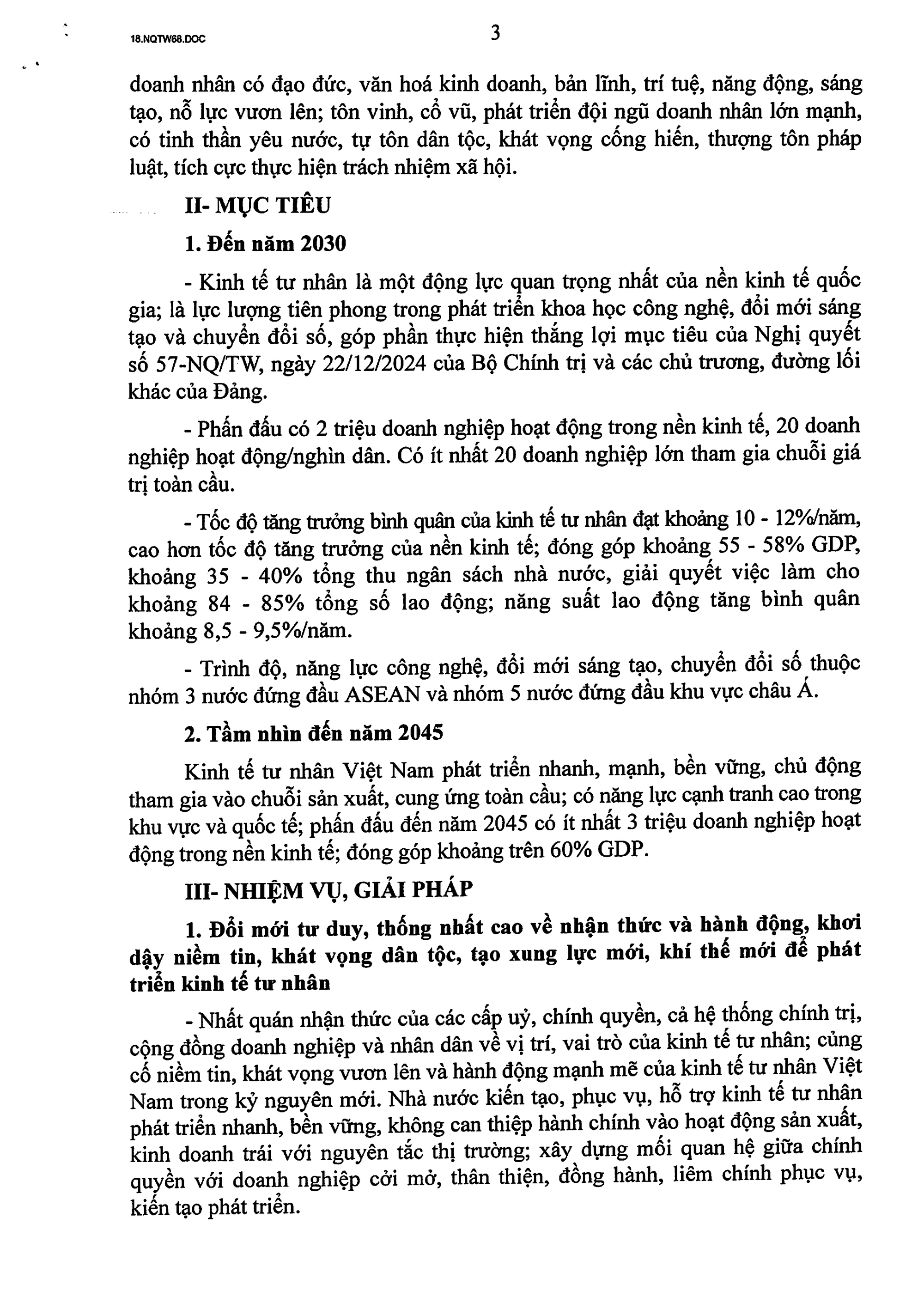
(Chinhphu.vn) – Thay mặt Bộ Chính trị, Tổng Bí thư Tô Lâm vừa ký Nghị quyết số 68-NQ/TW ngày 4/5/2025 của Bộ Chính trị về phát triển kinh tế tư nhân. Cổng Thông tin điện tử Chính phủ trân trọng giới thiệu toàn văn Nghị quyết này.
Nghị quyết số 68-NQ/TW của Bộ Chính trị về phát triển kinh tế tư nhân
Agent Orange was a chemical herbicide used during the Vietnam War that had a devastating impact long after the conflict ended.
Vietnam says 400,000 killed by Agent Orange; cleanup halted after US aid cuts
The US military sprayed millions of hectares of Vietnamese land with Agent Orange, a defoliant containing dioxin — a chemical linked to cancer, birth defects, and long-term environmental damage. Vietnam estimates 400,000 people were killed by the toxin. Although the US had been helping with the cleanup, efforts stopped following aid cuts by the Trump administration.
Al Jazeera’s Tony Cheng reports from Bien Hoa in Vietnam. A warning: this report contains disturbing images.
Trong cuộc Chiến tranh Việt Nam, Mỹ đã rải hàng triệu lít thuốc diệt cỏ độc hại, còn gọi là chất độc da cam (Agent Orange), xuống những cánh rừng rậm để phá hủy những tán lá dày mà các chiến binh Việt Cộng dùng làm nơi ẩn nấp.
Từ những năm 1960, bác sĩ Nguyễn Thị Ngọc Phượng bắt đầu nhận thấy các trường hợp dị tật bẩm sinh, ung thư và các căn bệnh liên quan đến việc tiếp xúc với chất độc da cam. Hơn nửa thế kỷ sau, nhiều người ở Việt Nam vẫn tiếp tục bị ảnh hưởng.
BBC News Tiếng Việt phỏng vấn giáo sư, bác sĩ Ngọc Phượng về hành trình hơn 40 năm đi tìm công lý cho các nạn nhân chất độc ca cam.
Năm 2024, bác sĩ Ngọc Phượng đã được trao giải thưởng Ramon Magsaysay (được mệnh danh là Giải Nobel châu Á) vì những đóng góp cho những nạn nhân chất độc da cam tại Việt Nam.
Labor Party leader becomes the first Australian prime minister to win a second consecutive three-year term in two decades.
Australia’s Prime Minister Anthony Albanese speaks at the Labor Party election night event in Sydney, May 3, 2025 [Hollie Adams/Reuters]
Published On 3 May 20253 May 2025
Anthony Albanese has become the first Australian prime minister to win a second consecutive three-year term in two decades, in a dramatic comeback for his Labor Party in a general election dominated by the cost-of-living crisis.
The Labor Party was on track on Saturday for an unexpectedly large parliamentary majority, as Peter Dutton, leader of the conservative Liberal Party, conceded defeat, having lost his own seat.
In his victory speech, left-leaning Albanese pledged to steer the nation through a rough patch of global uncertainty.
“Australians have chosen to face global challenges the Australian way, looking after each other while building for the future,” he told supporters in Sydney.
“We do not need to beg or borrow or copy from anywhere else. We do not seek our inspiration overseas. We find it right here in our values and in our people.”
Australia’s public broadcaster ABC projected that Labor was on track to win 85 seats in the House of Representatives, easily surpassing the 76-seat threshold needed to reach a majority.
Enforced disappearances, torture, extrajudicial killings: The human rights abuses allegedly committed by former Prime Minister Sheikh Hasina’s regime have left scores of Bangladeshis scarred and traumatised.
After a student-led movement overthrew the government in 2024, the full extent of the suffering is finally coming to light as an interim government, led by 84-year-old Nobel Peace Prize winner Muhammad Yunus, tries to rebuild a shattered nation.
From repairing the demoralised police force to seeking justice for victims and presiding over unstable relations with India, it’s a daunting task. How will Bangladesh rise from the rubble of a dictator’s rule? 101 East investigates.
Author Mehebub SahanaLeverhulme Early Career Fellow, Geography, University of Manchester
China recently approved the construction of the world’s largest hydropower dam, across the Yarlung Tsangpo river in Tibet. When fully up and running, it will be the world’s largest power plant – by some distance.
Yet many are worried the dam will displace local people and cause huge environmental disruption. This is particularly the case in the downstream nations of India and Bangladesh, where that same river is known as the Brahmaputra.
The proposed dam highlights some of the geopolitical issues raised by rivers that cross international borders. Who owns the river itself, and who has the right to use its water? Do countries have obligations not to pollute shared rivers, or to keep their shipping lanes open? And when a drop of rain falls on a mountain, do farmers in a different country thousands of miles downstream have a claim to use it? Ultimately, we still don’t know enough about these questions of river rights and ownership to settle disputes easily.
The Yarlung Tsangpo begins on the Tibetan Plateau, in a region sometimes referred to as the world’s third pole as its glaciers contain the largest stores of ice outside of the Arctic and Antarctica. A series of huge rivers tumble down from the plateau and spread across south and south-east Asia. Well over a billion people depend on them, from Pakistan to Vietnam.





 CVD
CVD 