Vietnam targets Chinese dolls over South China Sea ‘map’

South China Morning Post – 20-3-2025

Vietnam is stepping up inspections of a line of children’s toys over concerns that imagery on the face of one product resembles a map China uses to stake its claim to disputed areas in the South China Sea. The investigation was launched after local media reported that a version of widely sold Baby Three toys, many of which are made in China, featured a design that was viewed as similar to Beijing’s maritime map.

How the climate crisis fuels gender inequality

The climate crisis may be a collective problem, but its impacts do not fall equally. Women and girls often bear the heaviest burdens.

November 30, 2023

Editor’s note

This story is part of As Equals, CNN’s ongoing series on gender inequality. For information about how As Equals is funded and more, check out our FAQ.

Climate change acts as a threat multiplier, finding existing injustices and amplifying them. Women and girls already grapple with gender inequality, but when extreme weather devastates a community, the UN found that inequalities worsen: Intimate partner violence spikes, girls are pulled from school, daughters are married early, and women and girls forced from their homes face a higher risk of sexual exploitation and trafficking.

“When we look at who’s affected worse, who’s on the frontlines of the climate crisis, it’s primarily women — women in poor and vulnerable countries,” Selwin Hart, UN Special Adviser to the Secretary-General on Climate Action and Just Transition, told CNN. “And unfortunately, our policies or strategies are really not geared to address this challenge.”

To explore the complex links between gender and climate change, CNN worked with seven women photojournalists who spent time with women and girls in seven countries across the Global South to document the challenges they face.

This visual project gives a snapshot of the myriad ways the human-induced climate crisis is upending their lives, but also shows how they are fighting back. Every image shows both struggle and survival, the battle to live a decent life in a swiftly changing climate.

Girls’ education in Nigeria

The Center for Girls’ Education runs a series of programs in Nigeria to help girls stay in school. One in every five of the world’s children who are out of school is in Nigeria, according to UNICEF, and it is girls who are impacted the most.

Photographs by Taiwo Aina for CNN

More than 10 million children between 5 and 14 years old are absent from classrooms across Nigeria, according to UNICEF. For girls, the statistics are even bleaker: In states in the northeast and northwest of the country, fewer than half attend school.

This education crisis is the result of a tangle of factors, including poverty, geography and gender discrimination, the UN agency adds. But against the backdrop of these individual factors is the broader context of the climate crisis.

Nigeria is growing hotter and dryer, and extreme weather such as flash floods and landslides are becoming fiercer and more frequent. Climate disasters can make schools inaccessible and classrooms unsafe. Communities struggling to cope with extreme weather sometimes turn to their children to help or to earn extra money to support the family. And girls, whose attendance at school is already discouraged in some communities, are often most affected.

For every additional year the average girl attends school, her country’s resilience to climate disasters can be expected to improve by 3.2 points on an index that measures vulnerability to climate-related disasters, according to estimates from the Brookings Institution.

There are efforts to support girls’ education and equip them with the resources to cope with a fast-changing climate. The Center for Girls’ Education in the northern Nigerian city of Zaria runs programs to help girls stay in school and offers training on how to cope with the impacts of extreme weather.

“I feel when we give the girls education on climate change, how to mitigate it, it will go a long way in helping the girls in how to support themselves in times of difficulties, and even help them prepare for it,” said Habiba Mohammed, director of the Center for Girls’ Education.

Asiya Sa’idu, 17

Tiếp tục đọc “How the climate crisis fuels gender inequality”

Vietnam and China partner on wildlife-friendly traditional medicine practices


Mongabay.com

Vietnam and China, the two largest markets for traditional medicine (TM) that uses wild plants and animals, announced a new partnership in January to adopt practices that protect wildlife while preserving the countries’ cultural heritage.

The first-of-its-kind agreement involved leading TM associations from Vietnam and China — the Vietnam Oriental Traditional Medicine Association (VOTMA) and the China Association of Traditional Chinese Medicine (CATCM) — along with researchers, policymakers and pharmaceutical leaders. TRAFFIC, an international NGO monitoring illegal wildlife trade, facilitated it.

The partnership aims to explore “several sustainable practices to make traditional medicine more conservation-friendly,” said TRAFFIC Vietnam director Trinh Nguyen in a statement to Mongabay. She said these include encouraging practitioners to switch to legal, sustainable and cultivated plant-based alternatives, and eliminating illegal wildlife ingredients in prescriptions.

Historical TM practices in the two countries have incorporated wildlife-derived ingredients, including those from threatened species, such as tiger bonespangolin scalesrhino horns and bear bile. While many such ingredients are legal to trade inside China, the wildlife parts are often sourced from other countries to meet domestic demand. Many of the threatened species are, however, listed on CITES Appendix I, making the international trade in their parts illegal. As TM becomes popular globally, conservationists worry about its impact on wildlife.

Tiếp tục đọc “Vietnam and China partner on wildlife-friendly traditional medicine practices”

Plastic is choking the Mekong River

themekongeye.com By Anton L. Delgado 20 January 2025 at 10:54

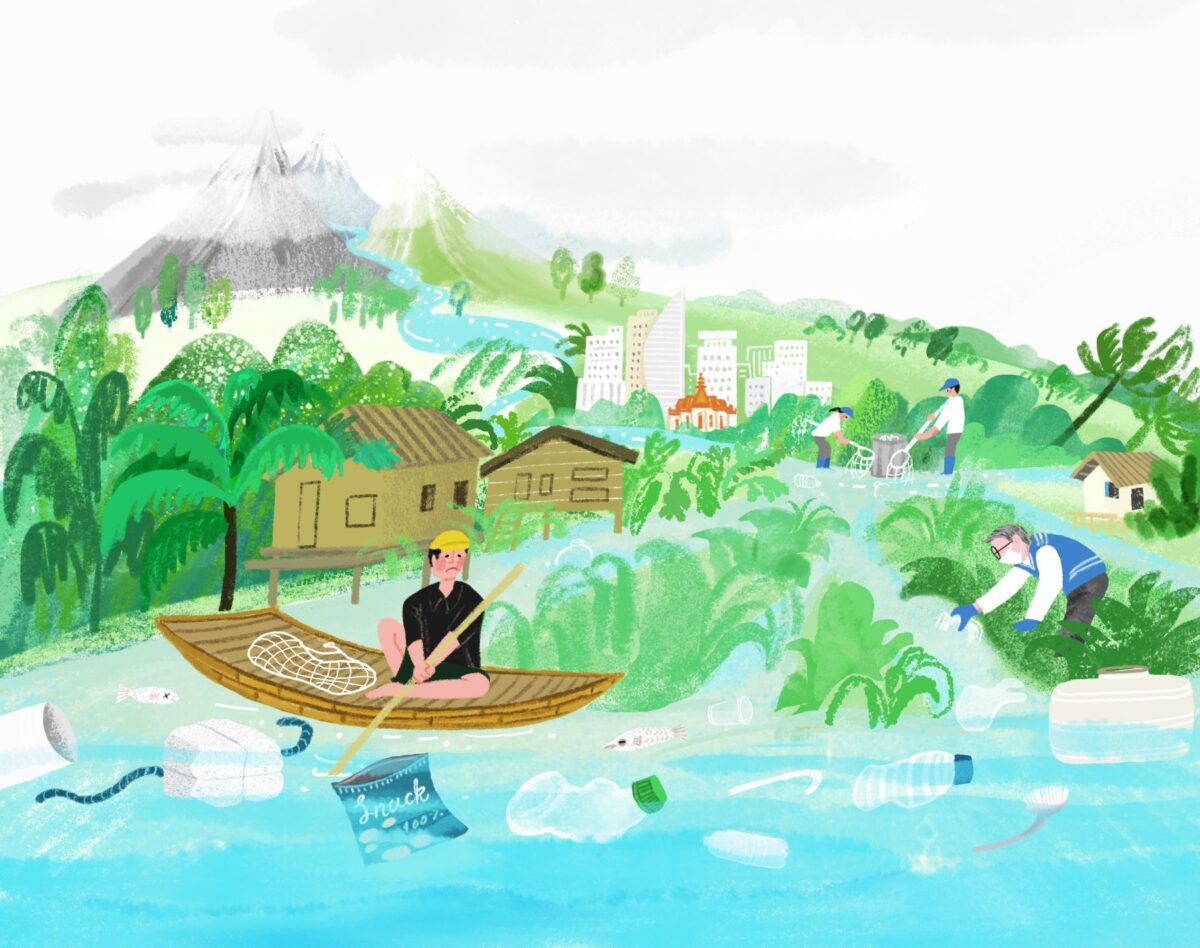
Plastic is now ubiquitous in the Mekong, Asia’s Mother of Rivers, and experts and local people are struggling to contain the risks to human health, biodiversity and livelihoods

ILLUSTRATION: Sunhee Park / Dialogue Earth

On Sơn Island in Viet Nam’s Mekong Delta, Le Trung Tin scatters fish feed into his ponds, where dozens of snakehead fish leap through the surface in synchronized bursts. “I taught them how to do that,” he says proudly, tossing another handful of feed at his fish.

The scene looks idyllic, but Le’s fish farm is a reluctant response to an escalating crisis. For decades, he made his living fishing the Hậu River, a distributary of the Mekong. But in recent years, plastic waste clogged his nets and strangled the fish. “I had no choice but to stop,” he says. “Everything was tangled – trash, nets, even the fish themselves. It was hopeless.”

Now, Le relies on enclosed ponds using filtered water to keep his fish alive. “I built this ecological environment free of plastic waste, chemical spills and [protected it from] extreme weather,” he says.

https://player.vimeo.com/video/1037846174?dnt=1&app_id=122963VIDEO: Anton L. Delgado/Dialogue Earth

Le’s experience reflects the wider challenges facing the Mekong. Stretching over 4,300 kilometres from the Tibetan Plateau to the South China Sea, the river supports nearly 70 million people and some of the world’s most biodiverse ecosystems. Yet, it is one of the most plastic-polluted rivers in the world and among the 10 rivers in Asia that carry the vast majority of plastic to the sea. The Mekong dumps – by some estimates – tens of thousands of tonnes each year into the ocean, with plastic waste accumulating along its banks, tributaries and lakes.

Plastic enters the Mekong in myriad ways – agricultural runoff, unregulated dumping and a flood of single-use packaging from upstream countries like China and Myanmar. It accumulates in hotspots like Tonle Sap Lake in Cambodia and the wetlands of Vietnam’s Mekong Delta, where this plastic waste threatens biodiversity, food security and human health.

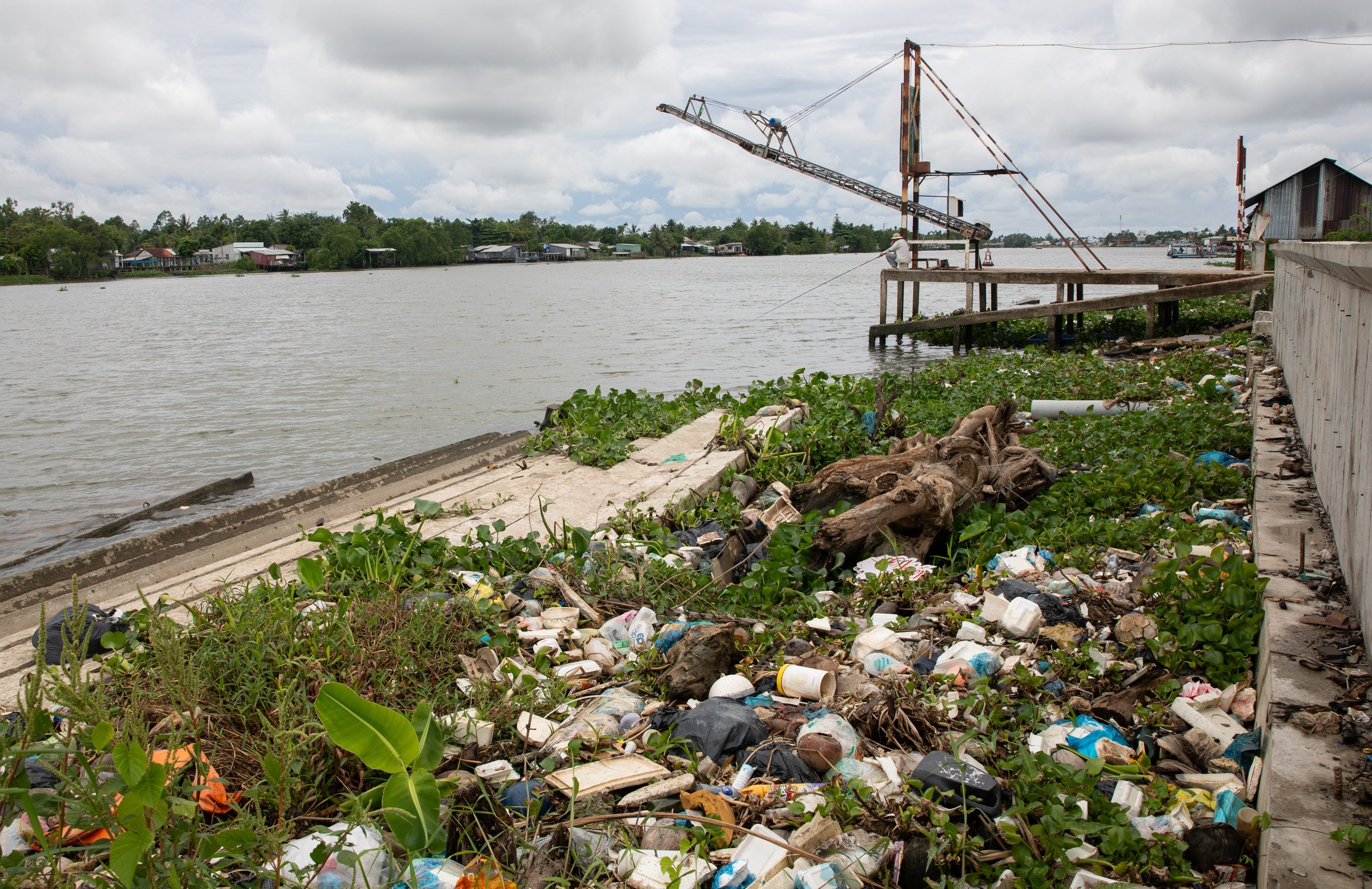
Plastics and other waste scattered along the riverbank
Plastics and other waste accumulate along the riverbank near the city of Can Tho in Vietnam’s Mekong Delta region. PHOTO: Anton L. Delgado / Dialogue Earth

Tiếp tục đọc “Plastic is choking the Mekong River”