“Cool” years are now hotter than the “warm” years of the past: tracking global temperatures through El Niño and La Niña

oneworldata.org

The world is warming despite natural fluctuations from the El Niño cycle.

In 2024, the world was around 1.5°C warmer than it was in pre-industrial times.1 You can see this in the chart below, which shows average warming relative to average temperatures from 1861 to 1890.2

Temperatures, as defined by “climate”, are based on temperatures over longer periods of time — typically 20-to-30-year averages — rather than single-year data points. But even when based on longer-term averages, the world has still warmed by around 1.3°C.3

But you’ll also notice, in the chart, that temperatures haven’t increased linearly. There are spikes and dips along the long-run trend.

Many of these short-term fluctuations are caused by “ENSO” — the El Niño-Southern Oscillation — a natural climate cycle caused by changes in wind patterns and sea surface temperatures in the Pacific Ocean.

While it’s caused by patterns in the Pacific Ocean and most strongly affects countries in the tropics, it also impacts global temperatures and climate.

There are two key phases of this cycle: the La Niña phase, which tends to cause cooler global temperatures, and the El Niño phase, which brings hotter conditions. The world cycles between El Niño and La Niña phases every two to seven years.4 There are also “neutral” periods between these phases where the world is not in either extreme.

The zig-zag trend of global temperatures becomes understandable when you are taking the phases of the ENSO cycles into account. In the chart below, we see the data on global temperatures5, but the line is now colored by the ENSO phase at that time.6

The El Niño (warm phase) is shown in orange and red, and the La Niña (cold phase) is shown in blue.

You can see that temperatures often reach a short-term peak during warm El Niño years before falling back slightly as the world moves into La Niña years, shown in blue.
Full article https://ourworldindata.org/global-temperatures-el-nino-la-nina?utm_source=OWID+Newsletter&utm_campaign=df01bb5c85-biweekly-digest-2025-03-07&utm_medium=email&utm_term=0_-0c7f305164-537125314

Myanmar’s military rule is crippling hope for young people like never before

theconversation.com Published: March 12, 2025 5.03pm GMT

Myanmar has struggled with civil war, military rule and widespread poverty for much of the past seven decades. But the country’s youth have never faced threats to their survival and future as severe as today.

The military coup of February 2021 shattered the hopes of many young people in Myanmar who had envisioned a better and more stable future under their democratically elected leader, Aung San Suu Kyi.

As brutal crackdowns on peaceful protests unfolded, thousands of young people fled to the jungles to take up arms. Hundreds of thousands more joined the civil disobedience movement, abandoning their studies to protest military rule through demonstrations and strikes.

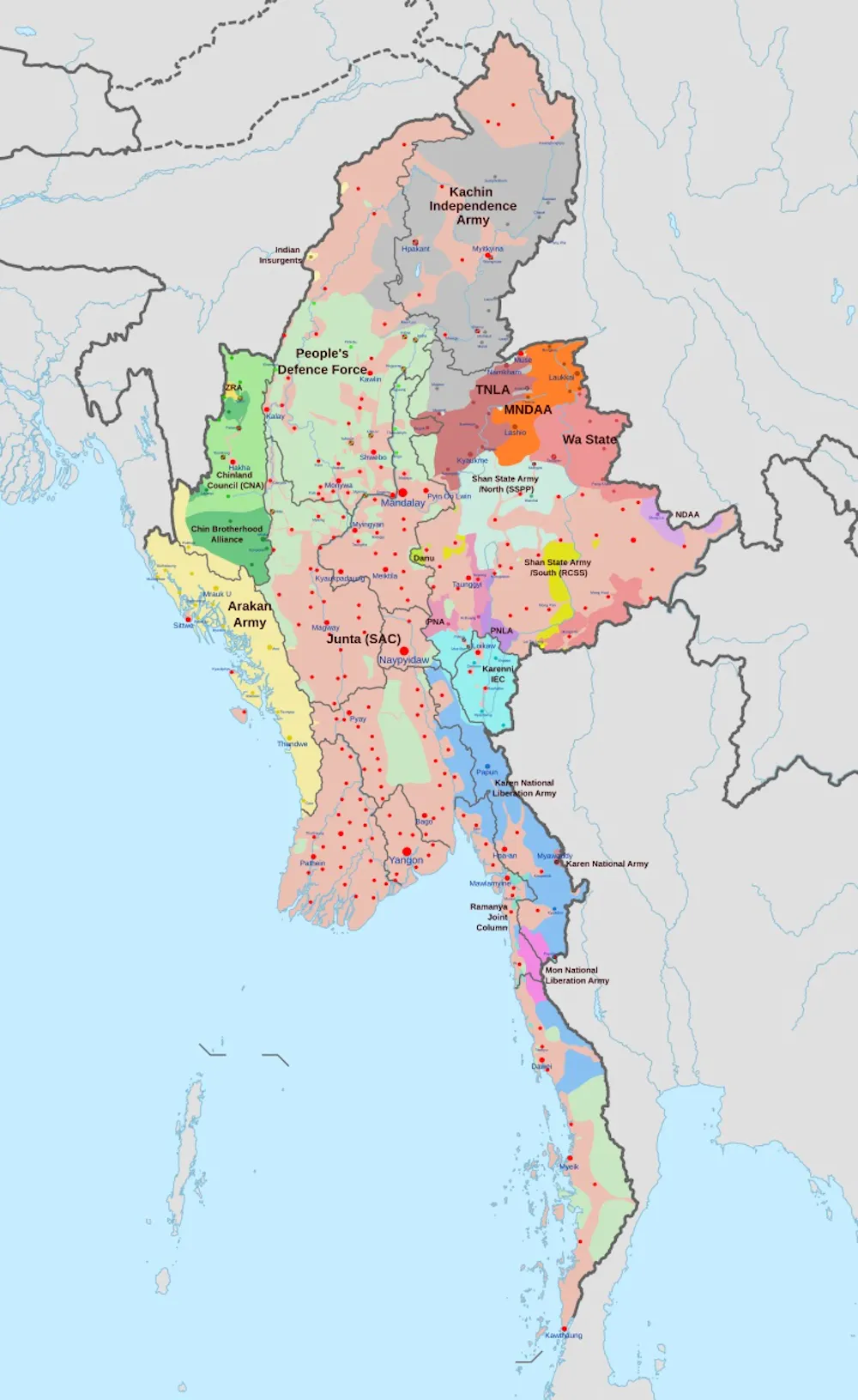
A map of Myanmar showing the military situation there as of February 4.
The military situation in Myanmar as of February 4 2025. Wikimedia Commons

Myanmar’s armed opposition has made significant gains over the past year, seizing vast territories from the military – though the latter still controls major cities like Naypyidaw, Yangon, and Mandalay.

Amid the surging violence, young people in Myanmar are finding themselves even more deprived of opportunities and increasingly forced into submission.

In February 2024, Myanmar’s junta declared mandatory military service for men aged 18 to 35 and women aged 18 to 27. Those who do not comply face up to five years in prison.

Tiếp tục đọc “Myanmar’s military rule is crippling hope for young people like never before”