Why work-life balance is a struggle in Asia

South China Morning Post – 28-2-2025

The Tokyo government is set to introduce a four-day work week for its employees starting in April 2025, following a similar move made by Singapore in December. Governments and companies in Asia have generally been slower than their Western counterparts in taking steps to adopt a healthy work-life balance. For decades, Japan’s work culture has been synonymous with gruelling hours and self-sacrifice. Is Tokyo’s introduction of a four-day work week the start of a shift away from a culture of overwork in Japan and across the region, or is it just a pipe dream for Asia?

China’s youth face growing job crisis | 101 East Documentary

Al Jazeera English – 27-2-2025
China is experiencing a prolonged economic slowdown, which has led to a youth unemployment crisis.

In 2023, the rate of 16 to 24-year-olds unable to find jobs reached a record high of 21.3 percent.

Following the release of those figures, the government suspended reporting before revising its methodology to exclude university students.

According to the latest figures, the rate is now 15.7 percent. Young people say they are having to settle for low-paying jobs, if they can find one at all.

101 East follows young jobseekers as they navigate China’s challenging labour market.

US – One nation, under God

February 26, 2025, New York Times newsletter

Good morning. We’re covering a new report about religion in America.

A woman kneels in prayer on a red carpeted floor, inside a small chapel with wood paneling on the walls.
In Cumberland, Md. Maggie Shannon for The New York Times

One nation, under God

By Lauren Jackson – I’m working on a project about belief.

As religion in America declined, experts administered last rites.

Churches were approaching “their twilight hour” as attendance fell, The Brookings Institution wrote in 2011. In his 2023 book, “Losing Our Religion,” the evangelical preacher Russell Moore asked: “Can American Christianity survive?

The answer appears to be yes. People have stopped leaving churches en masse, according to a new study released this morning by Pew Research. America’s secularization is on pause for now, likely because of the pandemic and the country’s stubborn spirituality. Most Americans — 92 percent of adults — say they hold one or more spiritual beliefs that Pew asked about:

Tiếp tục đọc “US – One nation, under God”

Heaven & Earth (1993)

Wikipedia – Heaven & Earth is a 1993 American biographical war drama film written and directed by Oliver Stone, and starring Tommy Lee Jones, Haing S. Ngor, Joan Chen, and Hiep Thi Le. It is the third and final film in Stone’s Vietnam War trilogy, following Platoon (1986) and Born on the Fourth of July (1989).

The film was based on the books When Heaven and Earth Changed Places and Child of War, Woman of Peace, both authored by Le Ly Hayslip about her experiences during and after the Vietnam War. It received mixed reviews and performed poorly at the box office. Tiếp tục đọc “Heaven & Earth (1993)”

CDC Hà Nội lên tiếng về ca bệnh COVID-19 vừa ghi nhận

– Anh Tuấn  –  Thứ ba, 18/02/2025 15:44 (GMT+7)

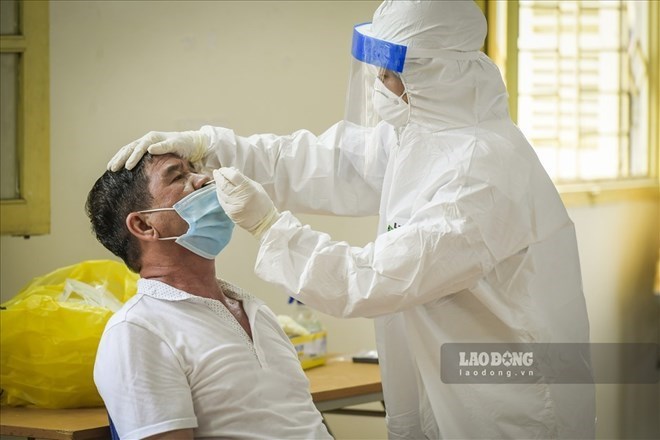
Trong tuần vừa qua, tại quận Cầu Giấy (Hà Nội) ghi nhận 1 trường hợp mắc COVID-19. Tính cộng dồn năm 2025, Hà Nội đã ghi nhận 3 ca COVID-19.

CDC Hà Nội lên tiếng về ca bệnh COVID-19 vừa ghi nhận
Hà Nội ghi nhận một ca COVID-19 ở Cầu Giấy. Ảnh: Hà Phương

Theo báo cáo cập nhật dịch bệnh trong tuần gần đây nhất (từ ngày 7 – 14.2) của Trung tâm Kiểm soát bệnh tật thành phố Hà Nội (CDC Hà Nội), toàn thành phố ghi nhận 32 trường hợp mắc tay chân miệng, tăng 22 trường hợp so với tuần trước, không có tử vong.

CDC Hà Nội cũng cho biết, tuần qua ghi nhận 1 trường hợp mắc COIVD-19 tại quận Cầu Giấy. Từ đầu năm 2025 đến nay, thành phố ghi nhận 3 trường hợp mắc COVID-19, không có tử vong. Số mắc COIVD-19 hiện giảm mạnh so với cùng kỳ 2024 (318 ca).

Tiếp tục đọc “CDC Hà Nội lên tiếng về ca bệnh COVID-19 vừa ghi nhận”

Chi tiết bộ máy các cơ quan Quốc hội và gương mặt mới của Ủy ban Thường vụ Quốc hội

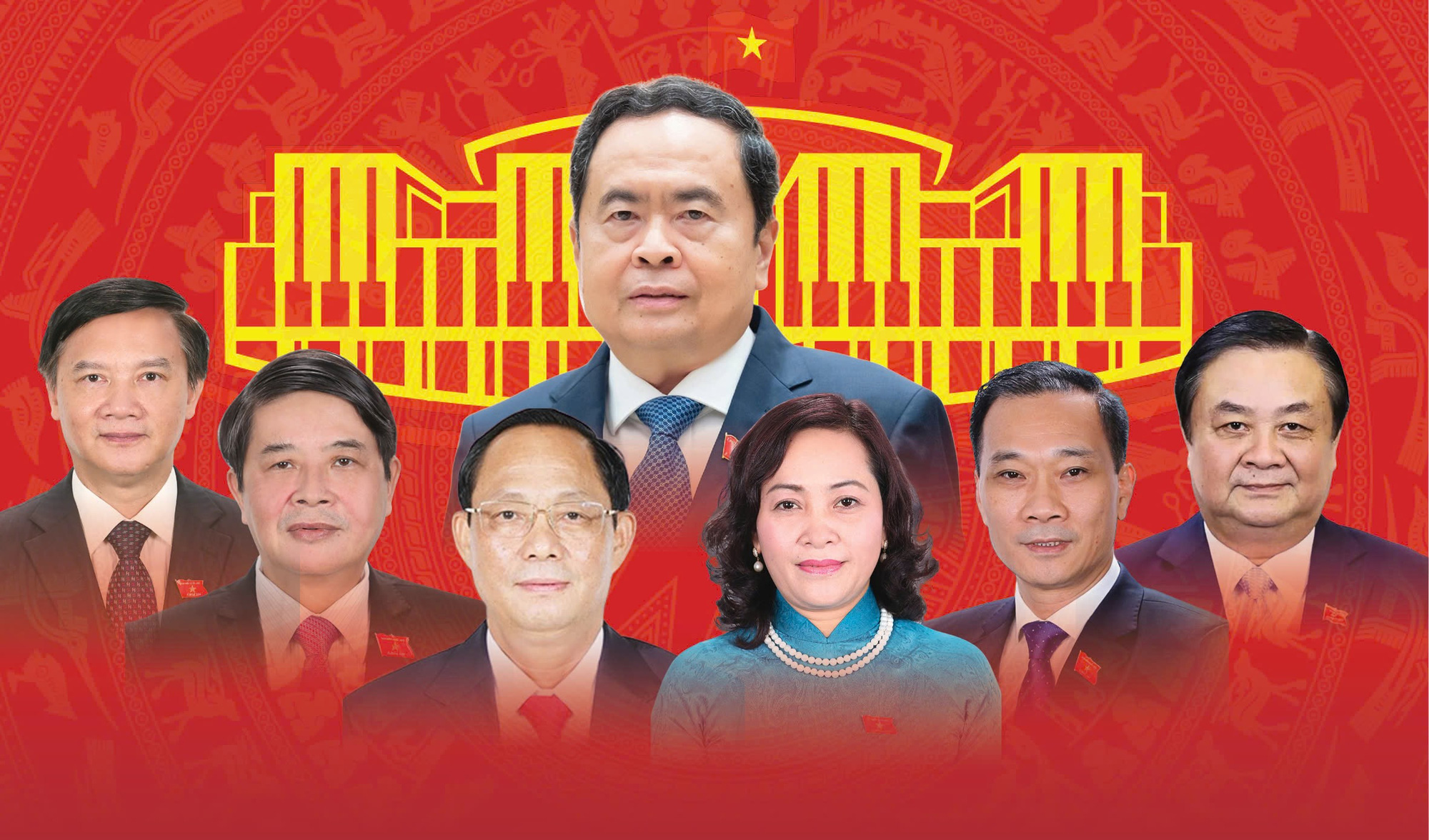
Dưới đây là chi tiết các nhân sự Ủy ban Thường vụ Quốc hội, các cơ quan Quốc hội nhiệm kỳ khóa XV sau kiện toàn.

Chi tiết kiện toàn nhân sự Ủy ban Thường vụ Quốc hội, các cơ quan của Quốc hội - Ảnh 1.
Ảnh ghép: NGỌC THÀNH

Ngày 18-2, Quốc hội đã thông qua nghị quyết về việc tổ chức các cơ quan của Quốc hội và nghị quyết của Quốc hội về số thành viên của Ủy ban Thường vụ Quốc hội khóa XV (sửa đổi), kiện toàn nhân sự.

Tiếp tục đọc “Chi tiết bộ máy các cơ quan Quốc hội và gương mặt mới của Ủy ban Thường vụ Quốc hội”

Bộ trưởng, trưởng ngành các bộ mới hợp nhất được Quốc hội phê chuẩn

TT – 18/02/2025 16:48 GMT+7

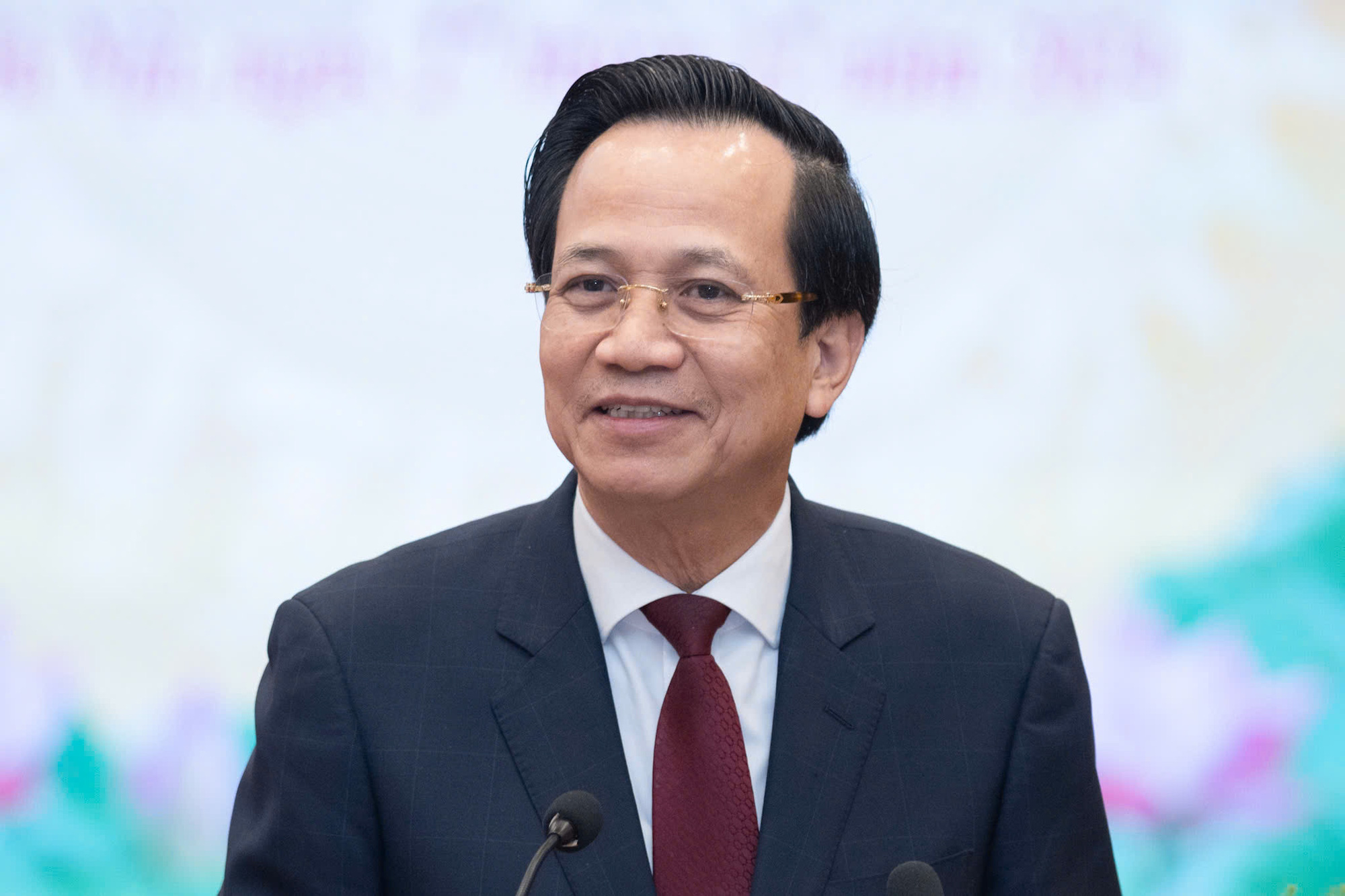
Ngày 18-2, Quốc hội phê chuẩn, bổ nhiệm bốn bộ trưởng các bộ vừa được thành lập mới trên cơ sở hợp nhất các bộ ngành.

Bộ trưởng, trưởng ngành các bộ mới hợp nhất được Quốc hội phê chuẩn - Ảnh 1.
Bộ trưởng Đào Ngọc Dung đảm nhiệm Bộ trưởng Bộ Dân tộc và Tôn giáo – Ảnh: Q.H.

Trên cơ sở Quốc hội biểu quyết thông qua nghị quyết về cơ cấu tổ chức của Chính phủ nhiệm kỳ Quốc hội khóa XV; nghị quyết về cơ cấu số lượng thành viên Chính phủ nhiệm kỳ Quốc hội khóa XV, tờ trình của Thủ tướng Chính phủ về việc phê chuẩn bổ nhiệm các chức vụ, Quốc hội đã phê chuẩn bổ nhiệm bốn bộ trưởng.

Tiếp tục đọc “Bộ trưởng, trưởng ngành các bộ mới hợp nhất được Quốc hội phê chuẩn”

Trung tâm y tế ở Đắk Lắk ‘hoãn mổ’ vì thiếu trầm trọng bác sĩ

19/01/2025 | 15:51

TPOTrong vòng 4 năm, trên 160 viên chức y tế Đắk Lắk xin thôi việc. Riêng 1 trung tâm y tế có tới 5 bác sĩ bỏ việc, xin chuyển công tác; đang đối mặt với nhiều khó khăn khi thiếu tới 15 bác sĩ.

Bác sĩ làm việc trong môi trường có nhiều áp lực

Bác sĩ Trần Anh Hùng – Phó Giám đốc phụ trách Trung tâm Y tế huyện Krông Búk (Đắk Lắk) cho biết, đang đối mặt với nhiều khó khăn khi nhiều bác sĩ lần lượt chuyển đi.

Từ năm 2022 đến nay, tại Trung tâm Y tế huyện Krông Búk có 2 bác sĩ bỏ việc và 3 người xin chuyển công tác.

Trung tâm đang thiếu tới 15 bác sĩ, chủ yếu là bác sĩ chuyên khoa như: Răng hàm mặt, tai mũi họng, mắt, da liễu. Đặc biệt, do thiếu bác sĩ ngoại, sản, gây mê, nên trung tâm chưa triển khai phương pháp phẫu thuật.

Tiếp tục đọc “Trung tâm y tế ở Đắk Lắk ‘hoãn mổ’ vì thiếu trầm trọng bác sĩ”

Global Risks Report 2025: Conflict, Environment and Disinformation Top Threats

Reliefweb.int

Full report https://www.weforum.org/publications/global-risks-report-2025/

World Economic Forum, public.affairs@weforum.org

  • State-based armed conflict emerges as the top immediate risk for 2025, identified by nearly a quarter of respondents, reflecting heightened geopolitical tensions and fragmentation globally.
  • Misinformation and disinformation lead the short-term risks and may fuel instability and undermine trust in governance, complicating the urgent need for cooperation to address shared crises.
  • Environmental risks dominate the 10-year horizon, led by extreme weather events, biodiversity loss and ecosystem collapse.
  • Read the Global Risks Report 2025 here and join the conversation using #Risks25. Follow the Annual Meeting here and on social media using #WEF25

Geneva, Switzerland, 15 January 2025 – The 20th edition of the World Economic Forum’s Global Risks Report, released today, reveals an increasingly fractured global landscape, where escalating geopolitical, environmental, societal and technological challenges threaten stability and progress. While economic risks have less immediate prominence in this year’s survey results, they remain a concern, interconnected with societal and geopolitical tensions.

State-based armed conflict is identified as the most pressing immediate global risk for 2025, with nearly one-quarter of respondents ranking it as the most severe concern for the year ahead.

Misinformation and disinformation remain top short-term risks for the second consecutive year, underlining their persistent threat to societal cohesion and governance by eroding trust and exacerbating divisions within and between nations. Other leading short-term risks include extreme weather events, societal polarization, cyber-espionage and warfare.

Environmental risks dominate the longer-term outlook, with extreme weather events, biodiversity loss and ecosystem collapse, critical change to Earth systems and natural resources shortages leading the 10-year risk rankings. The fifth environmental risk in the top 10 is pollution, which is also perceived as a leading risk in the short term. Its sixth-place ranking in the short term reflects a growing recognition of the serious health and ecosystem impacts of a wide range of pollutants across air, water and land. Overall, extreme weather events were identified prominently as immediate, short-term and long-term risks.

The long-term landscape is also clouded by technological risks related to misinformation, disinformation and adverse outcomes of AI technologies.

“Rising geopolitical tensions and a fracturing of trust are driving the global risk landscape” said Mirek Dušek, Managing Director, World Economic Forum. “In this complex and dynamic context, leaders have a choice: to find ways to foster collaboration and resilience, or face compounding vulnerabilities.”

Fractured systems, fragile futures

The report, which draws on the views of over 900 global risks experts, policy-makers and industry leaders surveyed in September and October 2024, paints a stark picture of the decade ahead. Respondents are far less optimistic about the outlook for the world over the longer term than the short term. Nearly two-thirds of respondents anticipate a turbulent or stormy global landscape by 2035, driven in particular by intensifying environmental, technological and societal challenges.

Over half of respondents expect some instability within two years, reflecting the widespread fracturing of international cooperation. Long-term projections signal even greater challenges as mechanisms for collaboration are expected to face mounting pressure. Societal risks such as inequality and societal polarization feature prominently in both short- and long-term risk rankings. Rising concerns about illicit economic activity, mounting debt burdens and the concentration of strategic resources highlight vulnerabilities that could destabilize the global economy in the coming years. All these issues risk exacerbating domestic instability and eroding trust in governance, further complicating efforts to address global challenges.

All 33 risks in the ranking increase in severity score over the longer term, reflecting respondents’ concerns about the heightened frequency or intensity of these risks as the next decade unfolds.

“From conflicts to climate change, we are facing interconnected crises that demand coordinated, collective action,” says Mark Elsner, Head of the Global Risks Initiative, World Economic Forum. “Renewed efforts to rebuild trust and foster cooperation are urgently needed. The consequences of inaction could be felt for generations to come.”

A decisive decade: Collaboration as the key to stability

As divisions deepen and fragmentation reshapes geopolitical and economic landscapes, the need for effective global cooperation has never been more urgent. Yet, with 64% of experts anticipating a fragmented global order marked by competition among middle and great powers, multilateralism faces significant strain.

However, turning inward is not a viable solution. The decade ahead presents a pivotal moment for leaders to navigate complex, interconnected risks and address the limitations of existing governance structures. To prevent a downward spiral of instability – and instead rebuild trust, enhance resilience, and secure a sustainable and inclusive future for all – nations should prioritize dialogue, strengthen international ties and foster conditions for renewed collaboration.

Links to other visuals and graphics

– Current Risk Landscape – 2025

– Global risks ranked by severity- 2 years

– Global Risks ranked by severity – 10 years

– Short and long-term global outlook

– Global risks landscape an interconnections map

About the Global Risks Report
The Global Risks Report is the World Economic Forum’s flagship publication on global risks, now in its 20th edition. Produced by the Global Risks Initiative at the Forum’s Centre for the New Economy and Society, the report leverages insights from the Global Risks Perception Survey, which draws on the views of over 900 global leaders across business, government, academia and civil society. The report identifies and analyses the most pressing risks across immediate, short- and long-term horizons, aiming to equip leaders with foresight to address emerging challenges. It serves as a key resource for understanding the evolving global risk landscape and fostering collective action to build a more resilient future.

For more information, visit the Global Risks Initiative and read the full report here.

Hanoi becomes world’s most polluted city

South China Morning Post – 13-2-2025

The Vietnamese capital Hanoi has taken the top spot for air pollution among global cities, according to the Air Quality Index (AQI) operated by leading air-quality technology company IQAir on February 12, 2025. Persistent smog has residents and tourists alike worried about whether the hazardous air may be causing long-term damage to human health.

Bhutan at the frontier of the climate crisis | 101 East Documentary

Al Jazeera English – 6-2-2025

The small Himalayan nation of Bhutan was the world’s first carbon-negative country.

With 70 % of its land covered by forests, it absorbs three times more carbon dioxide than it emits.

The environment is protected by the country’s constitution, and it is illegal to cut down trees without a permit.

Bhutan’s fast-flowing rivers provide the country with clean energy, making it almost entirely powered by hydroelectricity.

However, climate change and global warming are drying up rivers and threatening the country’s power supply.

In the high mountains, rising temperatures are causing glacial lakes to melt, increasing the risk of floods and other natural disasters.

101 visits Bhutan, a country at the frontier of climate change.

Tóm tắt tình hình Biển Đông năm 2024

Nghiên cứu Quốc tế – 03/02/2025 – 17:24

Những diễn biến lớn ở Biển Đông trong năm 2024 không báo hiệu điều tốt lành cho năm 2025.

Nguồn: Carl Thayer, “The State of the South China Sea: Coercion at Sea, Slow Progress on a Code of Conduct,” The Diplomat, 27/01/2025

Biên dịch: Nguyễn Thị Kim Phụng

Có bốn diễn biến chính định hình môi trường an ninh ở Biển Đông năm 2024: (1) Trung Quốc gia tăng hành vi cưỡng ép đối với tàu thuyền và máy bay của hải quân Philippines; (2) Philippines thông qua chiến lược phòng thủ biển mới; (3) Việt Nam tăng cường hoạt động xây dựng tại quần đảo Trường Sa; và (4) đàm phán về Bộ Quy tắc Ứng xử (COC) tiến triển chậm chạp.
Tiếp tục đọc “Tóm tắt tình hình Biển Đông năm 2024”

The National Security Imperative of USAID’s Food Security Programs

Climateandsecurity.org

As of today, the Trump Administration has paused two essential US global food security initiatives, Feed the Future and the Famine Early Warning Systems Network (FEWS NET). Created in reaction to the 2007-8 global food crisis and resulting instability, Feed the Future is a marquee US government food security program and tool for implementing the bipartisan Global Food Security Act, working in 20 countries to build a more resilient food system and supporting agricultural innovation at 17 US universities. Operating since 1985, FEWS NET provides rigorous analysis and forecasting of acute food insecurity to inform US and other humanitarian responses in 30 countries.

These programs make invaluable contributions to US national security and global stability. For example, Feed the Future builds resilience in five countries where the US National Intelligence Estimate on climate change assesses “building resilience…would probably be especially helpful in mitigating future risks to US interests.” In Central America, where drought during growing seasons has driven increased migration to the United States, Honduran Feed the Future beneficiaries report a 78% lower intent to migrate than the wider population. Meanwhile, FEWSNET’s data and analysis more quickly and efficiently direct US humanitarian support in reaction to conflict, economic shocks, and extreme weather, including in regions where the US military is deployed. 

Both programs have historically received consistent bipartisan support. Speaking at the launch of a new Feed the Future initiative last year, Senator John Boozman (R-AR) noted, “food security is national security.” Another Feed the Future supporter, Representative Tracey Mann (R-KS 1st District), has highlighted the value of his district’s Feed the Future Innovation Lab and stated that global food security programs have “an especially strong return on investment because they support American agriculture producers today, while greatly reducing the need for conflict or war-related dollars spent tomorrow” and are “a way to stop wars before they start.” As Executive Director of the World Food Program (2017-2023), former South Carolina Governor and Representative David Beasely testified to the Senate that “Investments in early warning systems like USAID’s Famine Early Warning System…allow humanitarian partners to project and respond in real time to potential emergencies….Without this capacity to forecast food insecurity, the cost of humanitarian intervention is much greater, both in dollars and lives lost.”

Last year, dozens of national security leaders, including the former commanders of Indo-Pacific Command (INDOPACOM), Africa Command (AFRICOM), and Central Command (CENTCOM), endorsed the Council on Strategic Risks’ The Feeding Resilience Plan: Safeguarding US National Security at the Crossroads of Food and Climate Change. The report makes recommendations to US policymakers to better anticipate, prevent, and respond to food- and climate-driven national security threats, including to:

  • “Support long-term resilience building in vulnerable countries by sustaining and expanding Feed the Future,” noting it and similar programs “bolster vulnerable countries’ ability to withstand food shocks and forestall security threats or need for costly US assistance,” and
  • “Expand on USAID’s FEWS NET to include longer-term food insecurity warnings” and to have security and defense agencies better “integrate FEWSNET projections with processes to forecast political instability and conflict.”

Amid multiplying threats from instability, extreme weather, and geopolitical competition, these recommendations remain critical today, and highlight the important national security benefits of capabilities like Feed the Future and FEWS NET.  

USAID Provides Critical Benefits to US National Security

Councilonstrategicrisks.org February 4, 2025

Center for Climate and Security, CSR Blog


The Trump Administration’s effort to try to shut down USAID and pause all foreign aid directly harms US national security, including by interrupting critical investments into resilience, adaptation, conflict prevention, and peacebuilding. In 2021, 79 senior national security leaders, including 8 retired 4-star generals and admirals, a former Director of National Intelligence, and a former Director of the Central Intelligence Agency, signed the Challenge Accepted report, which argued that USAID investments in resilience and adaptation were critical to preventing instability and conflict and maintaining the US competitive edge with China. 

In the Indo-Pacific, USAID investments in disaster response and resilience pay dividends in strengthening relationships with allies and partners critical to that competition with China. Take Papua New Guinea as an example, where the US signed a new security pact in 2022, gaining exclusive access to develop and operate out of PNG bases. As Admiral Sam Locklear, former head of US INDOPACOM, and Erin Sikorsky, Director of CCS, wrote, “To sustain and maintain this presence, the United States will need access to reliable energy sources, clean, fresh water, and an economically vibrant, healthy local population.” Those functions are all supported by USAID efforts, such as the $3.5 million in disaster response funds the agency allocated to PNG in 2024. 

Meanwhile, in the Sahel region of Africa, USAID investments in climate adaptation and resilience help prevent extremist and terrorist group recruitment in communities affected by climate hazards.  For example, the Resilience in the Sahel Enhanced (RISE) program funded by USAID aims to break cycles of crisis in the region that enable groups like Boko Haram and ISIS-W to thrive. AS US AFRICOM Commander Michael Langley noted in testimony to Congress, international aid and development programs “attack the roots of terrorism and tyranny more than bullets and air strikes ever will.”

Further, as we outlined in this article last week, USAID programs focused on agriculture resilience have helped curb irregular migration from Honduras to the United States by helping local farmers weather risk and stay in the country. Upstream investments before crises hit cost significantly less than waiting until such challenges become full-blown crises. 

The bottom line is that addressing critical, bipartisan national security priorities requires a robust 3D approach to US foreign policy—defense, diplomacy, and development. Anything less is short-sighted and puts the country at risk. CCS Advisory Board member and former commander of US Central Command General Anthony Zinni (USMC, Ret.) has endorsed CCS recommendations to expand USAID work on climate and food security. He said as Co-Chair of the US Global Leadership Coalition’s National Security Advisory Council, “a freeze on all U.S. foreign assistance – at a time when our rivals are playing to win – takes the U.S. off the playing field and diminishes U.S. strength around the world.”

Online fraud leaves nobody safe – The vast and sophisticated global enterprise that is Scam Inc

economist.com

EDGAR MET Rita on LinkedIn. He worked for a Canadian software company, she was from Singapore and was with a large consultancy. They were just friends, but they chatted online all the time. One day Rita offered to teach him how to trade crypto. With her help, he made good money. So he raised his stake. However, after Edgar tried to cash out, it became clear that the crypto-trading site was a fake and that he had lost $78,000. Rita, it turned out, was a trafficked Filipina held prisoner in a compound in Myanmar.

In their different ways, Edgar and Rita were both victims of “pig-butchering”, the most lucrative scam in a global industry that steals over $500bn a year from victims all around the world. In “Scam Inc”, our eight-part podcastThe Economist investigates the crime, the criminals and the untold suffering they cause. “Scam Inc” is about the most significant change in transnational organised crime in decades.

Pig-butchering, or sha zhu pan, is Chinese criminal slang. First the scammers build a sty, with fake social-media profiles. Then they pick the pig, by identifying a target; raise the pig, by spending weeks or months building trust; cut the pig, by tempting them to invest; and butcher the pig by squeezing “every last drop of juice” from them, their family and friends.

The industry is growing fast. In Singapore scams have become the most common felony. The UN says that in 2023 the industry employed just under 250,000 people in Cambodia and Myanmar; another estimate puts the number of workers worldwide at 1.5m. In “Scam Inc” we report how a man in Minnesota lost $9.2m and how a bank in rural Kansas collapsed when its chief executive embezzled $47m to invest in crypto, under the tutelage of a fake online woman, called Bella. A part-time pastor, he also stole from his church.

Online scamming compares in size and scope to the illegal drug industry. Except that in many ways it is worse. One reason is that everyone becomes a potential target simply by going about their lives. Among the victims we identify are a neuroscience PhD and even relatives of FBI investigators whose job is to shut scams down. Operating manuals give people like Rita step-by-step instructions on how to manipulate their targets by preying on their emotions. It is a mistake to think romance is the only hook. Scammers target all human frailties: fear, loneliness, greed, grief and boredom.