South African, left, and Israel’s delegation, right, stand during session at the International Court of Justice, or World Court, in The Hague, Netherlands, Friday, Jan. 26, 2024. Israel is set to hear whether the United Nations’ top court will order it to end its military offensive in Gaza during a case filed by South Africa accusing Israel of genocide. (AP Photo/Patrick Post)
BY JOSEF FEDERMANUpdated 2:46 AM GMT+7, January 27, 2024 AP
JERUSALEM (AP) — The U.N. world court on Friday came down hard on Israel’s war on Hamas in the Gaza Strip, calling on Israel to “take all measures” to prevent a genocide of the Palestinians. But it stopped short of demanding an immediate cease-fire, as the South African sponsors of the case had hoped.
All sides tried to claim victory with the ruling, seizing on different elements that buttressed their positions.
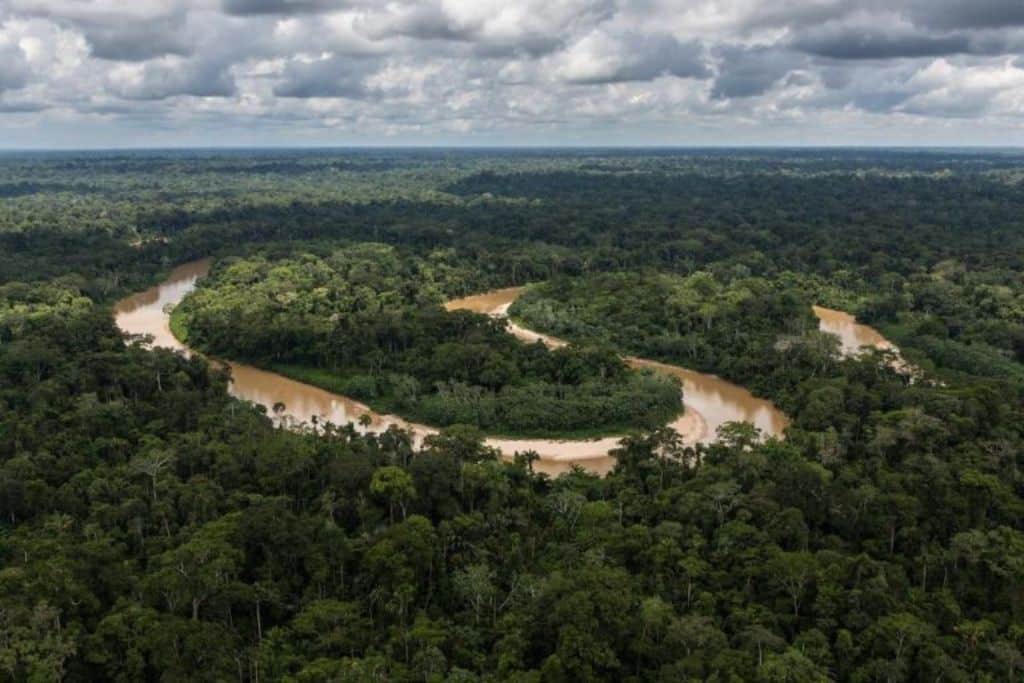
The months-long drought – a 1 in 100 years event – has dried up large parts of the Amazon River, with water levels at their lowest in more than a century.
—
Climate change is the main driver behind the exceptional drought that has been affecting the Amazon River since mid-2023, with the return of El Niño further exacerbating the situation, new research suggests.
A group of scientists from the World Weather Attribution (WWA) group used published peer-reviewed methods to assess the role of climate change and El Niño in influencing the drought, which is affecting an estimated 30 million people that rely on the river for transport, food, and power. They found that climate change-driven high temperatures were the main driver of the historic drought – a 1 in 100 year event on the Standardized Precipitation Index (SPI). On the other hand, the El Niño – a phenomenon that warms the Pacific Ocean and historically a driver of drought – had a “much smaller influence.”
President of Belarus Alexander Lukashenko attends the CSTO Collective Security Council meeting in Minsk, Belarus, 23 November 2023. [EPA-EFE/SERGY GUNEEV / KREMLIN / POOL]
Belarusian propaganda positions the EU as its main enemy, but several other features make it a unique case among its European neighbours.
*The author of this text remains anonymous due to fear of repercussions in their home country.
The most important and, at the same time, the most destructive peculiarity of disinformation in Belarus is strong Russian influence, which has deep historical roots and covers various spheres, from economy and culture to the military sector.
However, nowadays, Russian propaganda is helped by Belarusian colleagues who work to follow the same narrative.
This narrative includes turning EU countries into an economically and politically unstable military threat in the eyes of Belarusians while ignoring benefits and positives.
Innovative aircraft-based technique records carbon emissions not tracked before from the industrial region
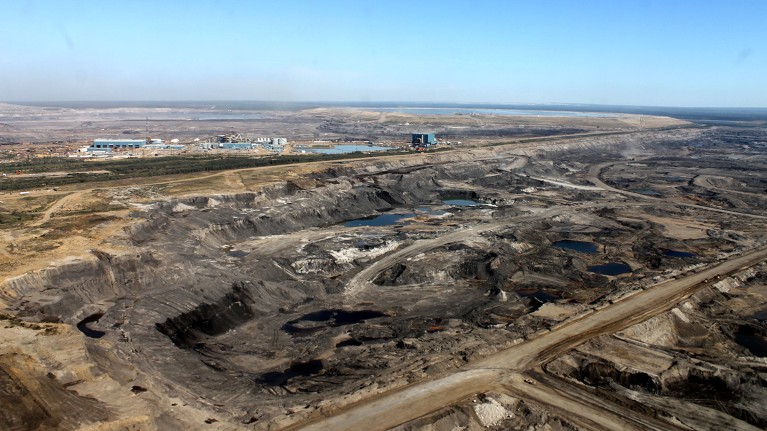
Researchers flew an aeroplane over the oil sands in Alberta, Canada, to measure all of their carbon-based emissions. Credit: John Liggio, Andrea Darlington and Andrew Elford
Canada’s controversial oil-producing tar sands generate a substantial amount of unaccounted-for carbon-based emissions that can affect air quality, according to measurements taken by aircraft. The sands release more of these pollution-causing gases than megacities such as Los Angeles, California, and about the same as the rest of Canada’s human-generated sources combined — including emissions from motor traffic and all other industries.
“No rules have been broken, or guidelines exceeded here,” says Janetta McKenzie, an oil and gas analyst for the Pembina Institute, a think tank in Calgary, Canada. “But that speaks to some issues in our rules and our guidelines.”How a dangerous stew of air pollution is choking the United States
The team that conducted the study — led by environmental engineer Drew Gentner at Yale University in New Haven, Connecticut, and chemist John Liggio at the federal agency Environment and Climate Change Canada (ECCC) in Toronto — used an innovative approach to measure all the carbon-based molecules in the air over oil sands in the province of Alberta. The researchers factored out greenhouse gases such as carbon dioxide and instead tracked only molecules important to air quality, many of which haven’t been monitored at the oil sands before. These carbon-based gases can seed particulate pollution in the air and react with other chemicals to form ground-level ozone.
The organization warns that escalating attacks on ships in the Red Sea are adding strain to shipping routes already hit by conflict and climate change.
The UN’s trade and development body, UNCTAD, has raised profound concerns over escalating disruptions to global trade.
It says that recent attacks on ships in the Red Sea, combined with geopolitical tensions affecting shipping in the Black Sea and the impacts of climate change on the Panama Canal, have given rise to a complex crisis affecting key trade routes.
UNCTAD’s head of trade logistics, Jan Hoffmann, outlined the organization’s detailed analysis of the situation at the UN’s daily press briefing on 26 January. He underlined maritime transport’s critical role in international trade, noting that it is responsible for approximately 80% of the global movement of goods.
Disruptions in the Black Sea and Panama and Suez Canals
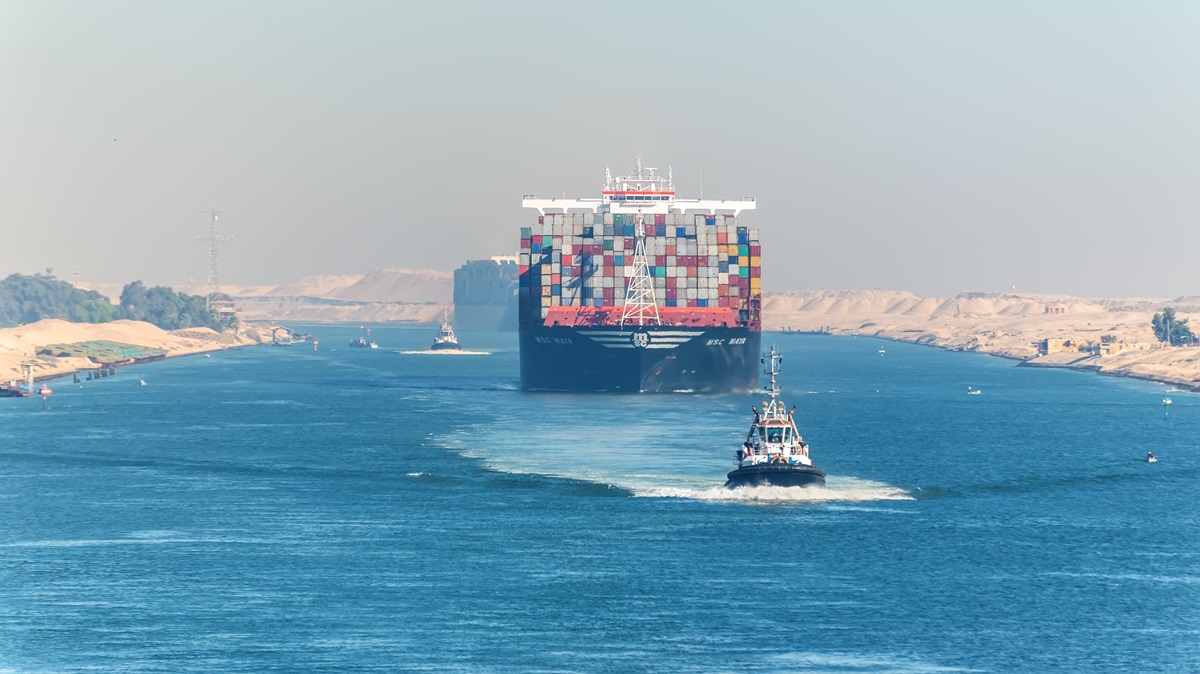
The Suez Canal, a critical waterway connecting the Mediterranean Sea to the Red Sea, handled approximately 12% to 15% of global trade in 2023. UNCTAD estimates that the trade volume going through the Suez Canal decreased by 42% over the last two months.
Red Sea crisis: Suez Canal traffic plummets
Suez Danal, daily transits, 28-day rolling average, 2016–23 January 2024, Index, Average=100201620172018201920202021202220232024020406080100120140160180200
The ongoing conflict in Ukraine has also triggered substantial shifts in oil and grain trades, reshaping established trade patterns.
Meanwhile, the Panama Canal, another key artery for global trade, is grappling with a severe drought that has diminished water levels, resulting in a staggering 36% reduction in total transits over the past month compared to a year ago.


 CVD
CVD 