
Tháng: Tháng Mười Hai 2023
“I’m furious. Furious that those with power shrug at the humanitarian nightmares unleashed on 1 mil. children.”
Quảng Bình: Lần đầu tiên bán ‘không khí’ thu về hơn 80 tỷ đồng
TP – 18/12/2023 | 06:16
Tin từ Sở NN&PTNT tỉnh Quảng Bình cho biết, lần đầu tiên và bắt đầu từ năm 2023, Quảng Bình cùng 5 tỉnh Bắc Trung Bộ nhận được nguồn tiền từ dịch vụ hấp thụ và lưu giữ carbon của rừng.
Theo đó, căn cứ Nghị định số 107/2022/NĐ-CP về thí điểm chuyển nhượng kết quả giảm phát thải (bán tín chỉ carbon) và quản lý tài chính thỏa thuận chi trả giảm phát thải khí nhà kính vùng Bắc Trung Bộ, Bộ NN&PTNT sẽ chuyển nhượng 10,2 triệu tấn CO2 vùng Bắc Trung Bộ cho Ngân hàng Tái thiết và Phát triển quốc tế (IBRD).

Quảng Bình hiện có tỉ lệ che phủ rừng thuộc tốp cao trong cả nước, hơn 60%.
Từ đó, Quỹ Bảo vệ và Phát triển rừng Trung ương sẽ nhận được 51,5 triệu USD từ Quỹ Carbon thông qua IBRD, sau đó điều phối gần 50 triệu USD đến các tỉnh theo quy định. Trong đó, Quảng Bình chuyển nhượng hơn 2,4 triệu tấn CO2, được chi trả khoảng 235 tỷ đồng trong giai đoạn 2023-2025. Riêng năm 2023, Quảng Bình được nhận 82,4 tỷ đồng (cao thứ 2 trong 6 tỉnh của khu vực).
Tiếp tục đọc “Quảng Bình: Lần đầu tiên bán ‘không khí’ thu về hơn 80 tỷ đồng”Vietnamese fruits struggle with higher standards
VNN – December 18, 2023 – 07:21
In light of the recent incident involving the destruction of two shipments of Vietnamese durians and peppers by the Japanese authorities, the vulnerability of Vietnamese agricultural exporters remains a pressing concern. This risk is particularly pronounced as importing markets tighten their standards for clean and green practices, necessitating a more proactive and comprehensive approach from the sector to keep its buyers and maintain a competitive edge.

Workers checking durians for export in the central highland province of Đắk Lắk. —VNA/VNS Photo
Tiếp tục đọc “Vietnamese fruits struggle with higher standards”
Israel-Gaza war is having a chilling effect on academic freedom
Listen to podcast https://shows.acast.com/60087127b9687759d637bade/65804f3a3c61a300185b8044
“In the UK we’ve seen suspension of students and staff from their universities. We’ve seen cancelling of events … of student activities like protests and sit-ins. We’ve seen a few cases of students that were arrested. We’ve seen students whose visas are threatened to be revoked.“
Across parts of academia, concerns are mounting that the Israel-Gaza war is having a chilling effect on academic freedom. In the second of two episodes of The Conversation Weekly exploring how the war is affecting life at universities, we speak to an Israeli legal scholar, now based in the UK, about the pressures that academics and students are facing to rein in their views about the war.https://embed.acast.com/60087127b9687759d637bade/65804f3a3c61a300185b8044
In the two months since the October 7 Hamas attack on Israel and subsequent Israeli war on Gaza, Neve Gordon is worried that there’s been a major clampdown on academic freedom in the US, Europe and Israel.
After teaching for 17 years in southern Israel, Gordon moved to the UK in 2016 and he’s now a professor of human rights and humanitarian law at Queen Mary University of London. His research looks at the laws of war with a special focus on Israel-Palestine, and on definitions of antisemitism.
He’s also the vice-president at the British Society for Middle Eastern Studies and chair of its committee on academic freedom. In this role, he’s been following the impact of the conflict on free speech at universities, and recently hosted an international webinar on the issue.
In the UK we’ve seen suspension of students and staff from their universities. We’ve seen cancelling of events … of student activities like protests and sit-ins. We’ve seen a few cases of students that were arrested. We’ve seen students whose visas are threatened to be revoked.
In Israel, Gordon told us he was aware of 113 cases in Israel of students and staff who have been suspended or dismissed, and at least ten students who have been arrested for their criticism of Israel’s attack on Gaza. “We have several students sitting behind bars for Facebook or tweets that basically express empathy for the suffering of the Palestinians,” he says.
Read more: American universities in the spotlight over reaction to Israel-Gaza war – podcast
Meanwhile, in Germany, many protests supporting Palestinian rights have been banned and Gordon says colleagues in Germany have told him that “the situation is untenable”.
All this, Gordon says, is having a chilling effect across academia.
I’m getting phone calls from friends in different universities in different countries saying that they want to cancel their Israel-Palestine course for next semester because they’re afraid that things that they will say in class can be interpreted by students as antisemitic.
Listen to the full interview with Neve Gordon on The Conversation Weekly podcast, where you can also listen to the first of our two episodes on the way the Israel-Gaza war is affecting life at universities, focusing on what’s been happening at one American public university.
13 year-old Girl under Gaza rubble asks rescuers to help relatives first
Trapped under the rubble of a 5-storey building in Gaza, a 13-year-old called Alma pleaded for rescuers to help free her relatives first. What happened to her family members is not known.
Outrage after Israeli forces kill Israeli captives in Gaza
Thousands of people have protested in Tel Aviv after Israeli forces killed three Israeli captives in Gaza who were shirtless, waving a white flag and calling for help in Hebrew. Demonstrators are demanding the gov’t reach a deal for the safe return of remaining captives
Antisemite? Really?

People, especially politicians, in the West are afraid of being called antisemite, and they may hang the antisemite label on the neck of their enemies if they get a chance.
What is so powerful about “antisemite” or “antisemitism”? Tiếp tục đọc “Antisemite? Really?”
2023: the year of the migrant crisis
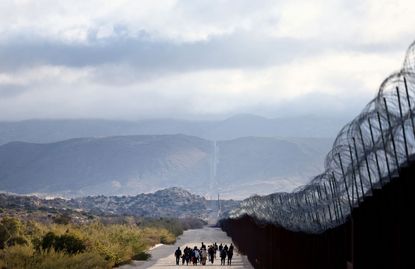
Asylum-seeking migrants walk toward a makeshift camp to await processing by the U.S. Border Patrol after crossing into the United States past a gap in the border barrier Dec. 1, 2023 in Jacumba Hot Springs, CaliforniaPUBLISHED 5 DAYS AGO
Immigration policy has been a hot-button issue for generations, in the United States and around the world. But waves of people fled their homes by land or by sea in 2023, triggering migrant crisis after migrant crisis in multiple regions. Battles over migration policy stoked domestic political feuds and diplomatic clashes.
International Organization for Migration officials told delegates at the United Nations’ COP28 climate conference that more than half of forced “internal displacements,” which totaled 32.6 million people last year, were driven by climate-related events, according to Forbes. Wars, like Russia’s invasion of Ukraine and the conflict between Israel and Hamas, drove more people to seek a better life in a new country, and increased tensions once they got there.
Here are some of the migration routes where the crisis was intense in 2023:
The U.S.-Mexico border
A “growing wave of migration” exploded at the U.S.-Mexico border in 2023, The Wall Street Journal reported recently. It hit especially hard in the small border city of Eagle Pass, Texas, where Mayor Rolando Salinas Jr. declared a state of emergency as the number of migrants entering from Mexico hit 3,000 per day. “We are on pace for this to be the worst of the border crisis yet, and we’ve seen some doozies,” said Rep. Tony Gonzalez (R-Texas), whose district includes Eagle Pass. The migrants included people fleeing turmoil in Venezuela, drug cartel violence in Ecuador and other once-safe countries, gang violence in Haiti, and a broad economic downturn across Latin America blamed on the Covid-19 pandemic.
But the impact wasn’t just felt at the U.S.-Mexico border. New York City Mayor Eric Adams declared a state of emergency as thousands of migrants — more than 146,000 between spring 2022 and November 2023 — arrived from the southern border. Many were sent north by Texas’ Republican governor, Greg Abbott, to cities run by Democrats in a campaign to pressure President Joe Biden to crack down at the border. Adams warned the city was facing a humanitarian crisis that would cost $12 billion over three years, The New York Times reported. City officials said in November their homeless shelters had no room for any more asylum-seekers.
The EU and UK
European nations have faced a huge influx of migrants in recent years. The EU is on track to receive more than one million asylum seekers in 2023, the most since a wave of people in 2015 and 2016, most of them fleeing Syria’s civil war. In Germany — already home to three million refugees, the most since waves of ethnic Germans returned from Eastern Europe after World War II — Chancellor Olaf Scholz is under pressure from overwhelmed states to do something about a more than 70 percent rise in asylum applications in 2023. “I don’t want to use big words,” Scholz told reporters in November, according to Politico, “but I think this is a historic moment.”
Italy and the United Kingdom joined forces in October to lead a European effort to fight “illegal migration.” Italy’s right-wing prime minister, Giorgia Meloni, came to power last year after vowing “to clamp down on unauthorized arrivals from North Africa with harsher immigration laws, restrictions on sea rescue charities, and plans to build migrant reception camps in Albania,” Reuters reported. U.K. Prime Minister Rishi Sunak’s conservative government wants to pay Rwanda to process asylum applications for people arriving illegally in the U.K., which Sunak said would help “break the cycle of tragedy” of people-smuggling using small boats, the BBC reported. The UK also is taking steps to curb legal migration, including a higher minimum salary.
South to South
Migrant waves to Western countries get most of the headlines, but most migration occurs between countries in the same region. “That has put a significant burden on states that border conflict zones, like Uganda, which sits alongside both South Sudan and the Democratic Republic of Congo,” according to the World Politics Review. Fighting between Sudan’s army and paramilitaries has internally displaced three million people, and sent 926,841 people seeking refuge in Egypt, Libya, Chad, the Central African Republic, South Sudan, Ethiopia, and other neighboring countries, according to the United Nations International Organization for Migration.
These crises threaten to only get worse as rising global temperatures fuel mass climate migrations, according to Fortune. Global carbon emissions are rising, and climate scientists say the greenhouse gasses already accumulated in our atmosphere all but guarantee that Earth’s average temperature rise will exceed the tipping point of two degrees Celsius, which it did briefly in November 2023. This, according to Fortune, could make countries like Bolivia or Yemen “vacant states,” as their people leave seeking “fertile” ground, with their leaders unable to give them reason to stay. As Fortune put it: “Solar panels for an Eritrean village won’t keep its boys from fleeing the country’s hopeless economy and austere politics.”
Tranh chấp Venezuela – Guyana và những di sản thực dân
SÁNG ÁNH 17/12/2023 08:23 GMT+7
TTCT – Ngày 3-12, Venezuela mở một cuộc trưng cầu toàn quốc về chủ quyền của Venezuela trên khu vực Essequibo là nơi tranh chấp lãnh thổ với Guyana láng giềng từ 1895.
Đây là một vùng đất mênh mông 160.000km2 (tương đương gần một nửa diện tích Việt Nam) nhưng vắng người, lác đác 125.000 dân cư.

Ảnh: France 24
Kết quả trưng cầu là 95% phiếu thuận, tuy số cử tri tham gia rất thấp. Kết quả này có thể là cơ sở để chính quyền Caracas lấy lại lãnh thổ này bằng võ lực vì ý dân là ý trời – cả nước đã đồng tình.
Tương quan lại rất chênh lệch và thuận lợi cho Venezuela, 28 triệu dân, trong khi Guyana là một tiểu quốc 800.000 người. Hoa Kỳ bèn lên tiếng bênh Guyana. Brazil thì đằng hắng. Nhưng trước hết xin đố bạn đọc là trên thế giới này có bao nhiêu “Guinéa”?
Tiếp tục đọc “Tranh chấp Venezuela – Guyana và những di sản thực dân”War Crimes under Rome Statute of the International Criminal Court
Below is Artile 8, entitled War Crimes, of Rome Statute of the International Criminal Court, to help you analyze war times committed in Russia-Ukraine war and Israel-Hamas war. (Some boldfaced emphases are by CVD)
| Article 82 War crimes | Điều 82 Hình tội chiến tranh |
| 1. The Court shall have jurisdiction in respect of war crimes in particular when committed as part of a plan or policy or as part of a large-scale commission of such crimes. | 1. Tòa sẽ có thẩm quyền tài phán về các hình tội chiến tranh đặc biệt khi được thực hiện như một phần của kế hoạch hoặc của chính sách hoặc như một phần của vi phạm những tội đó ở quy mô lớn. |
| 2. For the purpose of this Statute, “war crimes” means: | 2. Cho mục đích của Đạo luật này, “hình tội chiến tranh” nghĩa là: |
| (a) Grave breaches of the Geneva Conventions of 12 August 1949, namely, any of the following acts against persons or property protected under the provisions of the relevant Geneva Convention: (i) Wilful killing; (ii) Torture or inhuman treatment, including biological experiments; (iii) Wilfully causing great suffering, or serious injury to body or health; (iv) Extensive destruction and appropriation of property, not justified by military necessity and carried out unlawfully and wantonly; (v) Compelling a prisoner of war or other protected person to serve in the forces of a hostile Power; (vi) Wilfully depriving a prisoner of war or other protected person of the rights of fair and regular trial; (vii) Unlawful deportation or transfer or unlawful confinement; (viii) Taking of hostages. | (a) Vi phạm nghiêm trọng các Công ước Geneva ngày 12-8-1949, nghĩa là, bất cứ hành vi nào sau đây nhằm vào người hoặc tài sản được bảo vệ dưới các điều khoản của Công ước Geneva liên quan: (i) Cố ý giết người; (ii) Tra tấn hoặc đối xử vô nhân đạo, kể cả các thí nghiệm sinh học; (iii) Cố ý gây ra đau đớn lớn hoặc làm tổn thương nghiêm trọng đến cơ thể hoặc sức khỏe; (iv) Hủy diệt và chiếm đoạt tài sản trên diện rộng, không có lý do chính đáng bởi nhu cầu quân sự và được thực hiện phi pháp và bừa bãi; (v) Buộc tù nhân chiến tranh hoặc người được bảo vệ khác phục vụ trong lực lượng của Thế lực thù địch; (vi) Cố ý tước quyền được xét xử trong phiên tòa công bằng và bình thường của tù nhân chiến tranh hoặc người được bảo vệ khác; (vii) Trục xuất phi pháp hoặc chuyển phi pháp hoặc giam giữ phi pháp; (viii) Bắt làm con tin. |
| (b) Other serious violations of the laws and customs applicable in international armed conflict, within the established framework of international law, namely, any of the following acts: (i) Intentionally directing attacks against the civilian population as such or against individual civilians not taking direct part in hostilities; (ii) Intentionally directing attacks against civilian objects, that is, objects which are not military objectives; (iii) Intentionally directing attacks against personnel, installations, material, units or vehicles involved in a humanitarian assistance or peacekeeping mission in accordance with the Charter of the United Nations, as long as they are entitled to the protection given to civilians or civilian objects under the international law of armed conflict; (iv) Intentionally launching an attack in the knowledge that such attack will cause incidental loss of life or injury to civilians or damage to civilian objects or widespread, long-term and severe damage to the natural environment which would be clearly excessive in relation to the concrete and direct overall military advantage anticipated; (v) Attacking or bombarding, by whatever means, towns, villages, dwellings or buildings which are undefended and which are not military objectives; (vi) Killing or wounding a combatant who, having laid down his arms or having no longer means of defence, has surrendered at discretion; (vii) Making improper use of a flag of truce, of the flag or of the military insignia and uniform of the enemy or of the United Nations, as well as of the distinctive emblems of the Geneva Conventions, resulting in death or serious personal injury; (viii) The transfer, directly or indirectly, by the Occupying Power of parts of its own civilian population into the territory it occupies, or the deportation or transfer of all or parts of the population of the occupied territory within or outside this territory; (ix) Intentionally directing attacks against buildings dedicated to religion, education, art, science or charitable purposes, historic monuments, hospitals and places where the sick and wounded are collected, provided they are not military objectives; (x) Subjecting persons who are in the power of an adverse party to physical mutilation or to medical or scientific experiments of any kind which are neither justified by the medical, dental or hospital treatment of the person concerned nor carried out in his or her interest, and which cause death to or seriously endanger the health of such person or persons; (xi) Killing or wounding treacherously individuals belonging to the hostile nation or army; (xii) Declaring that no quarter will be given; (xiii) Destroying or seizing the enemy’s property unless such destruction or seizure be imperatively demanded by the necessities of war; (xiv) Declaring abolished, suspended or inadmissible in a court of law the rights and actions of the nationals of the hostile party; (xv) Compelling the nationals of the hostile party to take part in the operations of war directed against their own country, even if they were in the belligerent’s service before the commencement of the war; (xvi) Pillaging a town or place, even when taken by assault; (xvii) Employing poison or poisoned weapons; (xviii) Employing asphyxiating, poisonous or other gases, and all analogous liquids, materials or devices; (xix) Employing bullets which expand or flatten easily in the human body, such as bullets with a hard envelope which does not entirely cover the core or is pierced with incisions; (xx) Employing weapons, projectiles and material and methods of warfare which are of a nature to cause superfluous injury or unnecessary suffering or which are inherently indiscriminate in violation of the international law of armed conflict, provided that such weapons, projectiles and material and methods of warfare are the subject of a comprehensive prohibition and are included in an annex to this Statute, by an amendment in accordance with the relevant provisions set forth in articles 121 and 123; (xxi) Committing outrages upon personal dignity, in particular humiliating and degrading treatment; (xxii) Committing rape, sexual slavery, enforced prostitution, forced pregnancy, as defined in article 7, paragraph 2 (f), enforced sterilization, or any other form of sexual violence also constituting a grave breach of the Geneva Conventions; (xxiii) Utilizing the presence of a civilian or other protected person to render certain points, areas or military forces immune from military operations; (xxiv) Intentionally directing attacks against buildings, material, medical units and transport, and personnel using the distinctive emblems of the Geneva Conventions in conformity with international law; (xxv) Intentionally using starvation of civilians as a method of warfare by depriving them of objects indispensable to their survival, including wilfully impeding relief supplies as provided for under the Geneva Conventions; (xxvi) Conscripting or enlisting children under the age of fifteen years into the national armed forces or using them to participate actively in hostilities. | (b) Các vi phạm nghiêm trọng khác về luật và tập tục được áp dụng trong xung đột vũ trang quốc tế, trong khuôn khổ luật quốc tế đã thiết lập, nghĩa là, bất cứ hành vi nào sau đây: (i) Cố ý chỉ đạo các tấn công nhằm vào nhóm dân thường hoặc nhằm vào cá nhân dân thường không tham gia chiến sự trực tiếp; (ii) Cố ý chỉ đạo các tấn công nhằm vào các mục tiêu dân thường, là những mục tiêu không có mục đích quân sự; (iii) Cố ý chỉ đạo các tấn công nhằm vào nhân viên, cơ sở, vật chất, đơn vị hoặc phương tiện giao thông liên quan đến hỗ trợ nhân đạo hoặc nhiệm vụ giữ hòa bình theo Hiến chương Liên hợp quốc, trong khi những người và vật dụng này được quyền nhận bảo vệ dành cho dân thường hoặc các mục tiêu dân thường theo luật quốc tế về xung đột vũ trang; (iv) Cố ý phát động tấn công với ý thức tấn công đó sẽ gây tổn hại đi kèm về tính mạng hoặc thương tích cho dân thường hoặc thiệt hại cho các mục tiêu dân thường hoặc thiệt hại nghiêm trọng trên diện rộng và lâu dài đối với môi trường tự nhiên rõ ràng là quá mức so với toàn bộ lợi thế quân sự cụ thể và trực tiếp đã tính trước; (v) Tấn công hoặc ném bom, bằng bất kỳ phương tiện nào, phố, làng, nhà ở hoặc các tòa nhà không phòng thủ và không có mục đích quân sự; (vi) Giết hoặc làm bị thương chiến sĩ đã hạ vũ khí hoặc không còn phương tiện phòng thủ, đã đầu hàng không điều kiện; (vii) Dùng không đúng phép cờ ngừng bắn, cờ hiệu hoặc quân hiệu và quân phục của kẻ thù hoặc của Liên hợp quốc, cũng như các biểu tượng đặc biệt của Công ước Geneva, tạo ra chết hoặc bị thương nghiêm trọng; (viii) Việc Lực lượng Đang chiếm đóng chuyển, trực tiếp hoặc gián tiếp, một phần dân số của mình vào lãnh thổ mình chiếm đóng, hoặc trục xuất hoặc chuyển, bên trong hoặc bên ngoài lãnh thổ bị chiếm đóng, tất cả hoặc một phần dân số của lãnh thổ bị chiếm đóng; (ix) Cố ý chỉ đạo các tấn công nhằm vào các tòa nhà dành cho tôn giáo, giáo dục, nghệ thuật, khoa học hoặc mục đích từ thiện, di tích lịch sử, bệnh viện và những nơi gom tụ người bệnh và người bị thương, miễn là những nơi đó không có mục đích quân sự; (x) Bắt những người thuộc quyền bên địch để cắt xẻo cơ thể hoặc để thí nghiệm y tế hoặc khoa học dưới bất kỳ dạng nào mà không có lý do chính đáng về điều trị y tế, nha khoa hoặc bệnh viện cho người đó cũng như không được thực hiện vì lợi ích của họ, và gây chết hoặc gây nguy hiểm nghiêm trọng cho sức khoẻ của người đó hoặc những người đó; (xi) Một cách xảo trá giết hoặc gây thương tích những người thuộc quốc gia hoặc quân đội bên địch; (xii) Tuyên bố không tha chết; (xiii) Tiêu diệt hoặc tịch thu tài sản của bên địch trừ khi tiêu diệt hoặc tịch thu đó là bị yêu cầu bắt buộc do nhu cầu chiến tranh; (xiv) Tuyên bố bãi bỏ, đình chỉ hoặc không chấp nhận trước tòa các quyền và hành động của kiều dân bên địch; (xv) Buộc kiều dân bên địch tham gia các hoạt động chiến tranh nhằm vào chính nước của họ, ngay cả khi họ đã phục vụ tham chiến trước khi bắt đầu chiến tranh; (xvi) Cướp một thành phố hay một địa phương, ngay cả khi đã chiếm được bằng tấn công; (xvii) Dùng chất độc hoặc vũ khí có độc; (xviii) Dùng khí ngạt, khí độc hoặc khí khác, và mọi chất lỏng, vật liệu hoặc thiết bị tương tự; (xix) Dùng đạn dễ nở hoặc dễ thành mỏng và rộng trong cơ thể con người, như đạn có vỏ cứng không bọc lõi hoàn toàn hoặc đạn có xẻ các khía; (xx) Dùng vũ khí, vật phóng và nguyên liệu và cách thức chiến tranh có tính gây thương tích quá mức hoặc đau khổ không cần thiết hoặc có tính sát thương bừa bãi vi phạm luật quốc tế về xung đột vũ trang, miễn là các vũ khí, vật phóng, nguyên liệu, và cách thức chiến tranh đó là đối tượng của lệnh cấm toàn diện và được ghi ra trong phụ lục của Đạo luật này, bằng một tu chính án phù hợp với các quy định liên quan được nêu tại điều 121 và 123; (xxi) Xúc phạm nhân phẩm một cách tàn bạo, đặc biệt là sỉ nhục và hạ thấp nhân phẩm; (xxii) Hiếp dâm, nô lệ tình dục, cưỡng bức mại dâm, cưỡng bức mang thai, như được định nghĩa trong điều 7, khoản 2 (f), cưỡng bức triệt sản hoặc bất kỳ hình thức bạo lực tình dục nào khác cũng tạo thành vi phạm nghiêm trọng Công ước Geneva; (xxiii) Dùng sự có mặt của dân thường hoặc người được bảo vệ khác để làm cho các điểm, vùng hoặc lực lượng quân sự nào đó được khỏi bị tấn công quân sự; (xxiv) Cố ý chỉ đạo các tấn công nhằm vào các tòa nhà, vật chất, đơn vị và phương tiện giao thông, và nhân viên y tế có các biểu tượng đặc biệt của Công ước Geneva phù hợp với luật quốc tế; (xxv) Cố ý sử dụng nạn bỏ đói thường dân như một phương thức chiến tranh bằng cách tước đoạt của họ những đồ vật cần thiết cho sự sống còn của họ, bao gồm cả việc cố ý cản trở hàng cứu trợ theo quy định của Công ước Geneva; xxvi. Bắt đi lính hoặc tòng quân trẻ dưới 15 tuổi vào lực lượng vũ trang quốc gia hoặc dùng các em để tích cực tham gia chiến sự. |
| (c) In the case of an armed conflict not of an international character, serious violations of article 3 common to the four Geneva Conventions of 12 August 1949, namely, any of the following acts committed against persons taking no active part in the hostilities, including members of armed forces who have laid down their arms and those placed hors de combat by sickness, wounds, detention or any other cause: (i) Violence to life and person, in particular murder of all kinds, mutilation, cruel treatment and torture; (ii) Committing outrages upon personal dignity, in particular humiliating and degrading treatment; (iii) Taking of hostages; (iv) The passing of sentences and the carrying out of executions without previous judgement pronounced by a regularly constituted court, affording all judicial guarantees which are generally recognized as indispensable. | (c) Trường hợp xung đột vũ trang không có tính quốc tế, vi phạm nghiêm trọng Điều 3 chung của cả 4 Công ước Geneva ngày 12-8-1949, nghĩa là, bất kỳ hành vi nào sau đây chống lại những người không tích cực tham gia chiến sự, kể cả thành viên của các lực lượng vũ trang đã hạ vũ khí và những người không thể chiến đấu do đau yếu, thương tích, cầm tù hoặc bất kỳ lý do nào khác: (i) Bạo lực đối với tính mạng và bản thân, đặc biệt là giết người dưới mọi hình thức, cắt xẻo, đối xử và tra tấn dã man; (ii) Xúc phạm nhân phẩm một cách tàn bạo, đặc biệt là sỉ nhục và hạ thấp nhân phẩm; (iii) Bắt làm con tin; (iv) Phán án và thực hiện các vụ hành quyết mà trước đó không có phán quyết được tuyên án bởi một tòa án được thành lập bình thường, với tất cả bảo đảm tư pháp nói chung được công nhận là phải có. |
| (d) Paragraph 2 (c) applies to armed conflicts not of an international character and thus does not apply to situations of internal disturbances and tensions, such as riots, isolated and sporadic acts of violence or other acts of a similar nature. | (d) Đoạn 2 (c) áp dụng cho các xung đột vũ trang không có tính quốc tế và do đó không áp dụng cho các tình huống nhiễu loạn và căng thẳng nội bộ, chẳng hạn như bạo loạn, các hành động bạo lực cô lập và lẻ tẻ hoặc các hành vi khác có tính chất tương tự. |
| (e) Other serious violations of the laws and customs applicable in armed conflicts not of an international character, within the established framework of international law, namely, any of the following acts: (i) Intentionally directing attacks against the civilian population as such or against individual civilians not taking direct part in hostilities; (ii) Intentionally directing attacks against buildings, material, medical units and transport, and personnel using the distinctive emblems of the Geneva Conventions in conformity with international law; (iii) Intentionally directing attacks against personnel, installations, material, units or vehicles involved in a humanitarian assistance or peacekeeping mission in accordance with the Charter of the United Nations, as long as they are entitled to the protection given to civilians or civilian objects under the international law of armed conflict; (iv) Intentionally directing attacks against buildings dedicated to religion, education, art, science or charitable purposes, historic monuments, hospitals and places where the sick and wounded are collected, provided they are not military objectives; (v) Pillaging a town or place, even when taken by assault; (vi) Committing rape, sexual slavery, enforced prostitution, forced pregnancy, as defined in article 7, paragraph 2 (f), enforced sterilization, and any other form of sexual violence also constituting a serious violation of article 3 common to the four Geneva Conventions; (vii) Conscripting or enlisting children under the age of fifteen years into armed forces or groups or using them to participate actively in hostilities; (viii) Ordering the displacement of the civilian population for reasons related to the conflict, unless the security of the civilians involved or imperative military reasons so demand; (ix) Killing or wounding treacherously a combatant adversary; (x) Declaring that no quarter will be given; (xi) Subjecting persons who are in the power of another party to the conflict to physical mutilation or to medical or scientific experiments of any kind which are neither justified by the medical, dental or hospital treatment of the person concerned nor carried out in his or her interest, and which cause death to or seriously endanger the health of such person or persons; (xii) Destroying or seizing the property of an adversary unless such destruction or seizure be imperatively demanded by the necessities of the conflict; (xiii) Employing poison or poisoned weapons; (xiv) Employing asphyxiating, poisonous or other gases, and all analogous liquids, materials or devices; (xv) Employing bullets which expand or flatten easily in the human body, such as bullets with a hard envelope which does not entirely cover the core or is pierced with incisions. 2. Paragraphs 2 (e) (xiii) to 2 (e) (xv) were amended by resolution RC/Res.5 of 11 June 2010 (adding paragraphs 2 (e) (xiii) to 2 (e) (xv)). | (e) Các vi phạm nghiêm trọng khác về áp dụng luật và tập tục trong xung đột vũ trang không có tính quốc tế, trong khuôn khổ luật quốc tế đã thiết lập, nghĩa là, bất cứ hành vi nào sau đây: (i) Cố ý chỉ đạo các tấn công nhằm vào nhóm dân thường hoặc nhằm vào cá nhân dân thường không tham gia chiến sự trực tiếp; (ii) Cố ý chỉ đạo các tấn công nhằm vào các tòa nhà, vật chất, đơn vị ý tế và phương tiện giao thông, và nhân viên có các biểu tượng đặc biệt của Công ước Geneva phù hợp với luật quốc tế; (iii) Cố ý chỉ đạo các tấn công nhằm vào nhân viên, cơ sở, vật chất, đơn vị hoặc phương tiện giao thông liên quan đến hỗ trợ nhân đạo hoặc nhiệm vụ giữ hòa bình theo Hiến chương Liên hợp quốc, khi những người và vật này được quyền nhận bảo vệ dân thường hoặc các mục tiêu dân thường theo luật quốc tế về xung đột vũ trang; (iv) Cố ý chỉ đạo các tấn công nhằm vào các tòa nhà dành cho tôn giáo, giáo dục, nghệ thuật, khoa học hoặc mục đích từ thiện, di tích lịch sử, bệnh viện và những nơi gom tụ người bệnh và người bị thương, miễn là những nơi đó không có mục đích quân sự; (v) Cướp một thành phố hay địa phương, ngay cả khi đã chiếm được bằng tấn công; (vi) Hiếp dâm, nô lệ tình dục, cưỡng bức mại dâm, cưỡng bức mang thai, như được định nghĩa trong điều 7, khoản 2 (f), cưỡng bức triệt sản hoặc bất kỳ hình thức bạo lực tình dục nào khác cũng tạo thành vi phạm nghiêm trọng trọng Điều 3 chung của 4 Công ước Geneva; (vii) Bắt đi lính hoặc tòng quân trẻ dưới 15 tuổi vào nhóm hoặc lực lượng vũ trang hoặc dùng các em để tích cực tham gia chiến sự; (viii) Ra lệnh di dời nhóm dân thường vì những lý do liên quan đến xung đột, trừ khi vì lý do an ninh của những người dân thường đó hoặc vì lý do quân sự bắt buộc đòi hỏi; (ix) Một cách xảo trá giết hoặc làm bị thương chiến sĩ bên địch; (x) Tuyên bố không tha chết; (xi) Bắt những người thuộc quyền bên khác trong xung đột để cắt xẻo cơ thể hoặc để thí nghiệm y tế hoặc khoa học dưới bất kỳ dạng nào mà không có lý do chính đáng về điều trị y tế, nha khoa hoặc bệnh viện cho người đó cũng như không được thực hiện vì lợi ích của họ, và gây chết hoặc gây nguy hiểm nghiêm trọng cho sức khoẻ của người đó hoặc những người đó; (xii) Tiêu diệt hoặc tịch thu tài sản của bên địch trừ khi tiêu diệt hoặc tịch thu đó là bị yêu cầu bắt buộc do nhu cầu xung đột; (xiii) Dùng chất độc hoặc vũ khí có độc; (xiv) Dùng khí ngạt, khí độc hoặc khí khác, và mọi chất lỏng, vật liệu hoặc thiết bị tương tự; (xv) Dùng đạn dễ nở hoặc dễ thành mỏng và rộng trong cơ thể con người, như đạn có vỏ cứng không bọc lõi hoàn toàn hoặc đạn có xẻ các khía. 2. Khoản 2 (e) (xiii) đến 2 (e) (xv) đã được sửa đổi theo nghị quyết RC/Res.5 ngày 11- 6-2010 (bổ sung khoản 2 (e) (xiii) thành 2 (e) (xv)). |
| (f) Paragraph 2 (e) applies to armed conflicts not of an international character and thus does not apply to situations of internal disturbances and tensions, such as riots, isolated and sporadic acts of violence or other acts of a similar nature. It applies to armed conflicts that take place in the territory of a State when there is protracted armed conflict between governmental authorities and organized armed groups or between such groups. | (f) Khoản 2 (e) áp dụng cho các xung đột vũ trang không có tính quốc tế và do đó không áp dụng cho các tình huống nhiễu loạn và căng thẳng nội bộ, chẳng hạn như bạo loạn, các hành động bạo lực cô lập và lẻ tẻ hoặc các hành vi khác có tính chất tương tự. Khoản 2 (e) áp dụng cho các xung đột vũ trang diễn ra trong lãnh thổ Quốc gia khi có xung đột vũ trang kéo dài giữa các cơ quan chính quyền và các nhóm vũ trang có tổ chức hoặc giữa các nhóm vũ trang có tổ chức. |
| 3. Nothing in paragraph 2 (c) and (e) shall affect the responsibility of a Government to maintain or re-establish law and order in the State or to defend the unity and territorial integrity of the State, by all legitimate means. | 3. Không quy định nào trong khoản 2 (c) và (e) sẽ ảnh hưởng đến trách nhiệm của Chính phủ trong duy trì hoặc thiết lập lại luật và trật tự trong Quốc gia hoặc bảo vệ sự thống nhất và toàn vẹn lãnh thổ của Quốc gia, bằng mọi cách chính đáng. |
UNCTAD releases Handbook of Statistics 2023
14 December 2023
The annual handbook provides key data and indicators on how the economy has evolved across regions, countries and sectors.
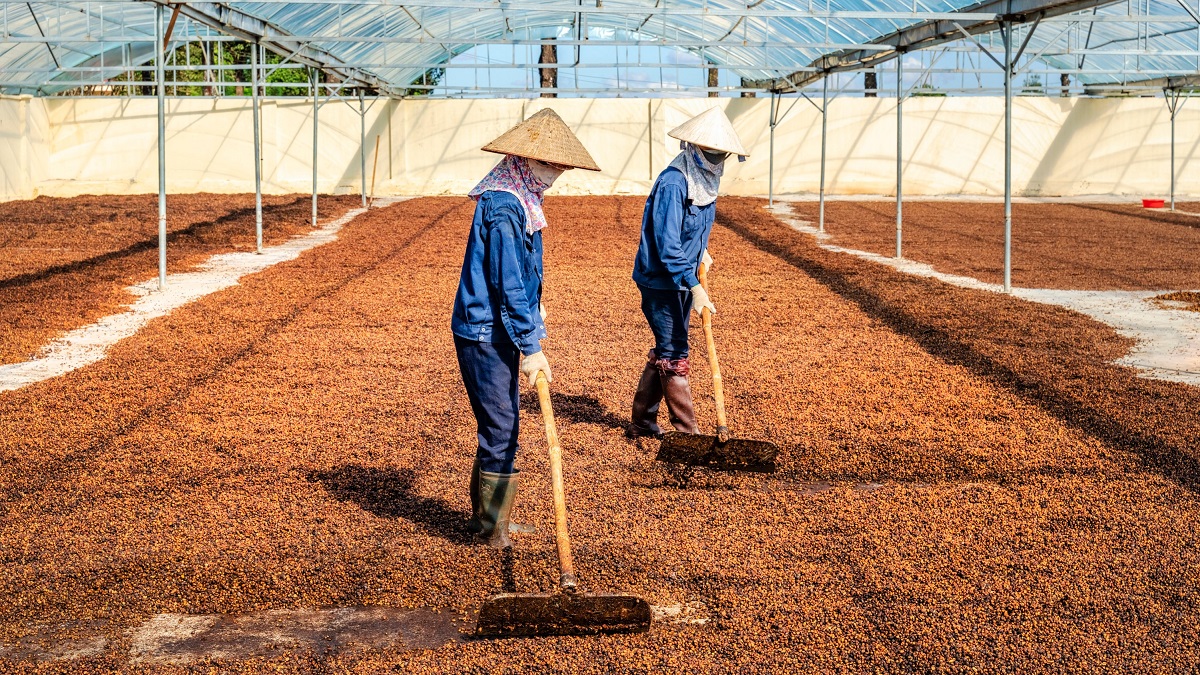
UNCTAD released on 14 December its Handbook of Statistics 2023 – the global reference for trade and development trends published each year.
It provides official statistics on how the global economy has evolved across regions, countries and sectors. An online version allows people to interact with the data, charts and graphs.
By using “nowcasts”, the handbook provides data-driven real-time estimates of current developments. These can assist governments in anticipating shifts in trade and the economy before final official statistics are available.
“Timely and quality data are critical now more than ever in an era of multiple global crises,” says Anu Peltola, head of UNCTAD Statistics. “These statistics will help countries take evidence-based decisions to tackle today’s challenges rather than yesterday’s.”
Below are some of the key trends for 2022 and 2023 highlighted in the report.
International trade dynamics
- Trade in goods falls: Following a strong recovery from COVID-19 in 2021, goods exports increased by 11.4% in 2022, reaching $29 trillion. But statistics show a 4.6% decrease in merchandise trade in the first half of 2023, and UNCTAD nowcasts a continued year-on-year decline for the third and fourth quarters.
- Trade in services continues to rise: Trade in services rebounded by 14.8% in 2022, surpassing pre-pandemic levels. Services trade grew more in developing countries, which in 2022 reached their highest global market share to date at 30%. Globally, UNCTAD nowcasts around 7% growth for trade in services in 2023. Tiếp tục đọc “UNCTAD releases Handbook of Statistics 2023”
Asia’s climate goals at risk over Cop28’s modest transition from fossil fuels: ‘we have one foot in the grave’
- Critics say the deal is still severely lacking when it comes to addressing the climate concerns of developing nations
- Asia faces multiple obstacles to its clean energy transition, with countries such as China, India and Indonesia failing to provide clear timelines for ending coal usage
The United Nations Climate Change Conference in Dubai ended on Wednesday with a message signalling the eventual end to the fossil fuel era, but its lack of a clear timeline could leave parts of developing Asia increasingly vulnerable to climate shocks, experts said.
The conference, also known as Cop28, adopted within minutes of its presentation the proposed text for a final climate deal that acknowledges for the first time the need for “transitioning away from fossil fuels” and “accelerating action in this critical decade” to achieve net-zero carbon emissions by 2050.
The text also includes agreements to triple the deployment of renewable energy and double the rate of efficiency gains by the end of the decade.
Cop28 climate summit adopts world-first ‘transition’ from fossil fuels13 Dec 2023
Tiếp tục đọc “Asia’s climate goals at risk over Cop28’s modest transition from fossil fuels: ‘we have one foot in the grave’”Nikki Haley is trying to shatter the presidential glass ceiling. She rarely mentions it
Voters tell CNN why they like Nikki Haley
Keene, New HampshireCNN —
Nikki Haley is trying to break the highest glass ceiling in politics, but you won’t hear her say so – at least not directly.
She does, however, offer fleeting glimpses at the historic nature of her Republican presidential campaign.
“There are no saints in DC right now, but that’s why I think you need a badass woman in charge at the White House,” the former South Carolina governor and United Nations ambassador said with a smile in the closing moments of a stop here Wednesday night, answering a voter’s question about criminal charges facing some politicians in Washington.
With the first votes of the Republican presidential primary barely a month away, Haley is drawing larger crowds – and louder applause – from voters like Thalia Floras, who has been eagerly searching for an alternative to former President Donald Trump.
“It would be great to have a female president, but that is not what this is about,” said Floras, a Nashua resident who has surveyed several candidates during their visits to New Hampshire. “I think we’re past the point of talking about that. It’s about the strongest candidate, and she, right now in the Republican Party, is the strongest candidate.”
Of course, not all of Haley’s supporters are women. And not all Republican women are supporting Haley, considering most polls show that Trump still receives a strong majority of support across all demographic groups.
But the makeup of Haley’s crowds is often distinct from those of her rivals, with audiences that include mothers bringing their daughters to see the candidate and older women hoping to see presidential history made in their lifetimes.
Tiếp tục đọc “Nikki Haley is trying to shatter the presidential glass ceiling. She rarely mentions it”The U.S.-South Korea Alliance
Developments at home and abroad are testing U.S.-South Korea relations.
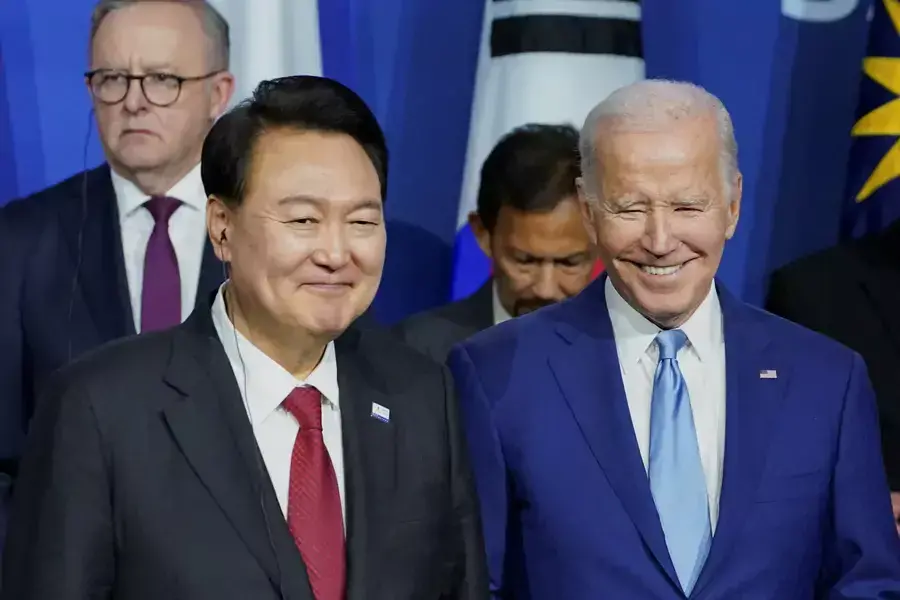
Blog Post by Michelle Kurilla
December 15, 2023 11:05 am (EST)
The latest episode of The President’s Inbox is live! This week, Jim sat down with Scott Snyder, senior fellow for Korea studies and director of the program on U.S.-Korea policy at the Council. They discussed Scott’s new book, The United States-South Korea Alliance: Why It May Fail and Why It Must Not.The President’s Inbox
The U.S.-South Korea Alliance, With Scott A. Snyder
Scott A. Snyder, a senior fellow for Korea studies and director of the program on U.S.-Korea policy at CFR, sits down with James M. Lindsay to discuss the importance of the U.S.-South Korea military alliance and how domestic and international forces could be undermining it.
Here are five highlights from the discussion:
1.) The U.S.-South Korea alliance is critical to the U.S. interest in preventing China from dominating the Indo-Pacific region. Scott argued that the United States is better equipped to “defend its interests” in East Asia with the “alliance architecture” that includes the U.S.-South Korea alliance as well as the U.S.-Japan alliance. The alliances help deter aggressive Chinese behavior that could roil the region.
Tiếp tục đọc “The U.S.-South Korea Alliance” CVD
CVD 