Greenhouse gas emissions can be offset by carbon sinks such as forests, but expanding these areas can put Indigenous communities, reliant on the forests, at risk.
Khao Sok rainforest in Thailand. Photo by: Sebastian Kautz / Alamy
From Khao Sok National Park in the southwest to Phu Chi Fa Forest Park in the north, forests cover around 30% of Thailand’s total area. Approximately 23 million people live near or in these lush green landscapes, depending on them for sustenance and livelihoods. But that’s now at risk, due to both climate change-related threats and the policies implemented to protect the forests.
Warangkana Rattanarat, Thailand country director for The Center for People and Forests, warned that the arrival of El Niño earlier this year has caused long droughts and less rain, damaging crops and other forest resources. This has affected the availability of food, as well as the income local people can derive from forest resources, she added.
The country has also experienced floods and the highest temperatures on record this year, impacting forests and the communities within them. In theGermanWatch Global Climate Risk Index 2021, Thailand ranked at number nine globally for long-term climate risks.
Additionally, there are land and tenure rights issues for Indigenous forest communities to contend with, and national climate commitments that have the potential to negatively impact such communities, said experts.
India prides itself as the largest democracy in the world, with nearly 1 billion eligible voters for the upcoming 2024 general election. But what’s been holding that democracy together has changed drastically under Prime Minister Narendra Modi and his nationalist party, BJP. Modi’s influence has shifted Indian society and widened rifts between communities.
How has Indian democracy changed? And why is it time to worry about India?
The classes not only help Jrai ethnic people in the village learn to read and write, but also contribute to raising people’s awareness and responsibility in protecting the national borders.
Many JRai students have to bring their children to literacy classes. — VNA/VNS Photo
GIA LAI — Border soldiers in the Tây Nguyên (Central Highlands) province of Gia Lai are assuming the role of teachers to eliminate illiteracy among local ethnic people.
The residential area of Suối Khôn in the border commune of Ia Mơ, Chu Prông District has 561 residents of the Jrai ethnic minority group, with most of them being very poor.
Currently, there are 71 illiterate people, accounting for 10 per cent of the area’s population.
Ia Lốp Border Guard Station opened classes to teach people and the soldiers are their teachers.
The classes not only help Jrai ethnic people in the village learn to read and write, but also contribute to raising people’s awareness and responsibility in protecting the national borders.
To get to Suối Khôn Residential Area, it takes more than two hours to travel from the city of Pleiku to Ia Pier Commune, then through a dirt road of more than ten kilometres full of mud and slush.
Lieutenant Colonel Nguyễn Văn Thành, secretary of the station’s Party Committee, said that there were 71 Jrai ethnic people who were illiterate, of which 45 people wanted to learn.
The station’s leaders decided to open classes to teach the illiterate people.
Since earlier this year, Ia Lốp Border Guard Station has organised two four-month literacy classes for the Jrai ethnic minority with 25 students.
The teachers are soldiers including Lieutenant Colonel Vũ Văn Hoàng, who teaches math, and Captain Nguyễn Văn Luân, who teaches Vietnamese language.
The entire programme uses literacy learning materials compiled by the Ministry of Education and Training.
The classes, which take place three evenings per week, received the professional support of Hoàng Hoa Thám Primary School in neighbouring Ia Piơr Commune.
Captain Nguyễn Văn Luân said that the journey of mobilising people to come to class encountered many hardships.
“The weather conditions here are very harsh. People mainly work in agriculture and their lives are very difficult,” Luân said.
“Ethnic minorities often feel an inferiority complex and have low self-esteem so they are timid in communication,” Luân said.
“Therefore, we had to go to each household to mobilise and encourage them to boldly come to class,” the captain said.
Soldiers cum teachers of Ia Lốp Border Guard Station come directly to local residents’ houses to urge them to attend literacy classes. — VNA/VNS Photo
Getting people to come to school was difficult, and maintaining class size was even more difficult.
Lieutenant Colonel Vũ Văn Hoàng said that the classes started in the evening, but in the afternoon the teachers had to go to each house to remind people of the class.
Because the students’ ages ranged from 16 to 60, organising classes and teaching methods must be flexible, especially during the crop season. Students have to work hard during the day so many of them cannot attend classes in the evening, said Hoàng.
“So to maintain the classes, the border guard soldiers had to come to help people with farm work or take care of their children to help them feel secure and focus on their studies,” said Hoàng.
Change of life
Kpui H’Lép, 27, is one of the outstanding students. After only four months of studying, she was able to read and write fluently.
H’Lep happily said: “Before, I was illiterate, very self-conscious and shy. I was always oppressed when doing business and criticised when doing housework.”
“But now it is different. I learned how to read and calculate. I thanked the teachers for helping me and other people in the village to have a better life,” she said.
Another student, Rơ Lan H’Cúc, 26, residing in Sâm Village, Ia Piơr Commune, has a two-year-old daughter whom she has to carry to evening classes.
Rơ Lan H’Cúc often sits at the back of the class but is very diligent and serious.
“I regretted not being literate earlier. Now I have the opportunity to learn many things from teachers. The teachers not only taught us how to read and write but also gave us books, pens, babysitting and farming instructions,” Rơ Lan H’Cúc said.
“I am very grateful to the teachers,” she said.
Suối Khôn residential area was formed in 2003. Most of residents are the Jrai ethnic minority.
Since its formation until now, this residential area has not yet received basic investment in electricity, roads, and schools, and people haven’t fully benefited from social security policies.
The reason is because this land belongs to the administrative boundaries of Ia Mơ Commune but the population is managed by another commune, Ia Piơr Commune.
Hà Văn Tin, vice chairman of the People’s Committee of Ia Piơr Commune, Chu Prông District, said that the authorities of Ia Piơr and Ia Mơ communes and the people in the area hoped that the competent authorities would soon allow the establishment of Khôl Village under Ia Mơ Commune according to a project since April 2022.
This is a condition for Suối Khôn Residential Area to be better managed and develop in the future, Tin said. — VNS
Soldiers of the Ia Lốp Border Guard Station teach literary classes for JRai ethnic minority people. — VNA/VNS Photo
An image taken before South Korean girl band Black Pink’s Born Pink Tour in Hà Nội in July. Tourist arrivals in the city jumped 2.5-fold to 170,000, including 3,000 foreigners, during their two-day concerts. — VNA/VNS Photo Tuấn Đức
The recent successful shows of famous international singers and bands show that Việt Nam is capable of organising mega global shows.
By Thu Ngân
For weeks Hanoian Bùi Trang Dung was unable to decide where to take her family for vacation last summer.
“This place is beautiful in the summer, that place has many delicious foods and the other one is cheaper.” These were the words that constantly ran in the 42-year-old’s mind.
She then came across a piece of information about a music show by a famous singer she loved in Mù Cang Chải in the northern province of Yên Bái.
The holiday destination instantly chose itself: It was to be Mù Cang Chải.
Activists from Jewish Voice for Peace group unfurl banners reading ‘Palestinians should be free’ at the base of New York landmark.
Activists from Jewish Voice for Peace occupy the pedestal of the Statue of Liberty. [Stephanie Keith/Getty Images via AFP]
Published On 7 Nov 20237 Nov 2023
Hundreds of US Jewish activists have peacefully occupied New York’s Statue of Liberty to demand an end to Israel’s “genocidal bombardment” of civilians in Gaza and a ceasefire.
Dressed in black T-shirts emblazoned with the slogans “Jews demand ceasefire now” or “Not in our name”, the protesters from the Jewish Voice for Peace group on Monday unfurled banners reading “The whole world is watching” and “Palestinians should be free” at the base of New York’s landmark.
On Saturday, tens of thousands of demonstrators, gathered in Washington, DC to call for an immediate ceasefire in the Gaza Strip, and to denounce US policy of support for Israel.
Caretaker Lebanese Prime Minister Najib Mikati speaks on the phone ahead of an interview.
NOVEMBER 9, 2023, 4:30 PM
Lebanese Prime Minister Najib Mikati has a plan for peace in Gaza and Israel. If it has any hope of becoming reality, he’ll need Western backers. Thus far, he doesn’t have any.
It’s time for Western leaders to step up.
As the death toll in Gaza grows, now over 10,000, Lebanon’s caretaker prime minister has been trying to win allies for his three-step peace plan. First, Mikati proposes, would come a five-day pause in hostilities, during which Hamas would release some of its Israeli hostages and Israel would open its border crossings to more humanitarian aid. If the peace can hold for those 120 hours, negotiations would begin for the release of the remaining hostages in exchange for prisoners held by Israel. As that happens, work on an international summit for a permanent two-state solution would begin.
If it can get off the ground, Mikati’s proposal would channel the worst violence Israelis and Palestinians have seen in decades into the most serious peace effort since the collapse of the Oslo Accords.
Dr. Mohammed Obeid, a surgeon with Doctors Without Borders/Médecins Sans Frontières (MSF) working inside Al-Shifa hospital in Gaza, described the situation on November 11, 2023. “Since this morning, there is no electricity. There is no water. There is no food,” he said. The hospital and the areas outside the hospital where people are sheltering have been hit with bombs. A sniper has wounded patients inside the hospital. Premature babies have died because the incubator cannot function without electricity. “We need help,” he said. “No one hears us.”
Premature babies are dying at Gaza’s al-Shifa Hospital
Healthcare workers gathered in front of UK Prime Minister Rishi Sunak’s office in London, raising signs with the names of more than 200 physicians who have been killed so far by Israel’s constant bombardment of Gaza.
Doctor who worked in Gaza describes dire situation at Al-Shifa Hospital
The debut of the Chàm Islands Nature Reserve would help improve the protection of natural areas for Quảng Nam and bring more value in eco-tourism, research, education, investment and ‘green’ growth in the future.
A view of Chàm Islands, off the coast of Hội An ancient town. The islands have been developed as a Nature Reserve for better protection and conservation of their rich forest and marine value. VNS Photo Công Thành
CHÀM ISLANDS — The management board of Chàm Islands Marine Protected Area (MPA), 20km off the coast of Hội An City has been building procedures and requirements for the establishment of the Chàm Islands Nature Reserve for extended protection and conservation of natural resources on land and sea.
12 Nov 2023 06:00AM(Updated: 12 Nov 2023 09:04AM), channelnewsasia
SINGAPORE: When the latest iPhone 15 series was released, many people eagerly submitted their pre-orders, hoping to receive it within a week. As a tech writer and enthusiast, I too succumbed to this temptation.
I vividly remember setting my alarm during my evening run to ensure I didn’t miss the 8pm pre-order launch of the iPhone 15 Pro on Sep 15. I frantically refreshed the page for the next 30 minutes, but the site crashed. Frustrated, I set my phone aside and went to take a shower. This was my first attempt at pre-ordering an iPhone.
Washington has influence and, with its allies, could shape an endgame that serves long-term U.S. interests.
By Emma Ashford, a columnist at Foreign Policy and a senior fellow with the Reimagining U.S. Grand Strategy program at the Stimson Center, and Matthew Kroenig, a columnist at Foreign Policy and vice president and senior director of the Atlantic Council’s Scowcroft Center for Strategy and Security.
Blinken in Israel
My FP: Follow topics and authors to get straight to what you like. Exclusively for FP subscribers. Subscribe Now | Log In
NOVEMBER 10, 2023, 11:16 AM
Emma Ashford: Good morning, Matt. Are you back from Norway yet? I just spent the week in Finland, learning about our newest NATO ally. It would be nice if every NATO ally were as self-sufficient and prepared to fight without U.S. troops as the Finns clearly are. Tiếp tục đọc “Is the U.S. Using All Its Leverage in Gaza?”→
Trade unions, youth movements, and Palestine solidarity groups have organized protests and blockades across Europe, opposing the role of their governments in Israel’s genocidal war on PalestiniansNovember 03, 2023 by Peoples Dispatch
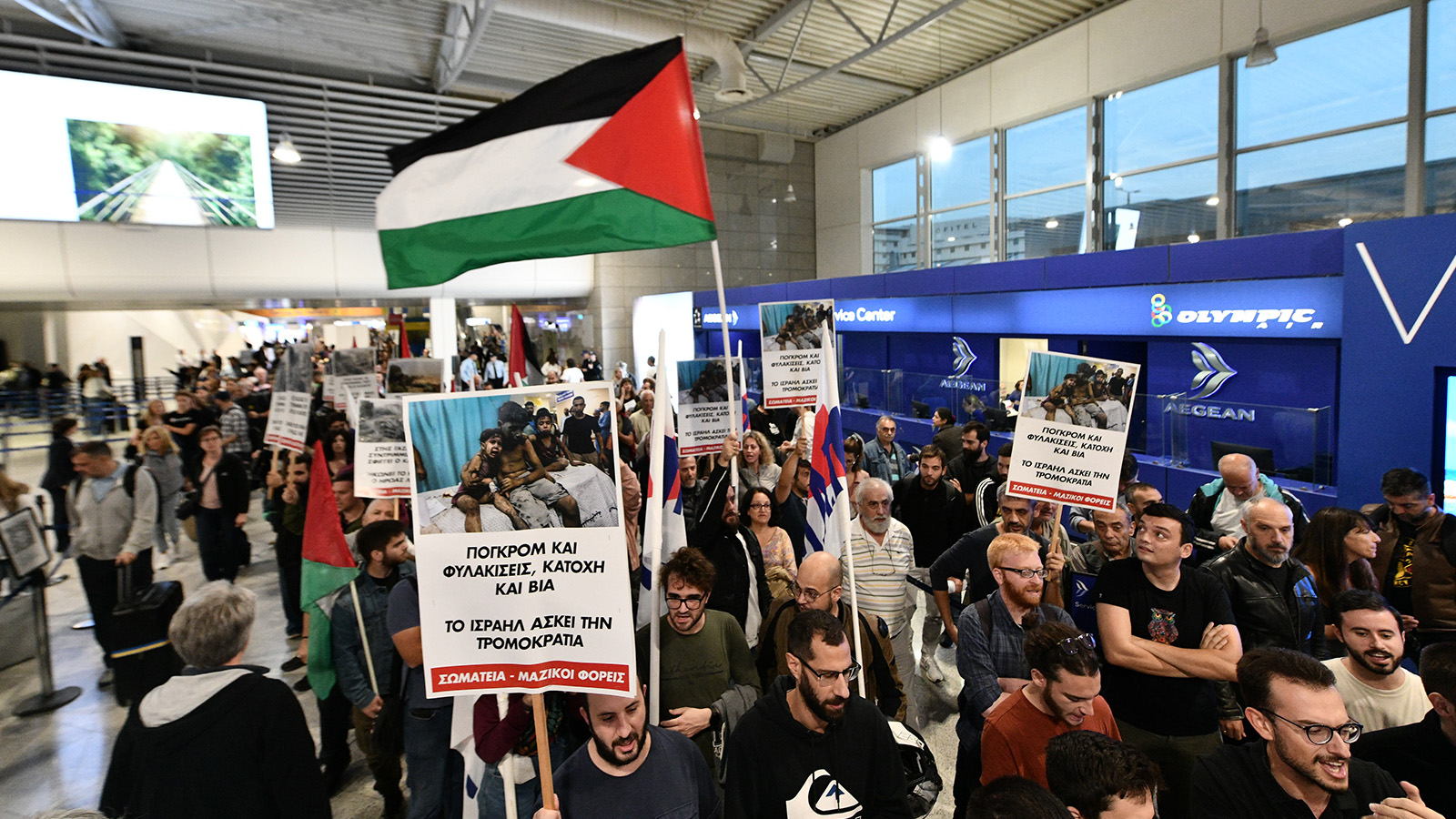
Trade unionists of PAME carry out flash protest inside Athens International Airport (Photo: PAME)
As Israel’s genocidal war on Gaza continues unabated for the fourth week straight, workers across Europe have stepped up their solidarity with Palestine and organized resistance to the supply of arms from various parts of the continent to Israel.
On Thursday, November 2, Greek trade unionists from the All Workers Militant Front (PAME) held a flash protest inside the Athens International Airport in solidarity with Palestine. The protest started in front of the offices of the Israeli airline El Al with protesters then marching inside the airport denouncing the genocidal war against Palestinians.
In their statement, PAME harshly criticized Israeli war crimes in Gaza. “No one can remain silent when the death toll from Israeli bombing in Gaza exceeds 8,000, including over 3000 children and over 1000 women,” PAME said.
“No one can remain silent when a child is killed in Gaza every 10 minutes. No one can remain silent when there are more than 15,000 wounded in Gaza without the necessary treatment because of the suffocating blockade by the murderer state of Israel.”
PAME has also demanded that the Greek government stop all economic, political, and military cooperation with Israel. The union called for an end to the facilitation of bases and other infrastructure by Greece to the US, NATO, and Israel.
PAME has also called for the immediate recognition of the Palestinian state along the 1967 borders with East Jerusalem as its capital.
Meanwhile, on October 31, transport unions in Belgium including the Belgian Union of Transport Workers (BTB), BBTK, ACV-Transcom, and ACV Puls issued a joint statement announcing their resolve to refuse loading or unloading weapons in transit to Israel, which are destined for the genocidal war against the Palestinians.
In their statement, the trade unions said that while genocide is taking place in Palestine, workers at various airports in Belgium note the arrival of arms shipments to the conflict zone. Workers’ participation in loading or unloading these weapons “means supporting regimes that kill innocent people,” the statement said.
In the UK, on October 31, activists from Palestine Action blockaded the road to the headquarters of Elbit Systems in Bristol, notorious for manufacturing parts for Israeli drones and other pilotless aircraft.
DKU activist blocading Terma A/S in Soborg (Photo: DKU)
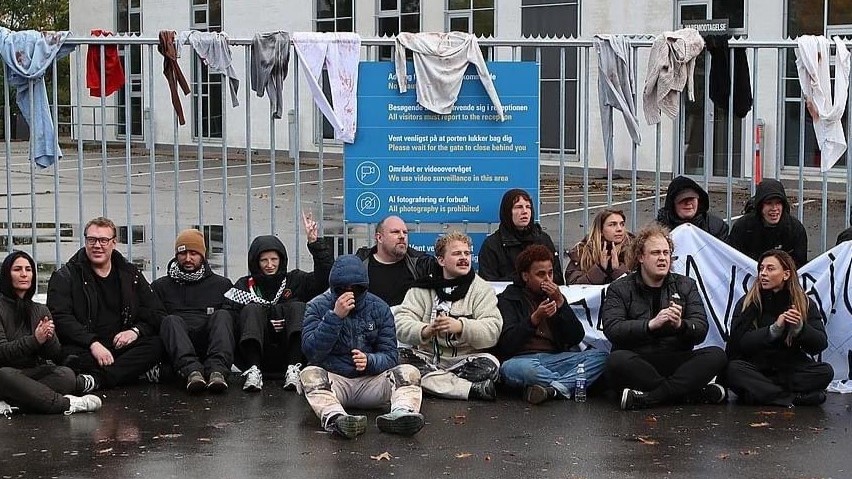
On October 30, in Demark, activists from various anti-war groups including the Communist Youth of Denmark (DKU), blocked all entrances to the Søborg plant of the Danish arms company, Terma, in protest against its sale of weapons and equipment to the Israeli Defense Forces.
According to reports, the Aarhus-based defense contractor supplies Israel with equipment for F-16 and F-35 fighter jets, which Israel uses to bomb Gaza. Terma has also been accused of sending arms for the war in Yemen.
During the blockade at Terma, DKU members hung up blood-stained children’s clothes to symbolize the consequences of Terma’s bloody business for civilians in Palestine.
Dagbladet Arbejderen has reported that the protestors have demanded that authorities publish all information about Terma’s activities and disseminate that information in a way that allows the people of Denmark to understand exactly what the company is doing.
They also demanded and end to the manufacturing of weapons parts used by the Israeli military and the termination of their agreements with F35 manufacturer Lockheed Martin, which supplies the Israeli genocidal apparatus.
As of November 3, the ongoing genocidal war carried out by Israel in the Gaza Strip since October 7, has claimed the lives of more than 9,000 people, wounded more than 30,000 people, and displaced over 1.4 million.
A programmer works on computers in an IT office. Photo by Shutterstock/ProStockStudio
Having worked for a large foreign technology corporation in Hanoi for more than five years, data analysis expert Le Thai Ha was shocked to get suddenly fired recently.
“Because the tech market has fluctuated a lot, our corporation officially announced a mass layoff, mostly of senior positions, including mine,” she said.
Despite being aware of the difficulties of the market in general, and of the corporation in particular, its decision to cut back was still a big surprise to Ha.
China is bad. At least, that’s what even a glance of U.S. reporting on China tells us. It’s a way of reporting that follows a long history of constructing the Chinese — in news, popular culture and the halls of DC — as a threat. In the first episode of Backspace, a new media critique series from AJ+, Sana Saeed explores what China and the Chinese have looked like in the American imagination, how that impacts and is impacted by U.S. immigration and foreign policies, and ways we can retell that story.
Một vụ phá rừng trái phép với quy mô lớn vừa xảy ra tại huyện Kông Chro, tỉnh Gia Lai. Người dân sở tại đã phá trắng gần 5 ha rừng tự nhiên để lấy đất làm nương rẫy. Vụ việc không chỉ ảnh hưởng đến nguồn lợi lâm sản mà còn gây thiệt hại cho môi trường sinh thái và an ninh trật tự của địa phương.
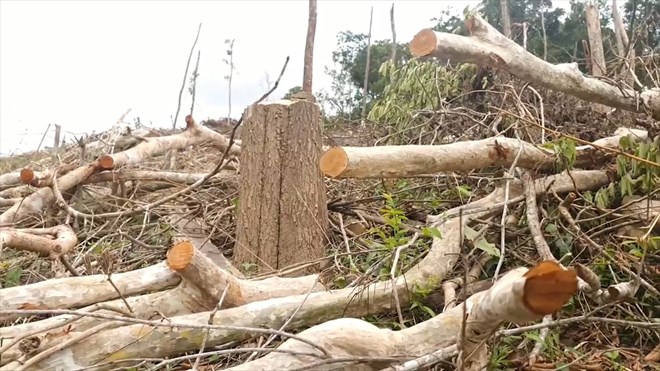
Những cây gỗ lớn bị đốn hạ. Ảnh: Thanh Tuấn
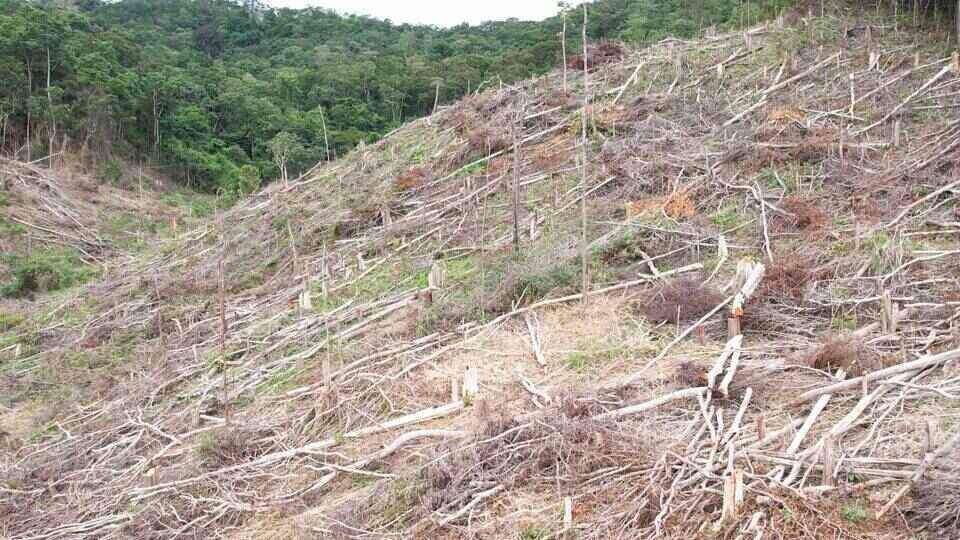
Theo ghi nhận của cơ quan chức năng, tại Tiểu khu 793 thuộc lâm phần Công ty TNHH Một thành viên Lâm nghiệp Kông H’de, thuộc xã Sró, huyện Kông Chro, 2 khoảnh rừng tự nhiên bị phá trắng, diện tích gần 5 ha, trong đó có khoảng 3 ha diện tích rừng có gỗ.
Kiểm đếm ban đầu, trên 641 cây rừng có đường kính gốc từ 8 cm – 30cm gồm nhiều loại như: Căm xe, bằng lăng, bình linh… bị chặt hạ.
Hàng loạt cây rừng lớn nhỏ bị đốn hạ bằng cưa xăng, gãy đỗ la liệt. Ảnh: Thanh Tuấn
Ông Lê Văn Thuỷ – Giám đốc Công ty TNHH Một thành viên Lâm nghiệp Kông H’de, Gia Lai cho biết: “6, 7 hộ dân dùng cưa xăng, hạ cây rừng rất nhanh. Công ty phát hiện, nhưng chậm can thiệp vì nước lớn, khó qua sông. Tôi là người đứng đầu nên chịu trách nhiệm”.







 CVD
CVD 