
Ngày đăng: Tháng Chín 12, 2023
What is AIS tracking? A SeaLight primer
This post explains how the AIS vessel tracking system works and how bad actors abuse the system.
Miao Shou, Gaute Friis | AUGUST 21, 2023


Miao Shou
Analyst

Gaute Friis
Analyst
Tracking vessels’ Automatic Information System (AIS) signals is a core means SeaLight and other open-source intelligence collectors use to monitor maritime activity. AIS is a broadcast system that maritime authorities use to identify a vessel’s unique identification number, type, position, course, speed and navigation status.
The International Maritime Organization (IMO) mandates the use of AIS to ensure maritime safety and direct marine traffic more efficiently. According to the International Maritime Organization’s International Convention for the Safety of Life at Sea (SOLAS) Regulation V/19.2.4, all vessels over 300 gross tons (or 500 tons for those not on international voyages) and passenger ships of any size are required to “carry automatic identification systems capable of providing information about the ship to other ships and to coastal authorities.”
Gray Zone Tactics Playbook: Going Dark
“Going dark” refers to the gray zone tactic of strategically turning off a vessel’s Automatic Information System (AIS) transponder to avoid detection.
Miao Shou | AUGUST 17, 2023

Miao Shou
Analyst
“Going dark” refers to the gray zone tactic of turning off a vessel’s Automatic Information System (AIS) transponder to avoid detection. AIS is a signaling system used to identify a vessel’s type, position, course, speed and other navigation safety information, and is required by the International Maritime Organization for larger non-military ships operating in international waters. Read our primer on the AIS system here.
Going Dark in the Recent Water Cannon Incident
In a recent incident that involved the blockade and water-cannoning of a small Philippine resupply vessel and its escorts, six of the blockading ships were from the China Coast Guard. Of these, only one ship (CCG 5402) remained AIS-visible during the entire engagement, while two other ships (CCG 4203 and CCG 3302) broadcast AIS only intermittently.
Tiếp tục đọc “Gray Zone Tactics Playbook: Going Dark”Gray Zone Tactics Playbook: Water Cannoning
This tactic consists of blasting another ship with a powerful stream of water using a high-pressure water cannon.
Gaute Friis | AUGUST 7, 2023

Gaute Friis
Analyst
As of this writing, the Philippines has just produced evidence that its coast guard and resupply vessels were subjected to assault by water cannons from China Coast Guard ships on 5 August 2023. This occurred during the regular rotation and resupply mission to the Philippine Navy’s outpost aboard the grounded BRP Sierra Madre at Second Thomas (Ayungin) Shoal, and is reminiscent of a similar incident in November 2021.
Tiếp tục đọc “Gray Zone Tactics Playbook: Water Cannoning”Introducing China’s Maritime Gray Zone Tactics Playbook
While China’s use of maritime gray zone tactics is well known, few resources describe the actual tactics in detail. We’ve developed a publicly available systematic examination of these concrete tactics, which we will roll out for you in the coming weeks.
Gaute Friis | JULY 6, 2023

Gray Zone Tactics Playbook: Spoofing
Spoofing is the act of deceptively and deliberately falsifying a vessel’s AIS identifying information or location.
Gaute Friis | SEPTEMBER 3, 2023

Gaute Friis
Analyst
Spoofing is a deception tactic meant to disrupt monitoring of maritime activities. It is frequently employed by Chinese gray zone actors in the South China Sea. In contrast to the “going dark” tactic of simply disabling a vessel’s Automatic Information System (AIS) broadcast, the spoofing tactic involves manipulating transmitting signals in order to falsify a vessel’s identity and/or location.
Tiếp tục đọc “Gray Zone Tactics Playbook: Spoofing”What Google, Facebook And Apple Can Learn From Microsoft’s 1998 Antitrust case
In 1995, Microsoft CEO Bill Gates published a memo entitled “The Internet Tidal Wave.” Gates outlined seven areas where Microsoft could increase its focus on internet features, including a web browser. The next year Microsoft launched its Internet Explorer web browser. Microsoft faced an antitrust lawsuit by the Department of Justice in 1998 during the height of the Browser Wars. Its Internet Explorer was quickly becoming the go-to web browser for the masses, but the U.S. government argued it stifled competition.
Gray Zone Tactics Playbook: Cable-Cutting
Cable-cutting is a sabotage and harassment tactic in which a ship will attempt to sever the cable to another ship’s trailing equipment, such as trawler lines or towed array sonars.
Gaute Friis | JULY 26, 2023

Gaute Friis, analyst
This tactic is an act of sabotage which aim to cut the cables to a ship’s trailing equipment, such as trawler lines or towed array sonars.
Cable-cutting is most frequently used against commercial research vessels conducting survey operations in disputed maritime zones, such as within China’s huge “nine-dash line” claim in the South China Sea.
Tiếp tục đọc “Gray Zone Tactics Playbook: Cable-Cutting”Gray Zone Tactics Playbook: Laser Dazzling
Dazzlers are non-lethal laser weapons meant to cause temporary blindness in humans or confound sensors. Recently employed against the Philippine Coast Guard, laser dazzlers have also been employed against U.S. and Australian military helicopters and surveillance planes operating in the region.
Gaute Friis | SEPTEMBER 12, 2023

Gaute Friis Analyst
Dazzlers are an emerging category of non-lethal but potentially dangerous weapons and a relatively recent addition to China’s gray zone arsenal. They can be used as a harassment tool; for destroying sensitive electro-optical sensors as an electronic warfare component; or as a weapon of psychological warfare.
Dazzlers are not themselves considered illegal. The U.S. military — which refers to them as “non-lethal optical distractors” — considers them an essential capability to “minimize fatalities, protect the innocent and limit collateral damage” when the alternative is lethal force, with the caveat that:
“Prior to fielding, all previously and currently fielded lasers or distracter devices have undergone legal reviews to ensure compliance with obligations assumed by the U.S. under applicable treaties, customary international law, and the law of armed conflict.”
China has used dazzlers to temporarily blind the crew of other countries’ ships. Because dazzlers have both physical and psychological effects their use against vessels at sea is hazardous, eroding their crews’ ability to navigate and react to maritime contingencies.
As detailed in our “going dark” playbook entry, a Chinese Coast Guard cutter used a dazzler to harass a Philippine resupply escort mission on February 6th, 2023.
The Philippine Coast Guard later clarified that was the second time this had occurred during a resupply mission.
China has also employed dazzlers against U.S. and Australian aircraft since at least 2018, as documented in incidents over the Pacific Ocean, the South China Sea, the East China Sea, the Arafura Sea, and near the Horn of Africa.
Note: Any use of lasers to permanently blind personnel is illegal under Protocol IV (Blinding Laser Weapons) under the Convention on Certain Conventional Weapons, which China joined in 1998.
AP PHOTOS: 20 images that documented the enormity of 9/11
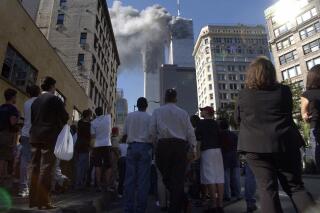
BY JENNIFER PELTZPublished 7:30 PM GMT+7, September 8, 2021Share
EDITORS: This story first ran in 2021 for the 20th anniversary of 9/11. It is being republished for the 22nd anniversary.
Tiếp tục đọc “AP PHOTOS: 20 images that documented the enormity of 9/11”UN chief hails SE Asia for vital role ‘building bridges of understanding’
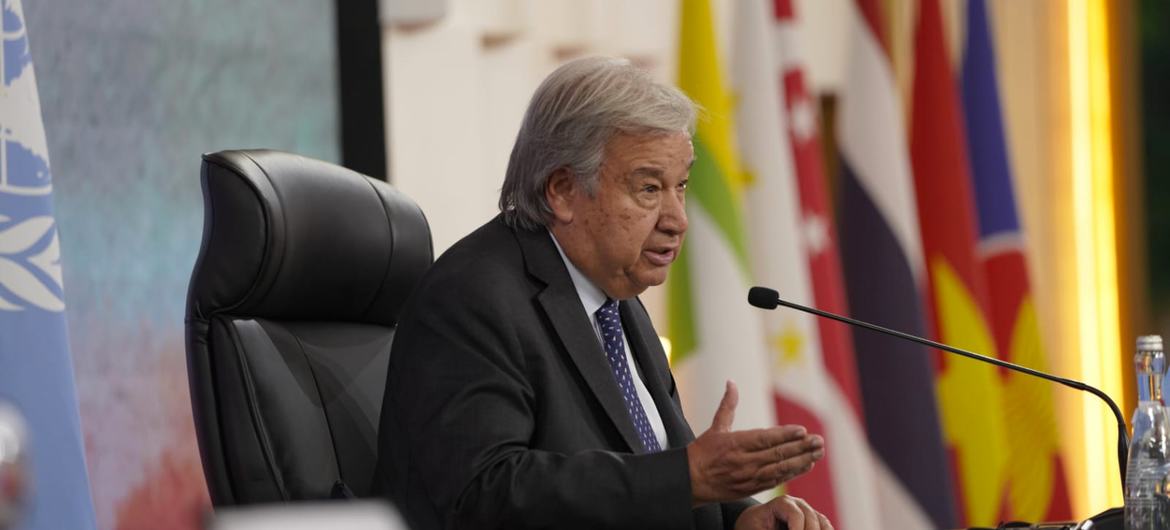
UN Indonesia/Lufty Ferdiansyah
UN Secretary-General António Guterres adresses the media at the Association of Southeast Asian Nations (ASEAN) Summit in Jakarta, Indonesia.
Amid rising geopolitical tension, Southeast Asia is fulfilling a “vital role in building bridges of understanding” worldwide said the UN chief on Thursday.
António Guterres was speaking in Jakarta, Indonesia, at the opening of the ASEAN-United Nations Summit, addressing Member States of the Association of Southeast Asian Nations and declaring “our partnership is more important than ever.”
 CVD
CVD 