An increasingly autocratic government is making bad decisions
Aug 24th 2023
Whatever has gone wrong? After China rejoined the world economy in 1978, it became the most spectacular growth story in history. Farm reform, industrialisation and rising incomes lifted nearly 800m people out of extreme poverty. Having produced just a tenth as much as America in 1980, China’s economy is now about three-quarters the size. Yet instead of roaring back after the government abandoned its “zero-covid” policy at the end of 2022, it is lurching from one ditch to the next.
Refugees observe August 25 as ‘Genocide Day’ to demand justice and safe and voluntary repatriation to their homes in Myanmar.
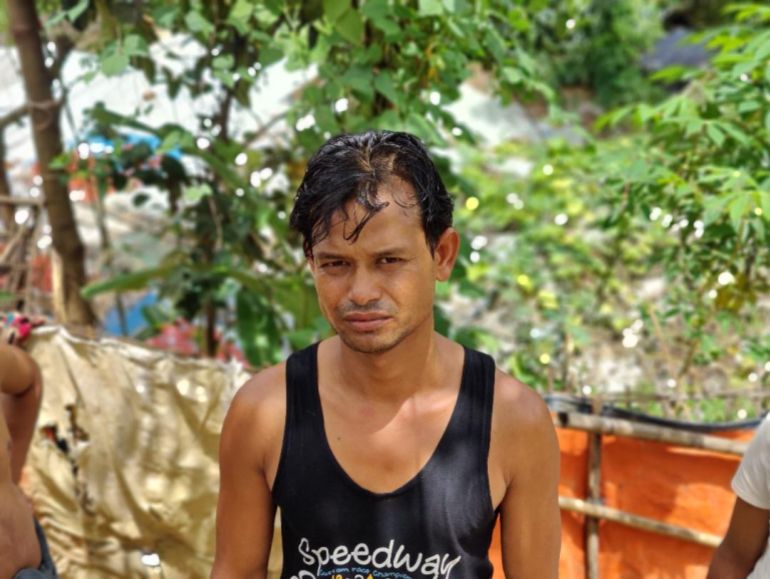
Nearly a million Rohingya refugees live in cramped camps in southern Bangladesh [Faisal Mahmud/Al Jazeera]
By Faisal Mahmud Published On 25 Aug 202325 Aug 2023
Dhaka, Bangladesh – Mohammad Jalil still has nightmares recounting the harrowing journey he took last October on a rickety boat in the Bay of Bengal.
Jalil, a 26-year-old Rohingya refugee from Bangladesh’s Kutupalong camp, paid around $1,500 to an agent who promised him a safe journey to Malaysia.
A month later, he found himself on board an overcrowded fishing trawler drifting aimlessly on a fierce sea for about a week.
“We had no food and the children were crying in hunger. The people who were in charge of the trawler beat us mercilessly. On the ninth or 10th day – I can’t remember – the boat sank,” Jalil told Al Jazeera.
He, along with a few others, swam for hours before being rescued by the Bangladeshi coastguard.
“Some women and children couldn’t make it and drowned,” he said. “All my money is gone. I have lost everything.”
MADRID, Aug 25 (Reuters) – Spanish soccer boss Luis Rubiales on Friday refused to resign for grabbing star player Jenni Hermoso’s head and kissing her on the lips after Spain’s Women’s World Cup victory, leading the national team to mutiny and the government to denounce his “macho actions”.
In a joint statement sent via their FUTPRO union, all 23 of the cup-winning squad including Hermoso, as well as 32 other squad members, said they would not play internationals while Rubiales remains head of the Royal Spanish Football Federation (RFEF).
In the same statement, Hermoso denied Rubiales’ contention that the kiss he gave her at the medal ceremony after Spain beat England 1-0 in the final in Sydney, Australia, was consensual.
Southern Vietnam is the country’s food bowl. But water shortages are driving Mekong Delta farmers to despair, with many of them opting to move to other provinces to find work. Read: https://cna.asia/3ViZLjr
Vietnam is seeing soaring demand and skyrocketing prices for its rice after India – the world’s biggest rice supplier – imposed export curbs last month. Industry players say the spike in global rice prices is an opportunity for Vietnam to boost production and exports. But at the Mekong Delta, known as Vietnam’s rice bowl where 90 per cent of the nation’s rice exports are grown, farmers tell CNA’s Tung Ngo they can barely keep up with the demand.
All development is about people: the transformative process to equip, link, and enable groups of people to drive change and create something new to benefit society. Development can promote societies where all people can thrive, but the change process can be complex, challenging, and socially contentious. Continued progress toward sustainable development is not guaranteed. The current overlapping crises of COVID-19, climate change, rising levels of conflict, and a global economic slowdown are inflaming long-standing challenges—exacerbating inequality and deep-rooted systemic inequities. Addressing these challenges will require social sustainability in addition to economic and environmental sustainability. Social Sustainability in Development: Meeting the Challenges of the 21st Century seeks to advance the concept of social sustainability and sharpen its analytical foundations. The book emphasizes social sustainability’s four key components: social cohesion, inclusion, resilience, and process legitimacy. It posits that •Social sustainability increases when more people feel part of the development process and believe that they and their descendants will benefit from it. •Communities and societies that are more socially sustainable are more willing and able to work together to overcome challenges, deliver public goods, and allocate scarce resources in ways perceived to be legitimate and fair so that all people may thrive over time. By identifying interventions that work to promote the components of social sustainability and highlighting the evidence of their links to key development outcomes, this book provides a foundation for using social sustainability to help address the many challenges of our time.
TTCT – Kể từ khi nắm quyền ở Singapore từ năm 1959, Đảng Hành động nhân dân (PAP) luôn đảm bảo vị thế bằng điều hành ổn định và mô hình quản trị gần như không tham nhũng.
Ảnh: CNBC
Các bộ trưởng và quan chức nước này được trả lương cao tương đương lãnh đạo các tập đoàn quốc tế, và những hành vi sai phạm bị xử lý gần như ngay tức khắc.
Nhưng mấy tuần gần đây, uy tín của PAP rung chuyển bởi một loạt bê bối. Giữa tháng 7, Bộ trưởng Giao thông S. Iswaran bất ngờ bị bắt cùng tỉ phú Ong Beng Seng (người có công đưa đua xe F1 tới nước này). Cơ quan Điều tra tham nhũng Singapore (CPIB) thông báo đang điều tra mối liên hệ giữa hai người, dù chi tiết vụ việc chưa được tiết lộ thêm.
Cùng tháng 7, Chủ tịch Quốc hội Tan Chuan-Jin (Trần Xuyên Nhân), từng là ngôi sao của PAP, đệ đơn từ chức vì những lời lẽ “thô tục và phi nghị viện”. Ông đồng thời thừa nhận có những “khía cạnh còn khiếm khuyết” khiến gia đình bị tổn thương.
Nhà sáng lập, CEO Doanh nghiệp Xã hội Hope Box Đặng Thị Hương từng phải rời vùng quê Lập Thạch, Vĩnh Phúc lên Hà Nội làm giúp việc từ khi 13 tuổi do hoàn cảnh gia đình khó khăn. Thế nhưng, chị không từ bỏ việc học mà miệt mài giành được học bổng Quản trị kinh doanh quốc tế của trường Box Hill Institute, thành phố Melbourne, Úc rồi thạc sĩ kinh doanh tại Đại học Công nghệ Swinburne.
Nhà sáng lập, CEO Hope Box Đặng Thị Hương. Ảnh: Nhân vật cung cấp.
KASI, Laos — Five decades have elapsed since the signing of the Paris Peace Accords on Jan. 27, 1973 that led to the end of the Vietnam War. The long conflict devastated all of Indochina, and its aftermath continues to stymie the region’s economic development.
Early this month, specialists of the Laotian military detected unexploded ordnance (UXO) in the northern town of Kasi. The team of about 10 found one cluster bomb the size of a tennis ball and used a loudspeaker to warn residents while cordoning off nearby roads before disposing of the device.
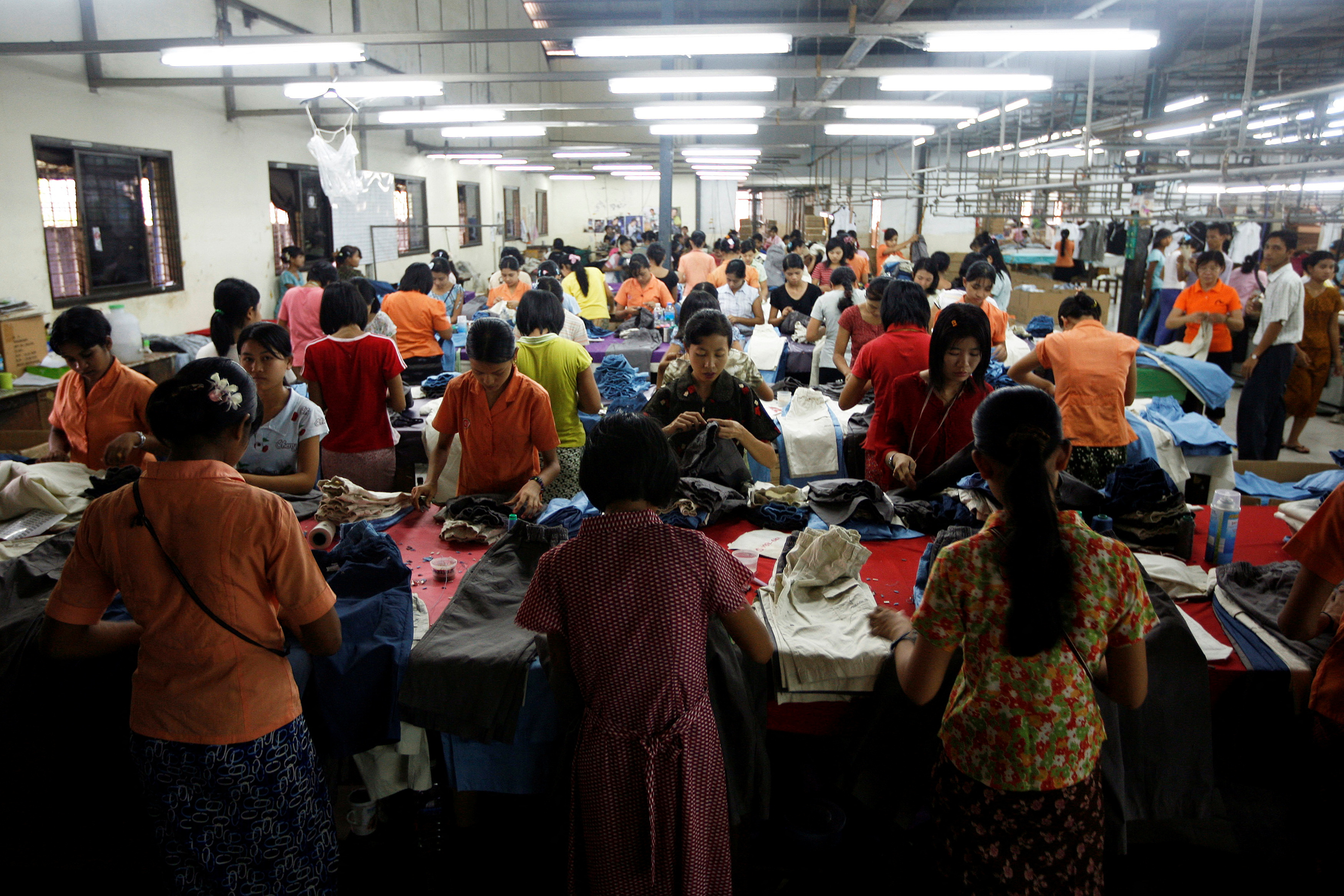
LONDON, Aug 17 (Reuters) – The world’s second-biggest fashion retailer H&M (HMb.ST) has decided to gradually stop sourcing from Myanmar, it told Reuters on Thursday, as reports of labour abuses in garment factories in the country increase.
H&M became the latest brand to cut ties with suppliers in the country after Zara owner Inditex (ITX.MC), Primark (ABF.L), Marks & Spencer (MKS.L) and others.
“After careful consideration we have now taken the decision to gradually phase out our operations in Myanmar,” H&M said in an email to Reuters.
“We have been monitoring the latest developments in Myanmar very closely and we see increased challenges to conduct our operations according to our standards and requirements.”
Chiều 20/6, dưới sự điều hành của Phó Chủ tịch Quốc hội Nguyễn Đức Hải, Quốc hội tiến hành biểu quyết thông qua Luật Bảo vệ quyền lợi người tiêu dùng (sửa đổi). Kết quả cho thấy, có 463/465 đại biểu tham gia biểu quyết tán thành với việc thông qua Luật này (đạt tỷ lệ 93,72%).
Sau khi Quốc hội nghe Chủ nhiệm Ủy ban Khoa học, Công nghệ và Môi trường Lê Quang Huy trình bày về Một số vấn đề lớn giải trình, tiếp thu, chỉnh lý dự thảo Luật Bảo vệ quyền lợi người tiêu dùng (sửa đổi), Quốc hội đã biểu quyết thông qua dự án Luật này.
Phát biểu tại Hội trường, Phó Chủ tịch Quốc hội Nguyễn Đức Hải cho biết, kết quả cho thấy, có 463/465 đại biểu tham gia biểu quyết tán thành với việc thông qua Luật này (đạt tỷ lệ 93,72%).
Phó Chủ tịch Quốc hội Nguyễn Đức Hải phát biểu tại Hội trường.
This report aims to contribute to growing conversations about coal finance mechanisms, particularly as they move from concept to reality. RMI believes that financial mechanisms can be a transformational tool in coal transition efforts—but only if implemented well. Ultimately, the devil will be in the detail as to how financial mechanisms are designed and governed to meet the critical needs of all stakeholders and help deliver a rapid and smooth pathway to a climate-safe future.
RMI’s report, Financing the Coal Transition, shows how financial mechanisms can complement policy and regulation to help achieve a rapid, equitable, and smooth coal transition.
The economics of power generation are shifting rapidly in favor of clean energy, challenging coal’s long history as a mainstay of economic development throughout the world. However, much more work needs to be done to transition the existing coal fleet in line with climate and development goals.
The privileged place coal has occupied in power generation for over a century has entrenched complex barriers—from the way that grids have been built to the incentive structures within electricity systems—that prevent markets from catching up to the economic trend toward clean energy. In the absence of solutions to address these barriers, the costs of uneconomic coal will fall largely on local communities through direct costs and unpriced impacts on local health and the environment.
The global community needs new solutions to address the social and economic complexities of the coal transition while responding to the urgency of the climate challenge. One set of solutions currently under development are the innovative financial mechanisms designed to support the transition from coal to clean energy.
This report helps make sense of the various financial mechanisms proposed to date, and models the impacts of using different financial mechanisms to transition existing coal power plants. While it finds that financial mechanisms have the potential to generate wins for both the climate and communities, it also recognizes the risks of using finance to support the coal transition. To manage these risks, RMI proposes five key principles to guide the design of credible financial mechanisms.
Five key principles to guide the design of financial mechanisms for coal transition
As the record-breaking 2023 Women’s World Cup ends, many see an exciting future – and many challenges – for the game.
Spain’s Jennifer Hermoso celebrates after winning the World Cup [Amanda Perobelli/Reuters]
By Alex Thomas Published On 21 Aug 202321 Aug 2023
Sydney, Australia – The success of the World Cup in Australia and New Zealand has led to some grand predictions about the future of women’s football – and perhaps the boldest is that it will eventually surpass the men’s game.
“I’ve always said this and people thought I’m crazy but I think women’s football will be bigger than men’s football”, former New Zealand captain Rebecca Smith told Al Jazeera.
It might look like a contentious claim but few know the game as well as Smith.
The climate crisis has begun to disrupt human societies by severely affecting the very foundations of human livelihood and social organisation. Climate impacts are not equally distributed across the world: on average, low- and middle-income countries suffer greater impacts than their richer counterparts. At the same time, the climate crisis is also marked by significant inequalities within countries. Recent research reveals a high concentration of global greenhouse gas emissions among a relatively small fraction of the population, living in emerging and rich countries. In addition, vulnerability to numerous climate impacts is strongly linked to income and wealth, not just between countries but also within them.
The aim of this report is twofold. It endeavours first to shed light on these various dimensions of climate inequality in a systematic and detailed analysis, focusing on low- and middle-income countries in particular. It then builds on these insights, together with additional empirical work and interviews with experts, to suggest pathways to development cooperation,and tax and social policies that tackle climate inequalities at their core.
Can progressive carbon taxes help alleviate poverty?
With unsustainable industrial development and unfettered capitalism driving climate change, it is no surprise that income inequality and carbon inequality are intrinsically linked. The latest report from the Intergovernmental Panel on Climate Change (IPCC) highlights the indisputable inequitable human impacts of climate change. Can climate policy interventions like carbon taxes address the complex and interconnected nature of global warming and wealth?
More money, more carbon
Research shows that the richest 1% are responsible for twice as much carbon pollution as the poorest half of humanity. Yet those living in low-income areas and who are already facing the multidimensional burdens of poverty will bear the brunt of the impacts of climate change.
The 2022 World Inequality report further emphasises the notion of “carbon inequality”, finding that global greenhouse-gas (GHG) emissions are concentrated amongst a small percentage of people: the top 10% of emitters are responsible for close to 50% of GHG emissions. As the findings show, this is not necessarily a “rich” vs “poor” country problem, as there are high emitters across all regions. Those high emitters, however, are almost always part of a high-income earning bracket.
If carbon taxes are effectively redistributed, they can fund policies that address both the social and environmental implications of climate change.
Can progressive carbon taxes help tackle carbon and income inequality?
Instruments like carbon taxes are essential to curbing emissions—something The Economist has argued for years. Some believe, however, that these types of policy interventions can be regressive, and end up disproportionately burdening low-income communities and small businesses while allowing richer, high-emitting individuals and corporations to continue to pollute—as long as they can pay. These concerns sparked the now infamous 2018 “yellow vest” protests in Paris.
Fortunately, if carbon taxes are effectively redistributed, they can fund policies that address both the social and environmental implications of climate change. Analysis shows that if every country adopted a uniform global carbon tax and returned revenues to citizens on an equal per-capita basis, it is possible to limit global warming to 2 degrees celsius by 2100 above pre-industrial levels. This type of redistributive carbon tax would also increase wellbeing, reduce inequality and could alleviate poverty across the world.






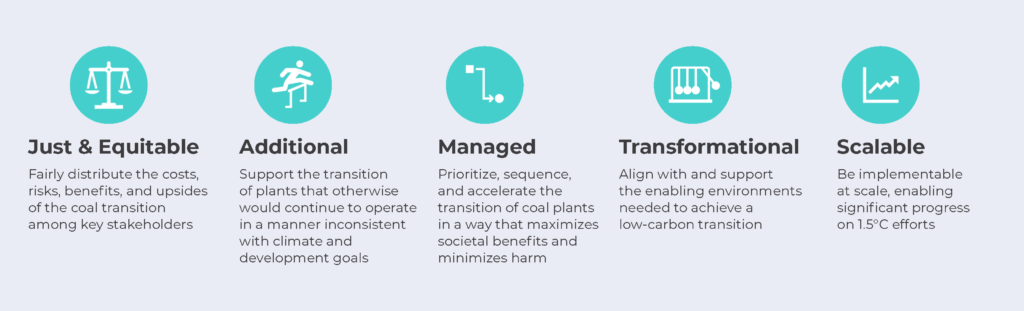 Five key principles to guide the design of financial mechanisms for coal transition

 CVD
CVD 