Vietnam’s big bet on LNG may not ease its power crisis

Reuters.com

By Francesco GuarascioEmily Chow and Khanh Vu July 17, 2023

Illustration shows a model of LNG tanker

Model of LNG tanker is seen in this illustration taken May 19, 2022. REUTERS/Dado Ruvic/Illustration/File Photo

  • Electricity-hungry Vietnam looks to become LNG importer
  • First plant fuelled from imported gas unlikely pre-2026
  • Investors, Hanoi at odds over volumes, price of power sales
  • Bold plans exposed to volatile LNG prices as demand grows

HANOI, July 17 (Reuters) – Vietnam received its first shipment of liquefied natural gas this month, a milestone for the energy-hungry country, but various hurdles mean it could take years for imported gas to ease the country’s long-running power shortages.

Disagreement over pricing, plant construction delays and lack of supply contracts are dogging the Southeast Asian manufacturing hub’s adoption of LNG, hampering its ambitions to make imported gas a major fuel, industry insiders say.

Vietnam’s urgent need to boost electricity supply, laid bare by recent rolling blackouts, has raised concerns among foreign investors about whether Vietnam can remain a reliable option to diversify manufacturing away from China.

Half the businesses in a June poll by the European Chamber of Commerce in Vietnam said the power crisis had hurt investment plans. Some were considering alternatives or pausing spending on factories.

Reuters Graphics

Reuters Graphics

Tiếp tục đọc “Vietnam’s big bet on LNG may not ease its power crisis”
Deep-sea mining for minerals: What is the issue?

IUCN.org

What is the issue?
Why is this important?
What can be done?
More information

  • Deep-sea mining is the process of retrieving mineral deposits from the deep seabed – the ocean below 200m.
  • Depleting terrestrial deposits and rising demand for metals mean deep-sea mining may begin soon, even thoughresearch suggests that it could destroy habitats and wipe out species.
  • Deep-sea mining should be halted until the criteria specified by IUCN are met, including the introduction of assessments, effective regulation and mitigation strategies.
  • Comprehensive studies are neededto improve our understanding of deep-sea ecosystems and the vital services they provide to people, such as food and carbon sequestration.

What is the issue?

Deep-sea mining is the process of extracting and often excavating mineral deposits from the deep seabed. The deep seabed is the seabed at ocean depths greater than 200m, and covers about two-thirds of the total seafloor. Research suggests deep-sea mining could severely harm marine biodiversity and ecosystems, but we still lack the knowledge and means to implement protections.

Despite this, there is growing interest in the mineral deposits of the seabed. This is said to be due to depleting terrestrial deposits of metals such as copper, nickel, aluminium, manganese, zinc, lithium and cobalt. Demand for these metals is also increasing to produce technologies like smartphones, wind turbines, solar panels and batteries.

featured image

ISA, 2021

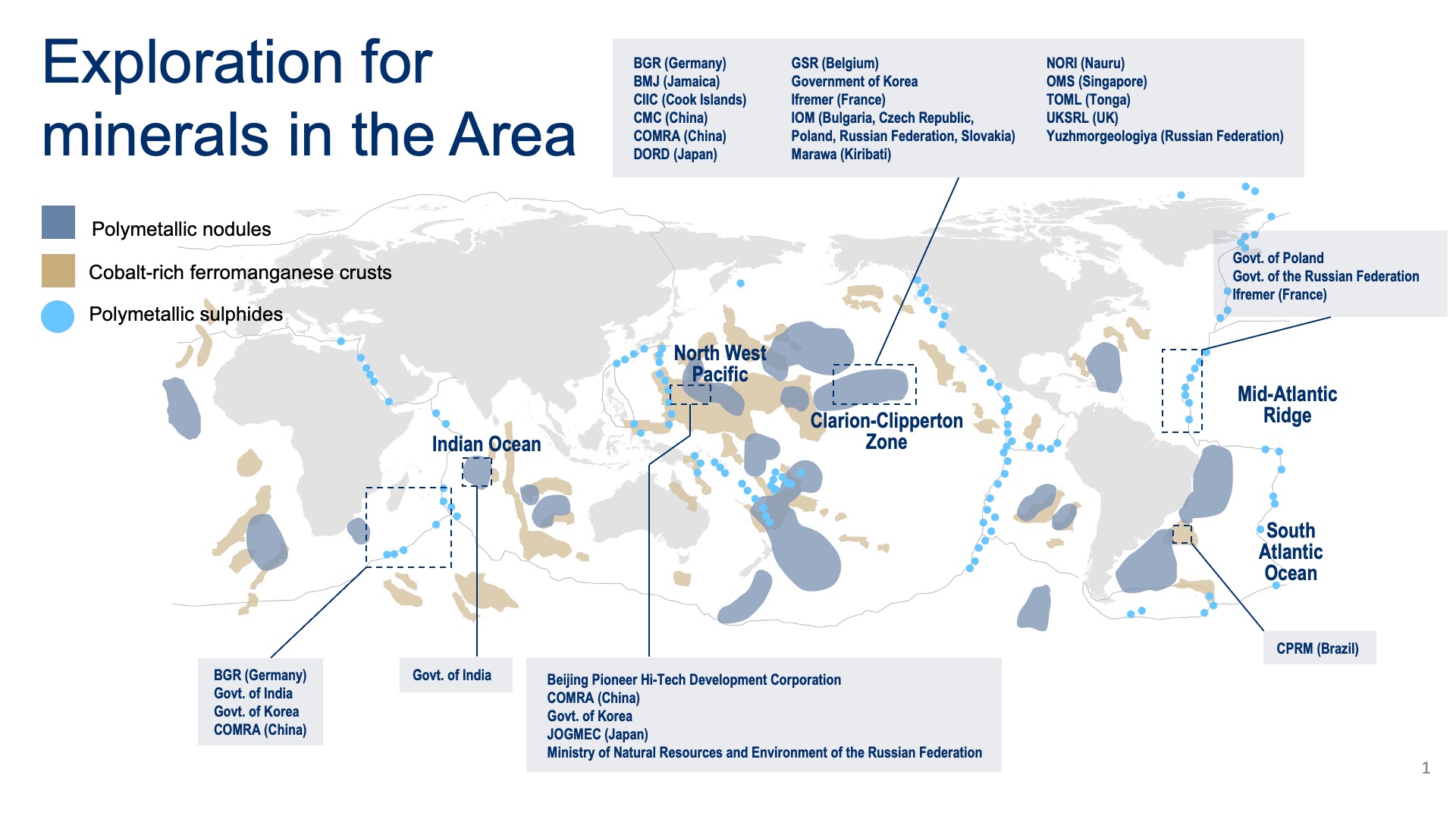
By May 2022, the International Seabed Authority (ISA), which regulates activities in the seabed beyond national jurisdiction (‘the Area’), had issued 31 contracts to explore deep-sea mineral deposits. More than 1.5 million km2 of international seabed, roughly the size of Mongolia, has been set aside for mineral exploration.

Tiếp tục đọc “Deep-sea mining for minerals: What is the issue?”