TTCT – Năm 1998, lần đầu tiên Luật Giáo dục được thông qua (có hiệu lực năm 1999), cũng là lần đầu có quy định sinh viên sư phạm, người theo học các khóa đào tạo nghiệp vụ sư phạm không phải đóng học phí.
Bỏ một chính sách nhiều bất cập
Giáo viên dạy học trực tuyến trong giai đoạn đại dịch COVID bùng phát Ảnh: Chu Hà Linh
Vào thời điểm đó, chính sách này được đánh giá cao, bởi người ta tin rằng nó sẽ khuyến khích các học sinh giỏi nhưng có điều kiện khó khăn lựa chọn ngành sư phạm. Tuy nhiên sau 20 năm, chính sách này đã bộc lộ nhiều bất ổn.
Nam Thủy Bắc Điều – tham vọng chuyển nước nhiều tranh cãi của Trung Quốc
Nam Thủy Bắc Điều là đại dự án đưa nước từ các con sông miền nam tới miền bắc khô hạn của Trung Quốc, nhưng gây nhiều tranh cãi về môi trường.
Sơ đồ các tuyến dẫn nước trong dự án Nam Thủy Bắc Điều. Nguồn dữ liệu: Global Times
Hãng thông tấn Xinhua của Trung Quốc cho biết dự án Nam Thủy Bắc Điều, hệ thống vận chuyển nước lớn nhất thế giới, đưa nước từ miền nam lên miền bắc Trung Quốc xuyên qua lòng sông Hoàng Hà, được thử nghiệm thành công ngày 25/8. Đợt thử nghiệm được tiến hành nhằm đánh giá quá trình vận hành toàn bộ 155 đơn vị và đưa toàn bộ đại dự án vào hoạt động.
China is on track to massively expand its nuclear arsenal, just as Russia suspends the last major arms control treaty. It augurs a new world in which Beijing, Moscow and Washington will likely be atomic peers.
By David E. Sanger, William J. Broad and Chris Buckley David E. Sanger and William J. Broad have covered nuclear weapons for The Times for four decades. Chris Buckley reports on China’s military from Taiwan.
WASHINGTON — On the Chinese coast, just 135 miles from Taiwan, Beijing is preparing to start a new reactor the Pentagon sees as delivering fuel for a vast expansion of China’s nuclear arsenal, potentially making it an atomic peer of the United States and Russia. The reactor, known as a fast breeder, excels at making plutonium, a top fuel of atom bombs.
The nuclear material for the reactor is being supplied by Russia, whose Rosatom nuclear giant has in the past few months completed the delivery of 25 tons of highly enriched uranium to get production started. That deal means that Russia and China are now cooperating on a project that will aid their own nuclear modernizations and, by the Pentagon’s estimates, produce arsenals whose combined size could dwarf that of the United States.
This new reality is prompting a broad rethinking of American nuclear strategy that few anticipated a dozen years ago, when President Barack Obama envisioned a world that was inexorably moving toward eliminating all nuclear weapons. Instead, the United States is now facing questions about how to manage a three-way nuclear rivalry, which upends much of the deterrence strategy that has successfully avoided nuclear war.
China’s expansion, at a moment when Russia is deploying new types of arms and threatening to use battlefield nuclear weapons against Ukraine, is just the latest example of what American strategists see as a new, far more complex era compared to what the United States lived through during the Cold War.
China insists the breeder reactors on the coast will be purely for civilian purposes, and there is no evidence that China and Russia are working together on the weapons themselves, or a coordinated nuclear strategy to confront their common adversary.
But John F. Plumb, a senior Pentagon official, told Congress recently: “There’s no getting around the fact that breeder reactors are plutonium, and plutonium is for weapons.”
It may only be the beginning. In a little-noticed announcement when President Xi Jinping of China met President Vladimir V. Putin in Moscow last month, Rosatom and the China Atomic Energy Authority signed an agreement to extend their cooperation for years, if not decades.
When President Xi Jinping of China met President Vladimir V. Putin in Moscow last month, Russia and China’s nuclear authorities signed an agreement to extend their cooperation for years.Credit…Grigory Sysoyev/Agence France-Presse, via Sputnik
One of the major investors in Australian LNG, INPEX, has recently suggested that the country is quietly
quitting the LNG business. This is in the context of increasing government regulation, including the
possibility of gas intended for LNG projects being diverted into the domestic market. The federal
government has responded by reassuring major buyers that Australia will continue to be a reliable LNG
supplier.
However, there are a number of fundamental challenges for the government in living up to its promise.
First, Australian gas reserves are not being replaced, with some important legacy gas fields reaching
the end of their lives. This includes both LNG and domestic gas fields. This leads to the possibility that
shortfalls in the domestic market will have to be met by diversions from LNG projects that also face gas
supply challenges. Second, the LNG projects are significant CO2 emitters and many Australian gas
fields, including those with the potential to backfill LNG, contain significant volumes of CO2. The new
federal government has adopted more ambitious emissions reduction targets. Third, coal-fired
generation is being closed faster than it can be replaced with renewables, increasing demand for gas
in key periods such as winter and pushing up gas prices.
NATO Holds Largest Air Drills in Europe Since End of Cold WarT
wenty-five countries are participating in joint military air exercises (NYT) that began in Germany yesterday, including new North Atlantic Treaty Organization (NATO) member Finland and prospective member Sweden. The drills, planned since 2018, were initially organized following Russia’s 2014 invasion and illegal annexation of Ukraine’s Crimean Peninsula, but have taken on new relevance after Russia invaded Ukraine last year. The drills will occur at six German bases over twelve days.
Japan is an observer to the drills, which come as NATO is preparing documents that will elevate its partnerships with the Indo-Pacific countries of Australia, Japan, New Zealand, and South Korea, Nikkei reported. The leaders of those four countries are expected to attend a NATO summit in Lithuania in July.
TTCT – Ngày 28-5-2023, ông Recep Tayyip Erdogan trúng cử lần thứ ba nhiệm kỳ tổng thống Thổ Nhĩ Kỳ với 52,18% số phiếu ở vòng 2.
Bầu cử tổng thống ở Thổ cần 2 vòng và đa số tuyệt đối, nhưng sau khi ở vòng 1, ông Erdogan về đầu với 49,52% thì kể như xong vì đối thủ của ông thuộc Đảng Xã hội chỉ có 44,88% và người thứ ba thuộc thành phần quốc gia cực đoan có 5,17%.
Trừ khi có phép lạ nào đó xảy ra, thì thực tế là ngay từ hôm bầu vòng 1 (14-5), cử tri Thổ đã quyết định rồi.
Đây là quyết định có thể dự đoán được nhưng vẫn bất ngờ, vì sau 20 năm cầm quyền, dư luận nghĩ quần chúng đã chán ông Erdogan – nhất là trong hoàn cảnh kinh tế lạm phát cực kỳ hiện nay và đồng tiền mất giá.
Việc cứu trợ động đất tháng 2 với 50.000 người chết cũng được cho là không tốt và làm nhiều người bất mãn.
The present policy brief is focused on how threats to information integrity are having an impact on
progress on global, national and local issues. In Our Common Agenda, I called for empirically backed consensus around facts, science and knowledge. To that end, the present brief outlines potential principles for a code of conduct that will help to guide Member States, the digital platforms and other stakeholders in their efforts to make the digital space more inclusive and safe for all, while vigorously defending the right to freedom of opinion and expression, and the right to access information. The Code of Conduct for Information Integrity on Digital Platforms is being developed in the context of reparations for the Summit of the Future. My hope is that it will provide a gold standard for guiding action to strengthen information integrity.
Digital platforms are crucial tools that have transformed social, cultural and political interactions
everywhere. Across the world, they connect concerned global citizens on issues that matter. Platforms help the United Nations to inform and engage people directly as we strive for peace, dignity and equality on a healthy planet. They have given people hope in times of crisis and struggle, amplified voices that were previously unheard and breathed life into global movements.
Yet these same platforms have also exposed a darker side of the digital ecosystem. They have enabled the rapid spread of lies and hate, causing real harm on a global scale. Optimism over the potential of social media to connect and engage people has been dampened as mis- and disinformation and hate speech have surged from the margins of digital space into the mainstream. The danger cannot be overstated. Social mediaenabled hate speech and disinformation can lead to violence and death.
The ability to disseminate large-scale disinformation to undermine scientifically established facts poses an existential risk to humanity (A/75/982, para. 26) and endangers democratic institutions and fundamental human rights. These risks have further intensified because of rapid advancements in technology, such as generative artificial intelligence. Across the world, the United Nations is monitoring how mis- and disinformation and hate speech can threaten progress towards the Sustainable Development Goals. It has become clear that business as usual is not an option.
Đêm 10 rạng sáng 11/6 đã xảy ra hai vụ tấn công vào trụ sở ủy ban hai xã ở huyện Cư Kuin tỉnh Đắk Lắk khiến một số cán bộ và người dân thiệt mạng và bị thương. Đằng sau vụ việc này có thể là tổ chức nào và nhằm mục đích gì?
Chúng ta đã chuẩn bị được những gì cho ba thập niên tới khi mà Việt Nam có hơn 30 triệu người cao tuổi và chiếm khoảng 25% dân số cả nước? Liệu đây có hoàn toàn chỉ là thách thức?
Prime Minister Hun Sen asked the Vietnamese government to watch out for former opposition leader Sam Rainsy entering Vietnam using his French passport.
“I would like to emphasise to the Vietnamese Ambassador to Cambodia Nguyen Huy Tang, to send a message to the Vietnamese government to be wary of a person (Rainsy) who uses a French passport to enter Vietnam as a tourist,” Mr Hun Sen said.
“I received information from one of my spies that (Rainsy) is trying to enter Cambodia through neighbouring countries to cause problems for me,” he said.
1,3 tỷ đồng là số tiền mà người dân làng Hưng Giáo, xã Tam Hưng (huyện Thanh Oai, Hà Nội) đã ủng hộ để biến ao nước tù, chứa nhiều loại rác thải trong làng thành bể bơi miễn phí rộng 1.100 m2.
Cần Giờ, a coastal district of Ho Chi Minh City, is home to a 75,740-hectare (187,158-acre) mangrove forest, planted and maintained as part of post-war reforestation efforts.
The district’s residents largely depend on aquaculture, shellfish gathering and small-scale ecotourism for their livelihoods.
The government and developers hope to market the area as an ecotourism city based on its natural beauty and post-war success story, but major projects could disrupt Cần Giờ’s precarious balance between ecosystems and livelihoods.
All names of sources in Cần Giờ have been changed so people could speak freely without fearing repercussions from authorities.
Một học sinh cấp 3 tại Hà Nội sau khi được một huấn luyện viên thể hình (PT) cho một chiếc “bánh lười” – loại bánh trộn cần sa đã mang về… chia cho các bạn cùng sử dụng. Hậu quả, một nhóm học sinh đã bị ngộ độc ngay sau đó.
Thứ sáu, ngày 07/04/2023
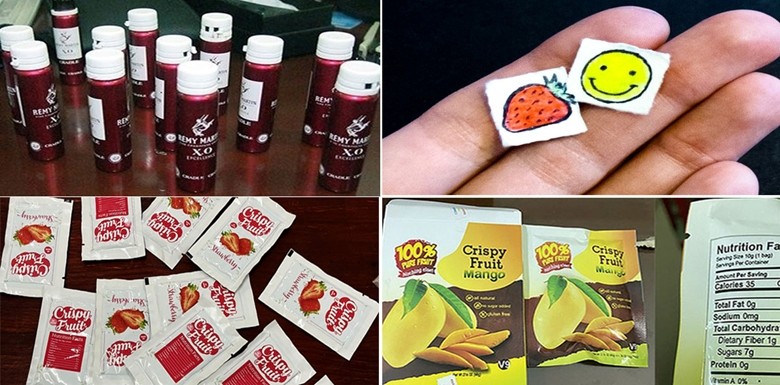
“Nước vui”, “bùa lưỡi”, “bột dâu”, “bột xoài” với hình thức bắt mắt dễ dàng qua mặt lực lượng chức năng. (Ảnh: Cơ quan chức năng cung cấp)
Đây chỉ là một trong những thí dụ không hề hiếm gặp cho thấy ma túy “thế hệ mới” đã và đang xâm nhập vào học đường hiện nay.
Nguy hiểm rình rập học đường
Theo thống kê của Bộ Công an vào tháng 6/2022, 60% số người sử dụng trái phép chất ma túy lần đầu ở độ tuổi từ 15-25 tuổi, trong đó nhiều người đang là học sinh, sinh viên. Người nghiện ma túy đang có xu hướng ngày càng trẻ hóa đặt ra không ít thách thức cho công tác phòng, chống ma túy cũng như cai nghiện.
Một điều tra viên lâu năm trong lĩnh vực phòng, chống tội phạm ma túy chia sẻ, bản thân anh đã từng chứng kiến nhiều vụ việc “dở khóc, dở cười”.
“Chúng tôi từng nhận được thông tin về việc một nữ học sinh cấp 3 được huấn luyện viên thể hình đưa cho một chiếc bánh lười (loại bánh tẩm cần sa-PV). Tuy nhiên, cô bé không sử dụng ngay mà mang về… chia cho các bạn cùng lớp ăn cùng. Kết quả, cả nhóm học sinh đều bị ngộ độc và phải đưa đi cấp cứu”, điều tra viên kể lại.
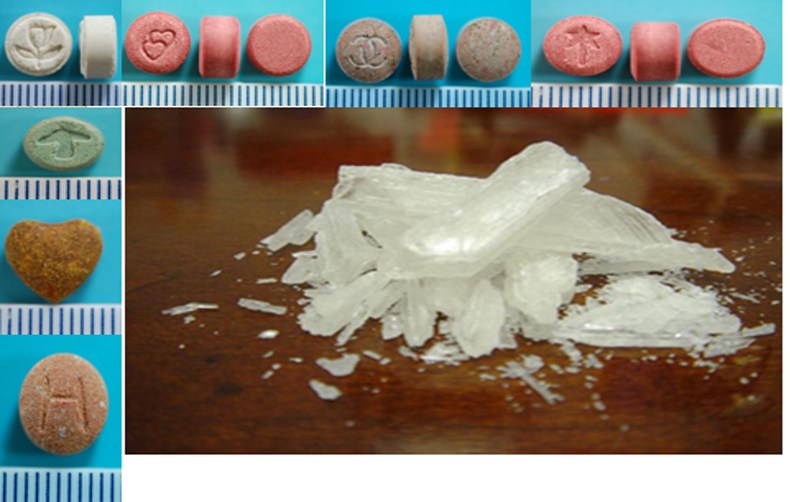
Ma túy tổng hợp cơ quan chức năng thu giữ. (Ảnh: Cơ quan công an cung cấp)
Các đối tượng tội phạm về ma túy thường lợi dụng tâm sinh lý của học sinh, sinh viên nói riêng; giới trẻ nói chung để lôi kéo, dụ dỗ.
Recently your social media feed may have been flooded with headlines on the advances in Artificial Intelligence (AI) or even AI-generated images. Text-to-image algorithms such as Dall-E2 and Stable Diffusion are becoming hugely popular. ChatGPT, a chatbot developed by OpenAI, is now the world’s best-performing large language model, reaching 1 million users in its first week – a rate of growth much faster than Twitter, Facebook or TikTok.
As AI demonstrates its ability to craft poetry, write code and even pollinate crops by imitating bees, the governance community is waking up to the impact of artificial intelligence on the knotty problem of corruption. Policy institutes and academics have pointed to the potential use of AI to detect fraud and corruption, with some commentators heralding these technologies as the “next frontier in anti-corruption.”


 CVD
CVD 