Toilet Gods and Demons in Japan

toilet-guru.com

In Japanese folklore there are both toilet gods and toilet demons. The toilet gods are household deities, the toilet demons are water demons. Let’s look at the gods first, then the demons.

Toilet Gods

There is only very limited livestock on Japan farms. Human waste has traditionally been collected in cesspits and used as fertilizer. This meant that there was a risk of falling into a cesspit and possibly drowning. Protection was needed against this dreadful fate. Also, since the collected waste was used for fertilizer, the toilet was connected with fertility in general.

The kawaya no-kami or toilet god was asked for help. Special rituals at the new year asked for the kawaya no-kami to bring a good harvest. Keeping the toilet clean was thought to lead to more attractive children.

The specific name and rituals associated with the toilet god vary with location. The name is Takagamisama around Nagano, Setchinsan in Hiroshima, Kamu-taka on Ishigaki Island, Sechinbisan in Ōita, and Usshimasama in Ehime. In some places the family sit in front of the toilet on a straw mat and eat a rice cake, in other places they would put an offering of food into the toilet.

In far northern Japan the Ainu people believed that their toilet god, the Rukar Kamuy, would be the first deity to provide help in times of danger. The Rukar Kamuy is one of many Kamuy or household gods. There is Apasamn Kamuy the husband and wife god and goddess who keep evil spirits out of the house entrance. Cisepannokianpa Kamuy and Cisepennokianpa Kamuy, the husband and wife god and goddess of the eaves of the roof, protect the house from earthquakes and typhoons. Cisekor Kamuy, a male god, sits in the east corner of the house and watches over everything. He is the husband of Apehuci Kamuy, the goddess of fire. Colpep Kamuy is the god of containers, thanks are given to this god when containers are retired.
Tiếp tục đọc “Toilet Gods and Demons in Japan”

Vì sao thiếu điện mà EVN chưa mua điện gió?

vietnamnet.vn

Để các dự án năng lượng tái tạo được sớm phát lên lưới, trách nhiệm không chỉ nằm ở EVN mà còn của Bộ Công Thương, UBND các tỉnh và nhất là các chủ đầu tư.

Được mở đường, nhà đầu tư vẫn lừng khừng

Đến nay có 85 dự án điện tái tạo (gồm 8 dự án điện mặt trời và 77 dự án điện gió), với tổng công suất hơn 4.700MW đã và đang đầu tư, xây dựng và lỡ hẹn giá ưu đãi vì giá FiT cho điện gió kết thúc vào tháng 31/10/2021 và điện mặt trời kết thúc vào tháng 12/2020.

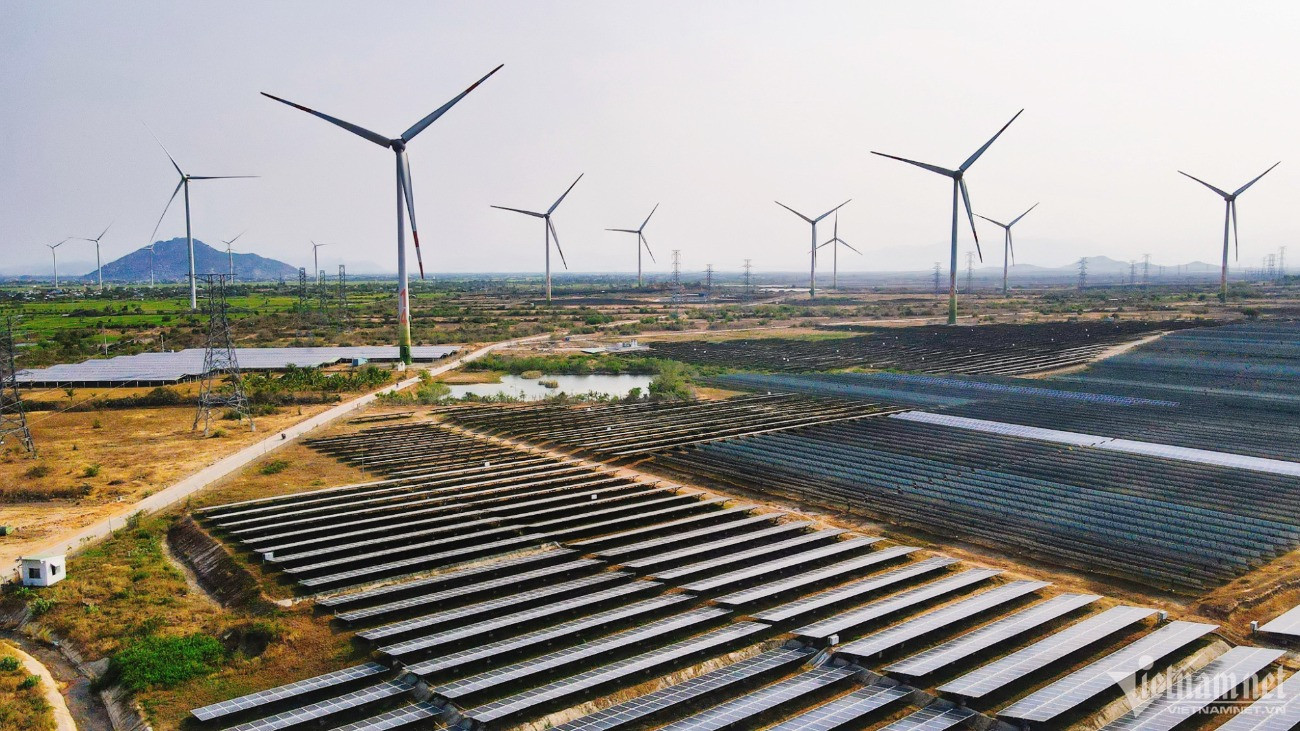
Nhiều dự án điện gió, điện mặt trời lỡ hẹn giá FiT. Ảnh: Thạch Thảo

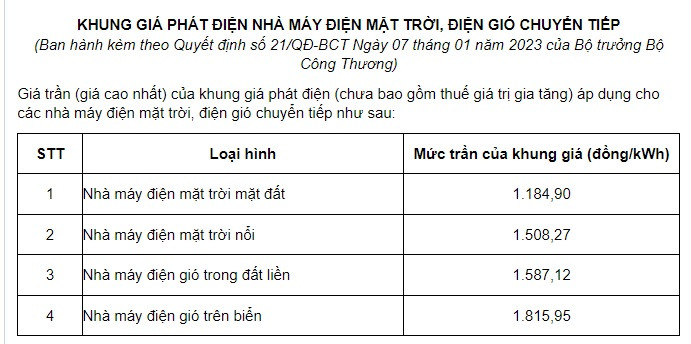
Mãi đến ngày 7/1/2023, Bộ trưởng Công Thương mới ban hành quyết định về khung giá phát điện nhà máy điện mặt trời, điện gió chuyển tiếp. Sự chậm trễ này rõ ràng có phần trách nhiệm của Bộ Công Thương.

Nhưng từ đó đến giữa tháng 5/2023, rất ít chủ đầu tư gửi hồ sơ đàm phán đến Công ty mua bán điện thuộc EVN (EPTC) vì nhà đầu tư “chê” mức giá đó là quá thấp.

Căn cứ mức giá trần này, mỗi kWh điện mặt trời mặt đất có giá tạm tính là 592,45 đồng; điện mặt trời nổi là 754,13 đồng; điện gió trong đất liền là 793,56 đồng; điện gió trên biển là 907,97 đồng.

Tiếp tục đọc “Vì sao thiếu điện mà EVN chưa mua điện gió?”

What are NDCs – Nationally Determined Contributions, and how do they drive climate action?

UNDP.org May 31, 2023

NDC explainer visual

Summary

  • Nationally Determined Contributions, or NDCs, are countries’ self-defined national climate pledges under the Paris Agreement, detailing what they will do to help meet the global goal to pursue 1.5°C, adapt to climate impacts and ensure sufficient finance to support these efforts.
  • NDCs represent short- to medium-term plans and are required to be updated every five years with increasingly higher ambition, based on each country’s capabilities and capacities.
  • Concrete progress is already being made towards achievement of the Paris Agreement, particularly in developing countries. For example, pledges from African countries are more robust than the global average in terms of explaining how targets will be achieved. 
  • NDCs represent politically backed commitments by countries. If used right, they could be our way out of tackling the world’s current crises – not just the climate crisis, but other systemic problems like biodiversity loss and energy security as well.

What are Nationally Determined Contributions and where do they come from? 

The Paris Agreement changed the face of climate action.

The legally binding international treaty, which was adopted in 2015 by all 196 Parties to the UN Climate Convention in Paris, established universal global goals endorsed by all countries. Primarily, this includes ensuring global average temperature rise is held well below 2°C above pre-industrial levels and pursuing efforts to limit the increase to 1.5°C.  It also includes an aim to increase the ability to adapt to climate impacts, and make finance flows consistent with country needs to achieve these goals.  

Tiếp tục đọc “What are NDCs – Nationally Determined Contributions, and how do they drive climate action?”

‘A Shared Vision for the Indo-Pacific’: Remarks by Secretary of Defense Lloyd J. Austin III at the Shangri-La Dialogue (As Delivered)

Source: Defense.gov

June 2, 2023  

Well, good morning, everyone. 

It is indeed great to be back here for another Shangri-La Dialogue.

Let me thank John and everyone at IISS for their efforts to deepen our dialogue on the Indo-Pacific. You know, this is my third time speaking in Singapore at an IISS event. And so this is starting to be—it’s becoming a habit there, John. 

I also want to thank our national host, Singapore, for your tremendous hospitality.  

And it’s great to see Senior Minister Teo, and Minister Ng, and other distinguished guests from our host here today.

And I’m glad that we’re joined by so many defense ministers and leaders from around the Indo-Pacific and around the world.

One minister of defense made a special effort to be here today: my good friend Oleksii Reznikov of Ukraine. Oleksii’s seat is currently empty. I’m sure he’s working the room somewhere around here, but Oleskii, if you can hear me, I’d remind you that, I’d just tell you that your presence here reminds us that we can never take our peace and security for granted.

I’m also delighted to be here with Director Haines and many of our U.S. military leaders. 

So thanks to everyone for being here today.

This dialogue is always a great opportunity to exchange views. And the only thing more wide-ranging than the conference agenda is the breakfast buffet. 

[Laughter]

Tiếp tục đọc “‘A Shared Vision for the Indo-Pacific’: Remarks by Secretary of Defense Lloyd J. Austin III at the Shangri-La Dialogue (As Delivered)”

A History of Impact Investing

investopedia.com

Impact investing is a major topic on investors’ radar screens, boasting huge growth, and widespread acceptance among those seeking to align their portfolios with their values. But impact investing has always been more than a fad.

KEY TAKEAWAYS

  • Socially responsible investing’s origins in the United States began in the 18th century with Methodism, a denomination of Protestant Christianity that eschewed the slave trade, smuggling, and conspicuous consumption, and resisted investments in companies manufacturing liquor or tobacco products or promoting gambling.
  • Socially responsible investing ramped up in the 1960s, when Vietnam War protestors demanded that university endowment funds no longer invest in defense contractors.
  • The combined efforts of protests and responsible investing during the Vietnam War and Apartheid in South Africa, led to institutional and legislative change.
  • Over time, research has backed up this strategy: companies that care about the environment, promote equality among employees, and enforce proper financial guidelines tend to accrue added benefits to investors.

History of Impact Investing

A History of Impact Investing
Investopedia / Sabrina Jiang

Impact investing is also referred to as socially responsible investing (SRI). The practice has a rich history. In Biblical times, ethical investing was mandated by Jewish law. Tzedek (which means justice and equality), comprises rules to correct the imbalances that humans cause. Tzedek is referred to in the first five books of the Bible—collectively called the Pentateuch—thought to have been written by Moses from 1,500 to 1,300 B.C.E.12 According to Jewish tradition, these rules apply to all aspects of life, including the government and the economy. Ownership carries rights and responsibilities, one of which is to prevent immediate and potential harm.3

Tiếp tục đọc “A History of Impact Investing”

ESG-Environmental, Social, Governance , SRI- Social Responsibly Investing, and Impact Investing: What’s the Difference?

Investopia.com

KEY TAKEAWAYS

  • A growing number of investors want to encourage companies to act responsibly in addition to delivering financial returns.
  • The terms environmental, social, and governance (ESG), socially responsible investing (SRI), and impact investing are often used interchangeably, but have important differences.
  • ESG looks at the company’s environmental, social, and governance practices alongside more traditional financial measures.
  • Socially responsible investing involves choosing or disqualifying investments based on specific ethical criteria.
  • Impact investing aims to help a business or organization produce a social benefit.

Investing is no longer just about the returns. A growing number of investors also want their money to fund companies as committed to a better world as they are to their bottom line.

Socially responsible investing and one of its subsets, impact investing, have attracted more than one-third of the assets under professional management in the U.S., according to a 2020 survey by the U.S. Forum for Sustainable and Responsible Investment. That amounted to more $17 trillion in assets under management based on socially responsible criteria, an increase of 42% from 2018.1

The growing demand has fueled a proliferation of funds and strategies that integrate ethical considerations into the investment process. Environmental, social, and governance (ESG), socially responsible investing (SRI), and impact investing are industry terms often used interchangeably by clients and professionals alike, under the assumption that they all describe the same approach. However, these terms have subtle differences of meaning.

ESG

Tiếp tục đọc “ESG-Environmental, Social, Governance , SRI- Social Responsibly Investing, and Impact Investing: What’s the Difference?”